Cabbage isn’t the most exciting vegetable in the produce aisle—it’s just kind of there. Typically reduced down to a St. Patrick’s Day side dish or a diner coleslaw, cabbage has quietly climbed its way up the social media ladder as of late. Why? Home cooks are realizing what professional chefs have known forever: Cabbage is affordable, versatile and super beneficial for gut health. Turns out, it’s more than just a food trend. Ahead, all the reasons you need to give this vegetable a chance.
Is Cabbage the New Cauliflower? Here’s Why It’s a Superfood for Digestion
The internet has spoken

•
Published May 11, 2026
Photoongraphy/woopics/Shutterstock
What Is Cabbage?
Cabbage is a leafy cruciferous vegetable in the same family as broccoli, cauliflower, kale and Brussels sprouts. It comes in several varieties—green, red and savoy being the most common—and can be eaten raw, cooked or fermented.
Why Is 2026 Dubbed the Year of the Cabbage?
Well, there are a few good reasons. First and foremost, in the current world of rising grocery prices, cabbage is one of the most budget-friendly vegetables you can buy. According to the most recent data from the U.S. Department of Agriculture, green cabbage averages just 83 cents per pound, so you can use it to feed a family for under $2. Yes, please.
And its appeal doesn’t stop at the price tag. Cabbage is incredibly versatile and used across cuisines worldwide. Candace Davison, PureWow’s VP of editorial content, says, “It’s kind of chameleon-like in its ability to take on whatever flavor its paired with, from jerk seasoning to marinara.” Since it doesn’t impart much flavor on its own, it can handle being roasted or tossed into hearty sauces or soups without breaking down into mush—making it a natural low-carb substitute for heartier ingredients. “Content creators [are] turning to it as a stand-in for zucchini or pasta as a low-carb—yet still filling—base for all kinds of dishes (like cabbage alfredo, which was really big this past January),” Davison adds.
What Makes It So Good for Gut Health?
If you still need convincing, it’s really beneficial in supporting gut health. “Cabbage is a fiber powerhouse,” says Marisa Moore, MBA, RDN, LD, registered dietitian nutritionist and cookbook author. The insoluble fiber helps promote regular bowel movements, and the soluble fiber feeds good gut bacteria—specifically Bifidobacteria and Lactobacilli—that go on to support healthy immune function. So if you’re into the current fibermaxxing trend, cabbage is a no-brainer.
And don’t stress about eating the “right” type of cabbage for gut health. Moore says, “All types support gut health and have slightly different nutrient profiles and culinary uses.”
- Green cabbage is the most accessible and budget-friendly. Plus, it’s rich in vitamins C and K.
- Red cabbage contains anthocyanins, powerful antioxidants linked to reduced inflammation.
- Savoy cabbage is a bit fancier and harder to find, with a tender texture that’s great for stuffed dishes. It’s also a good source of vitamin A.
Cabbage is also available in fermented forms, like sauerkraut and kimchi, which are fiber-rich. “They contain probiotics and enzymes that help us more easily break down the nutrients we eat,” Moore notes. However, she points out that many store-bought fermented foods are pasteurized and may or may not contain an abundance of probiotics.
For anyone who is on blood thinners, has irritable bowel syndrome (IBS) or has thyroid issues, it’s best to check with your healthcare provider about any personal nutrition needs before increasing your intake of cabbage.
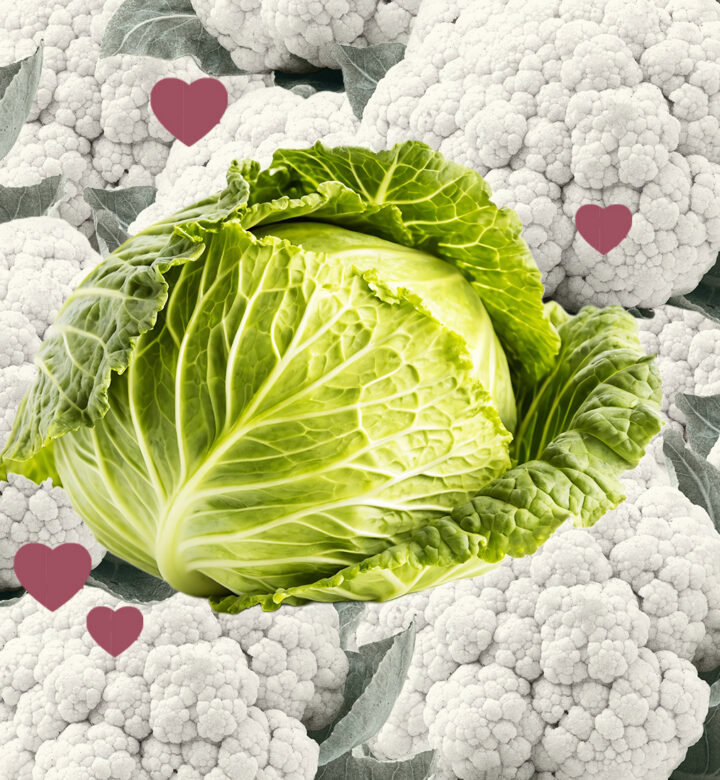
OK, Cabbage or Cauliflower?
“No need to choose,” Moore says. “Cabbage and cauliflower are high in fiber, vitamin C and phytonutrients, so there’s room for both on your plate.” Case closed.
Looking to add cabbage to your weekly rotation? Here are five cabbage recipes to try: