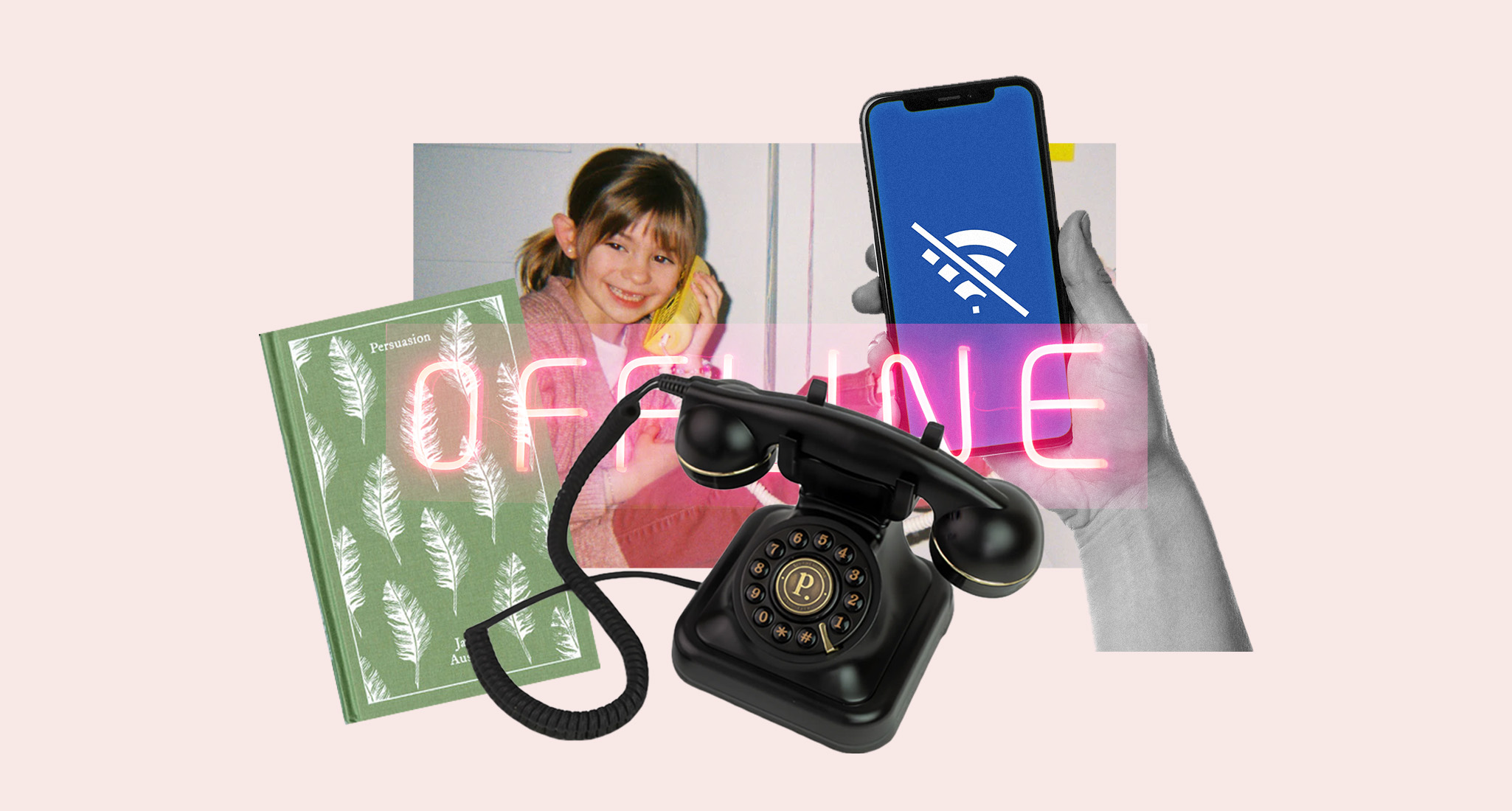
Ever since Succession dominated the airwaves with its ludicrously capacious handbag and an even more ludicrously priced Loro Piana baseball cap, quiet luxury has been the talk of the town. Or, the very least, the talk of TikTok. Suddenly, everyone was clambering for the old-money look. Logos were out, IYKYK understated pieces were in. But then, things stopped feeling luxurious. The premise of luxury is exclusivity—so what was the fun of having a Birkin bag if it seemed that everyone had one? Similarly, Mary Kate and Ashley Olsen’s notoriously exclusive brand, The Row, became a social media sensation. In 2026, it looks like quiet luxury, in the physical sense, is out. Real exclusivity can’t be bought. Rather, it’s something you do: Being offline.
Many celebrities have long touted their lack of online presence. From Jennifer Lawrence to Elle Fanning and Saoirse Ronan, dozens of public faces have decried the stress and danger of being chronically online. Perhaps, though, the ones who speak loudest are the those who lead by example. Zendaya posted just five times in 2025, and all her content was work related—ad campaigns, new film projects, with the occasional birthday post. And yet, last year the internet could not stop talking about her engagement to Tom Holland.
It’s not just the famous who have broken up with the public internet presence. There’s been plenty of recent reporting about “luddite teens,” most notably covered by The New York Times but also verbalized by teens themselves.
“Social media and phones are not real life,” says former high school student Lola Shub in a 2022 Times article, with another teen adding, “You post something on social media, you don’t get enough likes, then you don’t feel good about yourself. That shouldn’t have to happen to anyone.”