
The Tin Can Landline Unlocked My Kid’s Conversation Skills

It also may be an answer to the smartphone debate

tin can mobile
Tin Can
  • Value: 19/20
  • Quality: 20/20
  • Ease of Instructions: 20/20
  • Ease of Use: 20/20
  • Nostalgia Factor: 20/20

TOTAL: 99/100

I’m going to kick this review off by saying something rather bold: The Tin Can might be my favorite family-related product that I’ve tested all year. I first heard about it from, surprise, surprise, the Gen Zers in my office: They were all curious whether I, a millennial mom, had snapped up the landline-meets-walkie-talkie alternative to a smartphone.

As the parent of a 7-year-old (and 1-year-old, who is thankfully eons away from this debate, but who I’d let play around with a Tin Can the minute he learns how to talk), I’ve never Googled anything faster in my life. While it resembles a traditional landline, it includes special features that set it apart from the screen-free phones we grew up with.

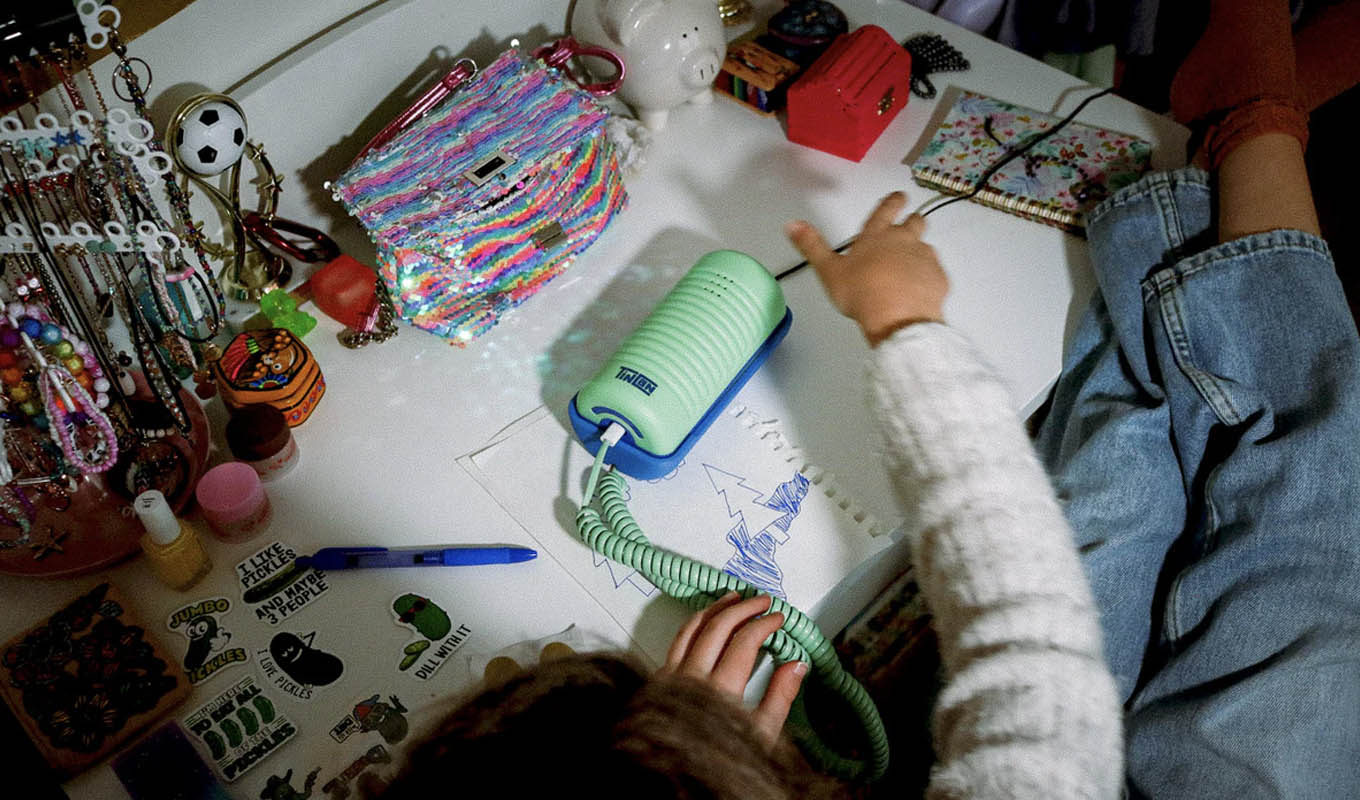
Here’s what Tin Can promises: An easy setup (no losing hours of time on the phone to a provider’s customer service department) and crystal-clear parental controls (kids can call friends who also have a Tin Can or you can pay $10/month to add non-Tin Can numbers via an app). It’s also a total throwback. More about my testing experience below, but the Tin Can flashback (one of two options) comes complete with that twirly cord that, no matter how far you stretch it, still keeps you tethered to a wall.

As an alternative, Tin Can also offers a Wifi-enabled option that not only cordless, it’s cute and candy-colored. (Don’t get me wrong, it’s still a throwback to the ‘80s, but one that feels Instagram-ready.)

Speaking of social media, that’s the beauty of the Tin Can: It’s retro in all the right ways and without an app or screen in sight. More importantly—and the part that’s left me the most gobsmacked—is how my son took to it immediately, leveling up his conversation skills (and confidence) in the process.

tin can review
Tin Can

How the Tin Can Works

Like I said, there are two versions of the Tin Can: The Tin Can Flashback and the Tin Can. The Tin Can Flashback is the most nostalgic-feeling (and closely mirrors my own landline experience as a kid). It’s also the device we primarily tested, plugging it into our home internet router via an Ethernet cord (which comes included) instead of a phone jack and attaching it to the wall in our kitchen. To use it, parents simply have to set up the app which gives them full control in terms of who kids can call, i.e. the numbers for other Tin Cans only or external numbers for a monthly subscription fee of $10/month.

On the flip side, the Tin Can is the brand’s wireless option. It connects to your home Wifi, no cord required. The app usage is the same, allowing parents to manage contacts and control who your kid can ring up.

Other features worth calling out: A paper phone list where you can write the numbers of friends and family and post it to the wall. (This has been a game-changer in terms of getting my kid to learn phone numbers by heart, something that’s so helpful for safety.) Kids also have to wait for a dial tone before plunking in the numbers (I told you it was old-school) and you can set “quiet hours” also within the app (perfect for long-distance cousins who live in a different time zone and might call at all hours of the night). Also, worth noting: In an emergency situation, calls to 911 always work.

tin can flashback
Tin Can

How I Tested It

I’ve been testing the Tin Can for a few months now, mainly via my 7-year-old son. When it arrived, we anchored it to the wall in our kitchen and—full disclosure—my husband also invested in an extender cord in order to give him a slightly longer tether as he wonders around the kitchen chatting up his Grammy or cousins in California. Speaking of his cousins, they also own a Tin Can (and, TBH, more and more friends are getting one, so his pre-approved phone list is ever-expanding), but we quickly added the “party line” plan for an affordable $10 monthly fee so that he could call all his grandparents, too. I’m not kidding when I say that he gets home from school and the Tin Can is the first thing he wants to reach for.

Initially, he was also rather clunky with it. He didn’t understand that it’s best practices to kick off a conversation with a salutation, such as “hello! How are you?” Also, the fact that when you’re done talking, you don’t just…hang up. I overheard him mid-conversation with his nana, then suddenly, he just slammed the phone down. “Are you upset? What happened?” I asked. “I didn’t have anything else to say,” he replied. (Cue our conversation about conversation skills.)

There’s more: What began as five-minute phone calls to friends and family now have morphed into conversations that can stretch to half an hour, sometimes longer. It’s incredible.

tin can
Tin Can

How It’s Changed My Life (No, But Really)

The smartphone debate has felt like a scary parenting pain point for years now. From my kid’s days as a toddler and on, I’ve frequently found myself quizzing parents about their own practices and stress-reading Jonathan Haidt’s assessment that our efforts to curb kid’s smartphone use has reached a critical—and life-altering—point.

But as my kid dialed up the numbers connected to so many core relationships in his life, he unlocked a new level of independence for himself, along with conversation skills that are rooted in confidence and curiosity.

“How was school today?” I heard him ask his cousin. “I have a list of things I need to tell you about,” I heard him tell his nana. I quickly realized that my anxiety about phone use wasn’t about phone use at all. It’s about screens and social media only. A phone—which at its core purpose allows my kid to connect with friends and loved ones, and laugh and talk as little or as long as he wants about his day—is a beautiful thing.

Add to the fact that as we’re cooking dinner and the chaos of life is swirling around us, we get interrupted by that old-school bring bring sound of a landline without the knowledge—other than our app approvals—of who’s on the other end? It’s a thrill that I totally forgot existed. (Also hilarious, how often he gets tangled up in the cord.)

Bottom Line: The Smartphone Debate Is Missing an Important Point

No, the Tin Can doesn’t solve the issue of kids needing phone access forever—I know a smartphone or smartwatch is ultimately in my future—but it does extend the length of time before my kid requires one. It also grants autonomy and independence and, even safety, if you will. Case in point: Not only does my son now have a way to phone his friends and family on his own, he can call us, too, say, if he has a question while home with a babysitter. (This brings him a ton of comfort, FYI.)

But more importantly, the Tin Can is a healthy gateway to phone usage that feels positive instead of anxiety-provoking. It’s not confused by texting capabilities or apps. Instead, it’s a chance to practice core social and conversation skills, which in just a few months’ time, has bolstered his confidence and his relationships, too.


rachel bowie christine han photography 100

Senior Director, Special Projects and Royals

  • Writes and produces family, fashion, wellness, relationships, money and royals content
  • Podcast co-host and published author with a book about the British Royal Family
  • Studied sociology at Wheaton College and received a masters degree in journalism from Emerson College