
Cozy French Kitchens Are Trending—These Are the 6 Essentials for Nailing the Look Today

Effortlessly chic yet functional

PureWow editors select every item that appears on this page, and some items may be gifted to us. Additionally, PureWow may earn compensation through affiliate links within the story. All prices are accurate upon date of publish. You can learn more about the affiliate process here.

french kitchen trends
williams-sonoma/anthropologie

French kitchens have never gone out of style, but in a year marked by romanticizing the everyday (‘whimsy’ is the TikTok phrase du jour) and the pushback after years of all-white kitchens built with ROI in mind, it’s safe to say the aesthetic is facing a tidal wave of new interest. Pinterest backs this: Its latest trend report called out that searches for the “French kitchen aesthetic” were up 275 percent year over year, along with searches for a “cozy vintage kitchen” (up 165 percent) and “warm wood kitchen” (up 140 percent).

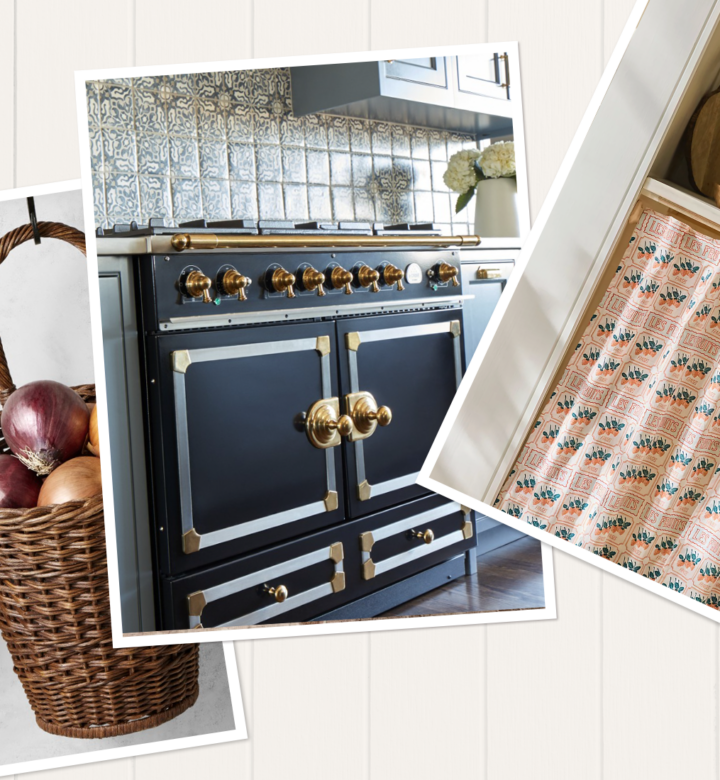
So, what does that look like, exactly? Picture muted color palettes, hanging racks with copper pots, exposed wood and stone elements and “functional clutter”—a smattering of objects with character and purpose. It’s similar to English country style, only the color palette tends to skew earthier and the prints a bit daintier.

After researching the style and spending years talking to designers while covering interiors, these are the hallmarks of achieving the cozy French kitchen aesthetic, even if your address is closer to Pensacola than Provence.
1. Warm, Muted Colors

As sandy beiges replace millennial gray, it’s no wonder people are gravitating toward the French kitchen color palette—it embodies warmth without being in-your-face. Caroline Clifton Mogg sums it up well in her book, Summers in France: Beautiful & Inspirational French Homes: “The French rural color palette is like no other. Soft and almost translucent in appearance, it gives the impression that the base color has been washed over, creating the effect of a multilayered film of color over a creamy background.” It allows the space to feel light and airy, without skewing stark. You’ll see a lot of toned-down creams, blues, grays, pinks and greens—all subtle winks of color.

2. Curated Open Shelves

French interior design excels at pairing the elegant with the unexpected. You’ll often see worn wooden cutting boards next to porcelain cups, gleaming copper pots alongside weathered clay bowls. Everything has a purpose, none of it is too perfectly arranged—this isn’t for the ‘gram, it’s for easy access—but it looks elegant because every item on display was chosen; not picked out of a bargain bin. (That goes in the cabinets.) Potted fresh herbs give the space life and make for easy snipping as you cook dinner.

3. Wicker Baskets & Natural Textures

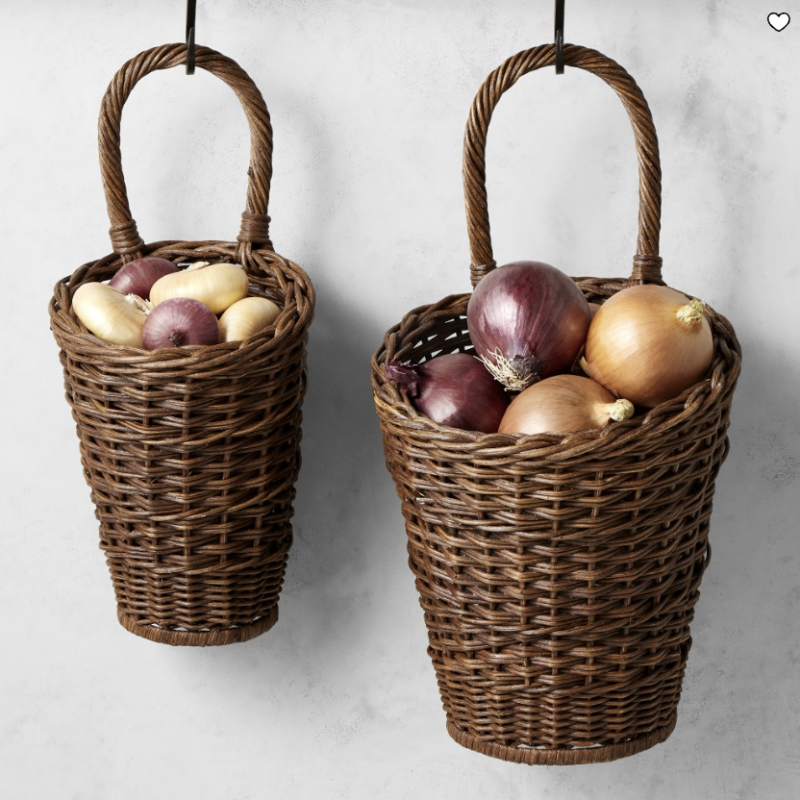
Sensing a trend here? Wicker baskets are practical for farmers market runs; they also lend a rustic touch to the space. They’re an easy addition to the space, breaking up all the smooth, hard surfaces typically found in a kitchen. You’ll also find rumpled linen dish cloths, exposed wood beams and, in classic cases, terracotta or stone floors, adding to that overall sense of cozy comfort.

4. Hanging Pot Racks

Pretty and purposeful is the name of the game here. You’ll often see hanging pot racks featuring a workhorse array of copper pots and pans. Not only does the cookware look like jewelry for the kitchen, the rack also makes great use of vertical space. (Similarly, you may find a magnetic knife rack on the wall instead of the traditional block to preserve counter space.)

5. A Statement Stove

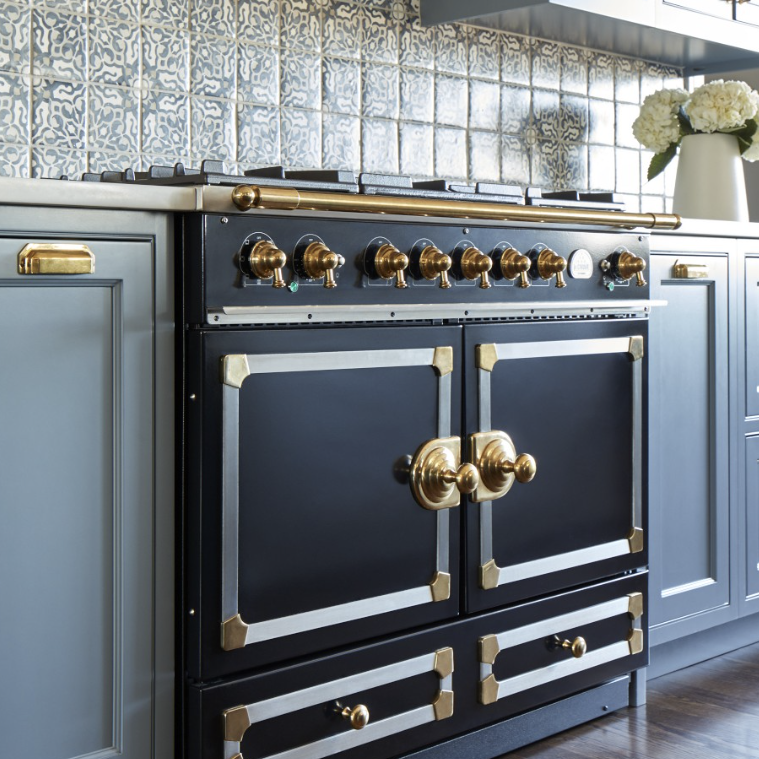
In a world of ultra-modern ranges, French kitchens stand out for their vintage, ornate styles. While La Cornue is the blueprint, you don’t have to drop nearly $15,000 on a stove (though there may be a certain thrill in hunting one down secondhand). Look for a statement-maker: eye-catching colors (ideally in a dusty blue or other soothing shade) and bold, gleaming hardware.

6. Farmhouse Sink

Joanna Gaines may be closely associated with farmhouse sinks, but they’ve been a French country kitchen staple for ages. Often porcelain or creamy white in color with an apron front that extends from the rest of the cabinetry, making it more of a focal point. It was originally designed for its function—its large, making dish-washing a bit easier—but there’s a certain charm in its rounded edges and simple yet eye-catching design.


candace davison bio

VP of editorial content

  • Oversees home, food and commerce articles
  • Author of two cookbooks and has contributed recipes to three others
  • Named one of 2023's Outstanding Young Alumni at the University of South Florida, where she studied mass communications and business