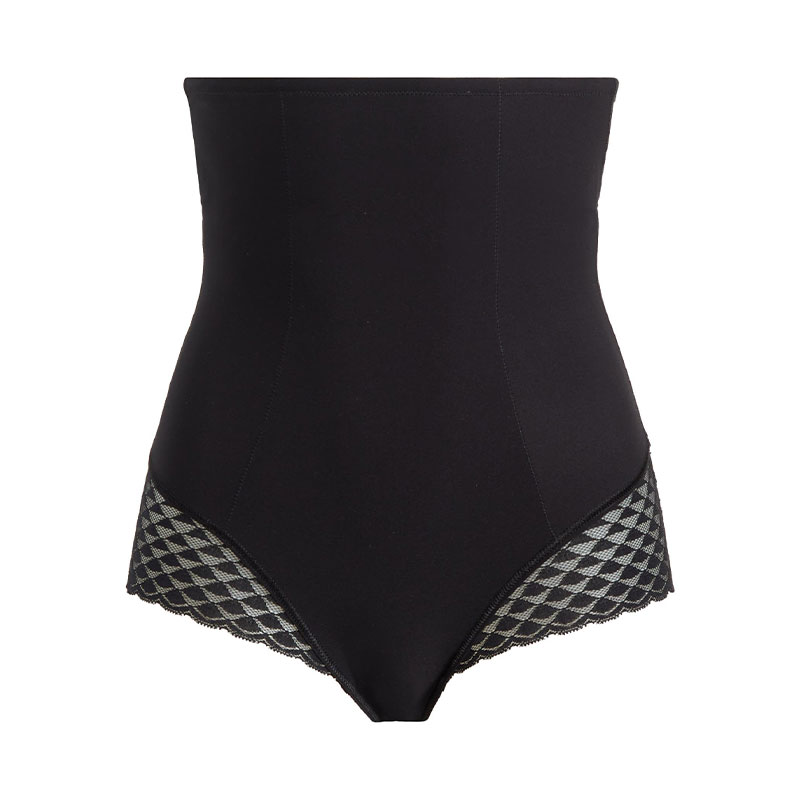
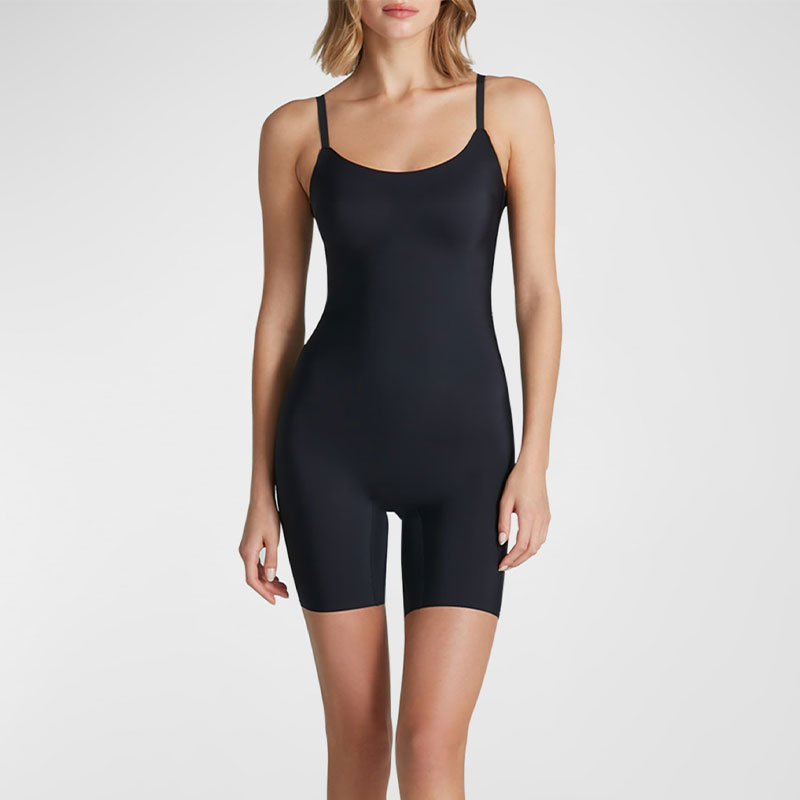
Once upon a time, shapewear was the thing you didn’t talk about. Hidden under cocktail dresses and pencil skirts, it was the secret weapon of red carpets and office wardrobes alike. You wouldn’t dare be caught wearing a cinching contraption, or discuss it in the woman's bathroom for fear of being viewed as needing it or–worse–suprmely vain. But somewhere between Spanx’s early 2000s domination and today’s Skims-fueled body positivity era, compressionwear has undergone a quiet revolution. Shapewear has evolved from a tool of restraint to a fusion of fashion and self-expression.
Is Shapewear the New Power Suit?

•
Published Oct 24, 2025
PureWow editors select every item that appears on this page, and some items may be gifted to us. Additionally, PureWow may earn compensation through affiliate links within the story. All prices are accurate upon date of publish. You can learn more about the affiliate process here.
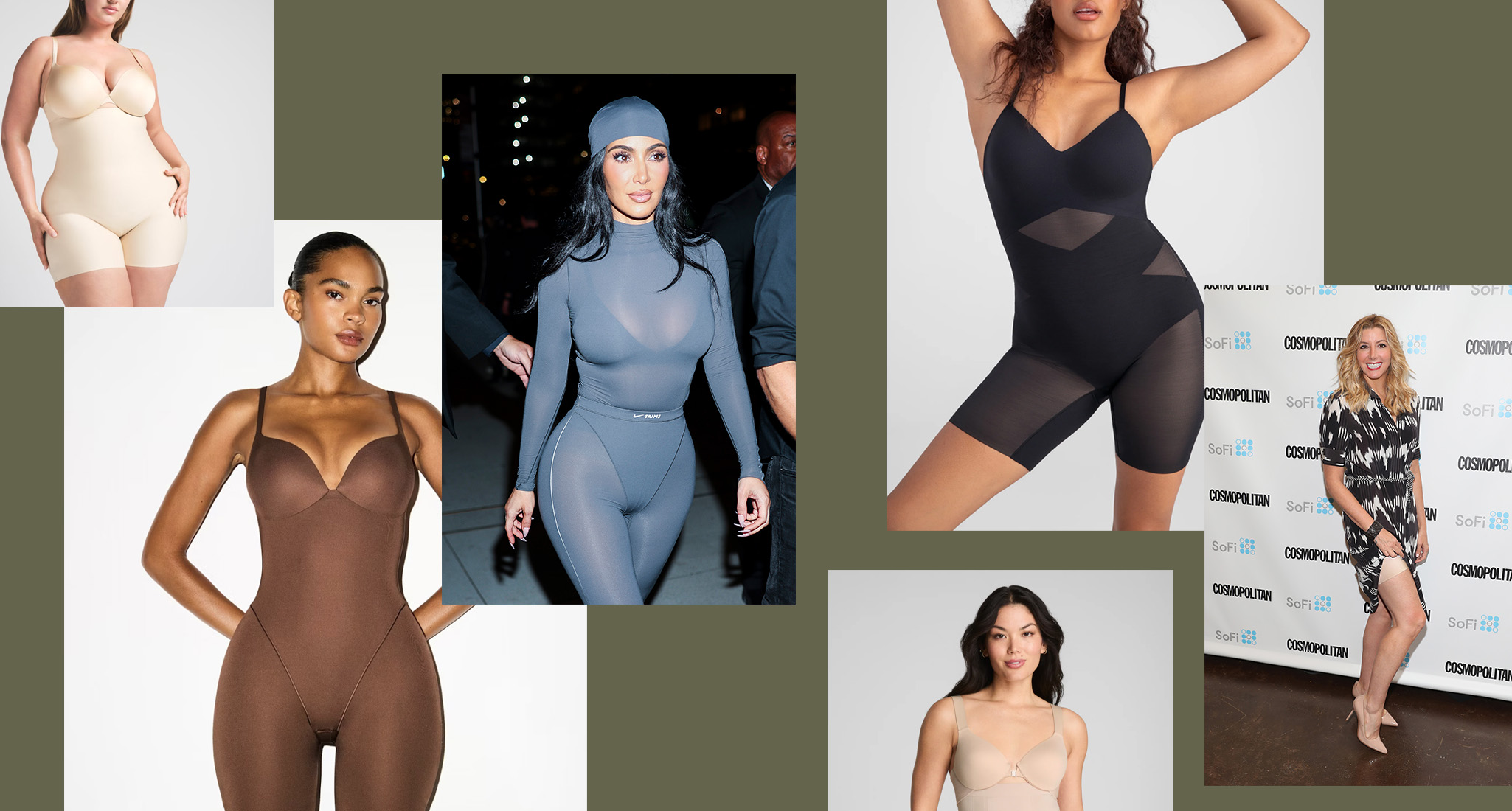
Paula Boudes for PureWow
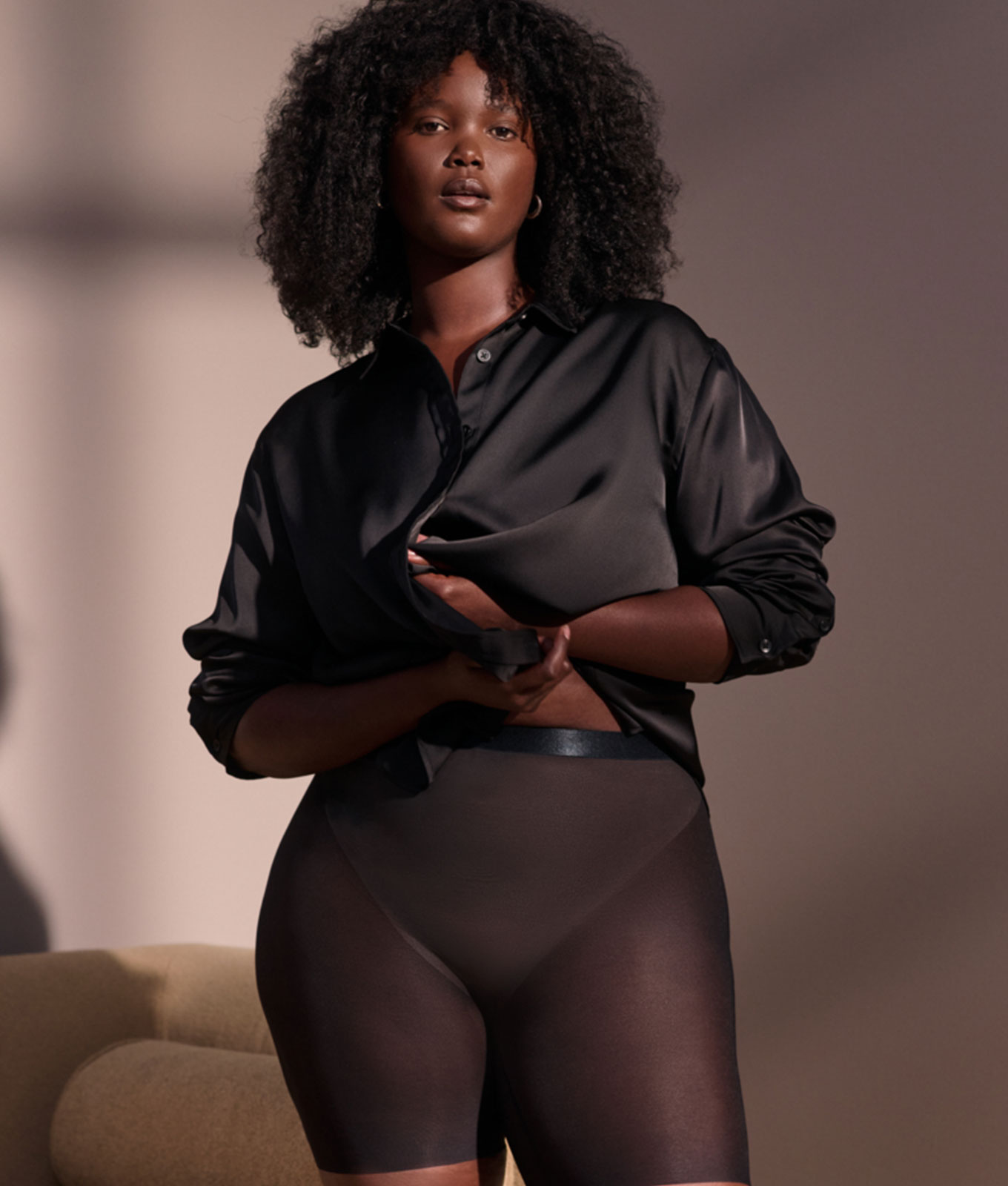
Spanx
The Spanx Era
When Sara Blakely launched Spanx in 2000, the idea of comfortable shapewear was unprecedented. Radical, even. At the time, shapewear was wrapped in secrecy. It was the thing you bought quietly, usually in beige and slipped on only when you needed to look your best. I’m thinking of the tummy-sucking tights of my youth or the high-waisted latex girdles from my grandmother’s era. Sure, it was uncomfortable, but it was common. And the message was stitched right into the seams: control-top, control brief, control slip. Control. Control. Control.
But Spanx changed the game, introducing shapewear in different skintone shades and targeted specific areas like the thighs, stomach and hips without causing discomfort. As Blakely told Inc., the idea for Spanx came after she cut the feet off a pair of control-top pantyhose to wear under white pants—a DIY fix that smoothed without the bulk or seams. The reaction was almost instant: women everywhere understood the appeal. Shapewear didn’t have to suffocate; it could simply flatter.
As Spanx Vice President of Innovation and Intimate Apparel Design Wendy Hanson puts it, “Our mission has always been about empowering women to feel confident and comfortable when they get dressed every day. Comfort has always been our North Star.”
Twenty-five years later, the industry has caught up, and is wearing shapewear beyond wedding days. “Shapewear used to be about hiding something,” says Lyndsey Giannacio, Senior Merchant at Bare Necessities. “Now it’s about feeling confident and supported.
Hanson, agreeing, notes that the evolution of the category has been driven by technology that serves women, not the other way around. Spanx’s innovation, the SPANXeffect, takes that philosophy further with five levels of shaping across its core styles, from seamless underwear and sculpting shorts to smoothing leggings and bodysuits. Standouts include SPANXsmooth, which offers a barely-there finish for everyday wear, and SPANXsupersculpt, designed for maximum contouring, compression, and curve creation without sacrificing comfort.
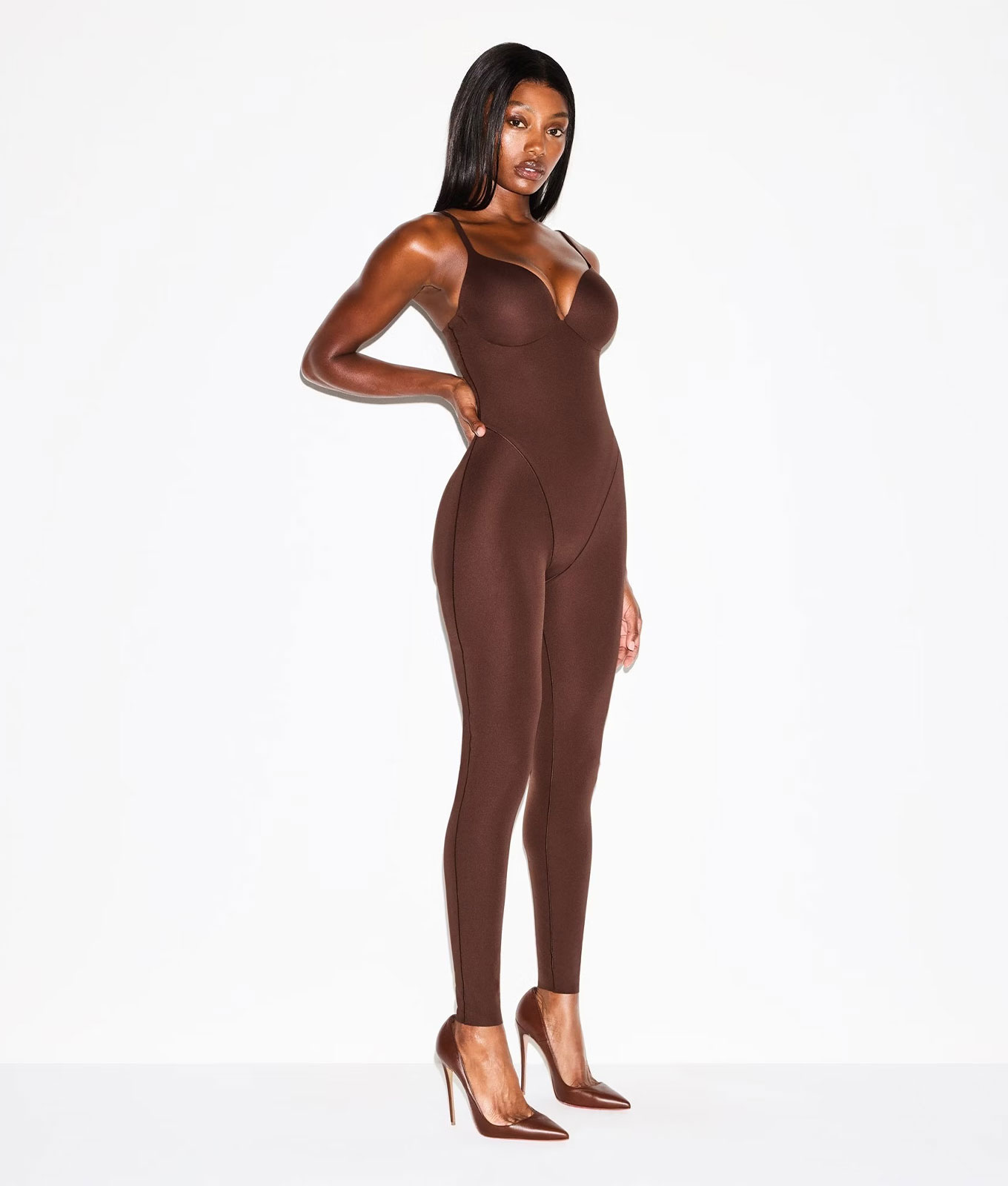
Skims
Skims, Yitty (a shapewear brand co-owned by singer and songwriter, Lizzo) and Alo have also reframed compressionwear as visible, sexy and often the main event. Bodysuits are worn as tops. Smoothing leggings transition from yoga to brunch. And the message has shifted from “nobody will know” to “everybody can see.” And that’s the point.
At Bare Necessities, Giannacio says, “For us, shapewear that doubles as clothing is trending—think smoothing tanks worn solo or sculpting leggings styled from gym to street.” In other words, compressionwear has joined the athleisure conversation. She credits TC Fine Intimates and Miraclesuit for raising the bar with breathable fabrics and seamless fits.
“This intersection between fashion and function is deliberate,” says Hanson. “We’ve seen an increase in demand for activewear that doubles as shapewear. Customers want fewer, smarter layers. Our Booty Boost leggings, for example, give you a flat tummy and a great butt.”
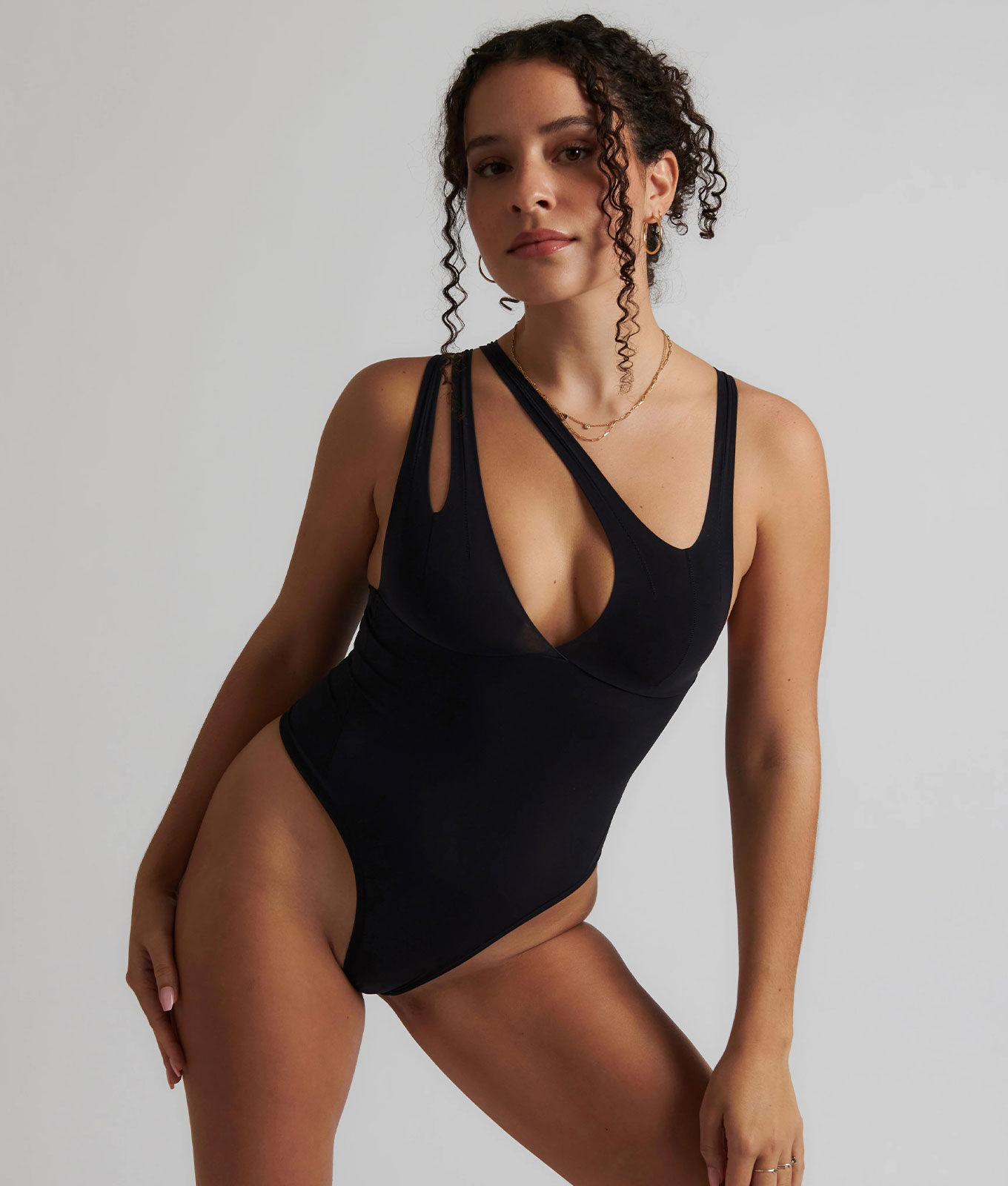
Nuudii
The New Language of Compression
Today, even the vocabulary of shapewear has evolved, with brands touting words like, “support,” “smoothing” or “lift.” This rebrand mirrors a cultural shift toward body neutrality and self-acceptance, with women no longer wanting to erase their bodies, but rather enhance them. “It’s less about changing your shape and more about embracing it,” says Giannacio.
But even with the semantic shift, not every brand sees compression as the future. Some, like Annette Azan, founder and CEO of Nuudii System, are actively rebelling against the concept. “We didn’t set out to make a bra,” Azan says. “Our products, called boobwear, were created to fill the space between going braless and wearing a bra.”
Nuudii System, offering bodywear made from Italian yarn, is intentionally non-restrictive. “Our products don’t constrict or reshape, they hug and hold,” says Azan. “We intentionally avoid using the word support, a term tied to traditional bras, because Nuudii’s stretchy straps and cradle gently hold the boobs without compression or heavy lift.”
The brand’s mission? Comfort as liberation. “Nuudii is an outlier,” says Azan. “We’re calling BS on the intimates industry for preying on women’s vulnerabilities, selling products designed to reshape rather than celebrate.”
The latest chapter in compressionwear’s evolution is also rooted in science. From anti-cellulite leggings to lymphatic drainage-inspired underwear, the new wave of de-bloat shapewear claims to also support circulation. The appeal is equal parts physical and psychological. Light compression and smart materials like supima cotton or engineered stretch yarns promise comfort that moves with the body, not against it.
“We’re seeing women think more holistically about how they feel, not just how they look,” says Hanson.
Still, even as shapewear evolves to celebrate comfort and inclusivity, it’s worth asking: has the goalpost really moved, or just shifted? The language may have softened, but much of the messaging still implies there’s something to fix or sculpt. Yes, it’s progress that shapewear is no longer a secret, but the real revolution might be imagining a world where a body simply exists without needing to be changed.
Looking to the Future
The next frontier of shapewear will likely blur categories even more. Will we covet compression that doubles as skincare? Fabrics that stimulate circulation? Or maybe even designs that move from morning workout to night out? And in the Ozempic era, when GLP-1 medications (like Ozempic and Wegovy) and other lifestyle shifts can lead to rapid size changes, shapewear will need to be even more adaptive. And more to the point, will we still want slim tummies if our stomachs are smaller? Maybe not. But we guarantee women will still like clean lines under clothes, a subtle lift where it’s welcome and fabric that moves and breathes.
Whatever the future holds, we’re sure it will continue to reveal a woman's changing relationship with her own body. And, of course, her power to define what feels good.
Shop Shapewear