
The Death of the “Unreachable” Movie Star

Would Audrey Hepburn have been on TikTok?

death-of-the-unreachable-movie-star
Paula Boudes for PureWow/Shutterstock

I love Reese Witherspoon, but I am going to pick on her for a minute.

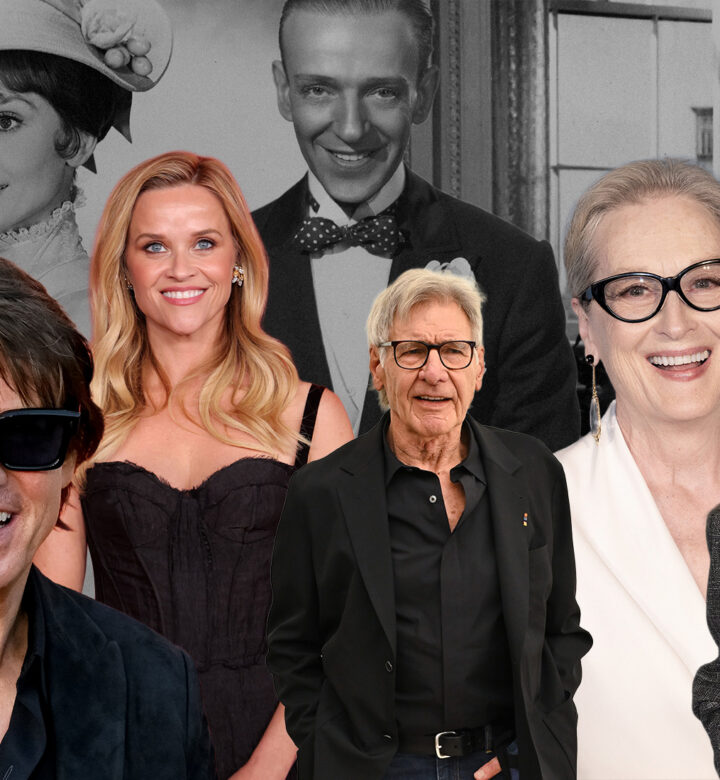
If this were a different time, Witherspoon—a striking beauty, an immense talent, a film industry powerhouse—would have been an “unreachable” movie star, a Hollywood golden icon. But this is 2026 and, sadly, no such icons exist any longer. Instead, like nearly all of her big-screen colleagues, she over-posts on social media, she has her hand in ten billion projects including a book club, she does television (something that would have been unthinkable to the previous generation of movie stars). The Oscar winner, in an effort to seem more approachable, relatable and accessible, posts meme videos that take the word cringe to entirely new heights. But it’s not her fault. This is what it means to be a movie star now. The “unreachable” movie star is dead.

Certainly movie stars have made public appearances and given interviews for decades in efforts to promote themselves and their films. But things are different now. Things are much more…casual and not in a good way.

Former “unreachable” stars Nicole Kidman and Sandra Bullock posted dozens of photos, videos and “silly moments” in the lead-up to the release of Practical Magic 2, presumably in an effort to be more “reachable.” Julia Roberts—another previous untouchable—made her debut on a small Broadway stage in 2006 to not great reviews (and will be returning again in 2027). As much as I love Shrinking, it’s hard to believe Hollywood legend Harrison Ford (known as Indiana Jones and Han Solo) is doing a TV show—a comedy at that. Y’all, Sharon Stone did an episode of Murderville on Netflix. Pop. Another bubble was burst.

It’s hard to say when it first happened. My earliest memory of a Hollywood icon losing his mystique might be Tom Cruise jumping up and down on Oprah’s couch in 2005. Suddenly, the star of Top Gun, Rain Man, Mission: Impossible and Jerry Maguire was reduced to a “man hysterically in love” that we either related to or, worse, laughed at. Pop.

Now, of course there is something to be said for increased accessibility (particularly from their POV). The more we know a star, the more we love that star. And perhaps the more we love that star, the more we consume their content. But that’s just it. It makes everything feel like content—cheap, disposable and unimpressive—rather than a sweeping cinematic masterpiece.

With few exceptions (like Oppenheimer and Everything Everywhere All at Once), films don’t carry that same epic, even magical cache anymore. Gone with the Wind, The Godfather trilogy, Apocalypse Now, Schindler’s List and Titanic were created over a long period of minimal accessibility to our stars. It’s hard to feel the same magic about a film when it features an actor who just posted a video attempting the “Bugging” dance challenge. (Can you imagine Marlon Brando doing such a thing?!)

Perhaps we should have seen this coming. As “regular” people share every inch of their lives on social media, it was likely only a matter of time before our “idols” did the same. Still, if Meryl Streep joins TikTok, I’m out.


Philip Mutz Headshot

Philip Mutz

VP, News and Entertainment

  • Oversees news and entertainment content
  • Is an award-winning playwright and has hosted two entertainment podcasts
  • Has 10+ years experience in entertainment coverage and viral media