I’m In My 40s and I Stand By My Botox

“Black don’t crack,” but I still book my appointment

why-i-love-botox
marevgenna/Shutterstock

There are very few beauty products that become verbs. You don’t say you’re going to “get neuromodulator.” You say you’re going to get Botox (botulinum toxin)—even if it’s not technically Botox. Like Kleenex or Google, the brand has become the thing itself. And in 2026, Botox is everywhere. It’s no longer reserved for celebrities or dermatology offices with month-long waitlists. You can get Botox at medspas, dental offices, and yes, even Planned Parenthood. It’s become as normalized as getting your eyebrow shaping, just with slightly higher stakes. In fact, 42% of women we surveyed say they’ve had Botox, which is proof that this isn't niche anymore.

Still, for a long time, it didn’t feel like it was for me.

To give you context, I’m a Black woman, and historically, we’ve been slower to adopt Botox compared to our white counterparts. A lot of that is cultural. We’ve been raised on “Black don’t crack,” the idea that our melanin is both protection and proof that we age slower. And in many ways, we do. Fine lines tend to show up later. Skin holds onto elasticity longer. And because of this, there’s less urgency and pressure to fix something.

I knew all of this, and I happily lived in that space for a while. In fact, I was 37 the first time I got Botox. And that’s with years of experience as a beauty editor, access to top dermatologists and a front-row seat to every treatment under the sun. If anything, that access made me more cautious. I wasn’t resisting it on principle. I just didn’t feel like I needed it yet. My skin was doing what it needed to do. I wasn’t thinking about maintenance, filler, prevention or any of the language we now casually throw around.

I simply wasn’t thinking about it at all.

And then, slowly I was. It began with a line that stayed a little longer than it used to. Or a subtle heaviness that makeup couldn’t hide. That’s when Botox stopped feeling like something reserved for later and started feeling like a smart upgrade.

These days, I get Botox as often as I can. And I don’t say that sheepishly. I say it the same way I talk about a great facial or a core workout that actually works. At 40-something, I know what works for my face and I’m leaning into it.

And yes, I’ve asked myself the question: do I need it? Of course not. My crow’s feet could stay. My forehead lines could stay. I would still (kinda) look like myself. But if I feel more refreshed, why wouldn’t I opt in?

quotation mark

It’s not a personality change. It’s a tweak. A way to press pause, not erase.

When I first started, a few ill-informed friends warned me I’d look frozen or expressionless. As if I’d suddenly lose the ability to emote. To be clear, that was never the goal. I still want movement. I still want expression. I want to laugh and have it show up on my face. I just don’t need every moment to leave a permanent mark.

That’s the nuance people miss. For years, the conversation around Botox was rooted in fear—fear of aging, fear of wrinkles, fear of doing “too much” and not being able to undo it. But Botox isn’t permanent. It’s not all-or-nothing. It’s not a personality change. It’s a tweak. A way to press pause, not erase.

That said, do it right. Do your research. Go to a reputable injector (read: no at-home botox) Book a consultation before committing to anything. Ask every question you have until you feel completely comfortable—how much, where, why, what happens if you stop. A good provider will walk you through it all. 

I wish I started earlier, not because I needed it, but because I would’ve understood it sooner. I would’ve realized how subtle it can be, how customizable, how much it can be about enhancing my life.

Black don’t crack can still be true. And also, sometimes, I just want a little help. And that’s ok, too.


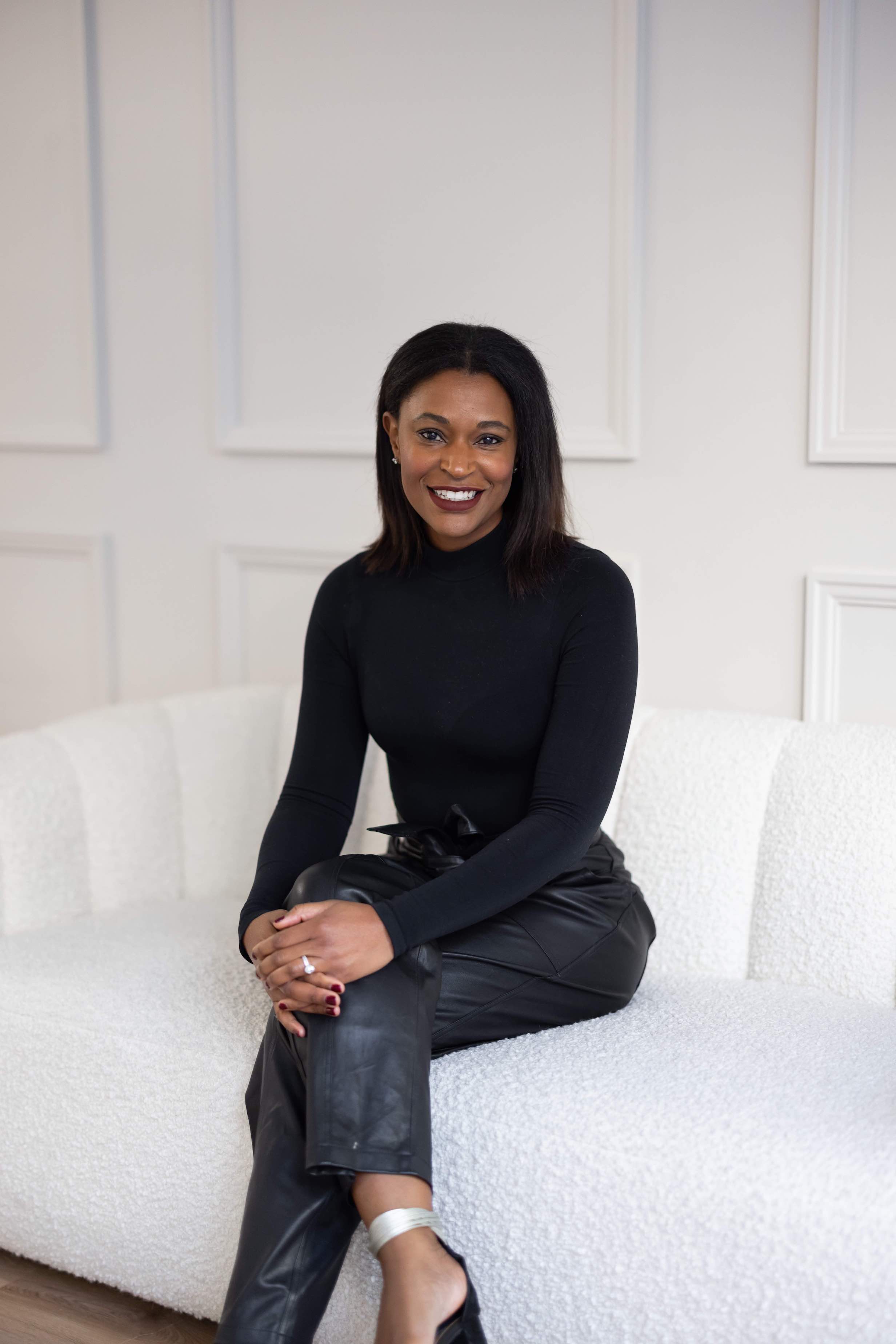
Deena Headshot

Fashion and Beauty Director-at-Large

  • Oversees fashion and beauty content. 
  • Former Beauty Director at Marie Claire; editorial lead at Allure, Essence, and L’Oréal-owned beauty platforms
  • Advocate for inclusive storytelling in style, beauty, and wellness