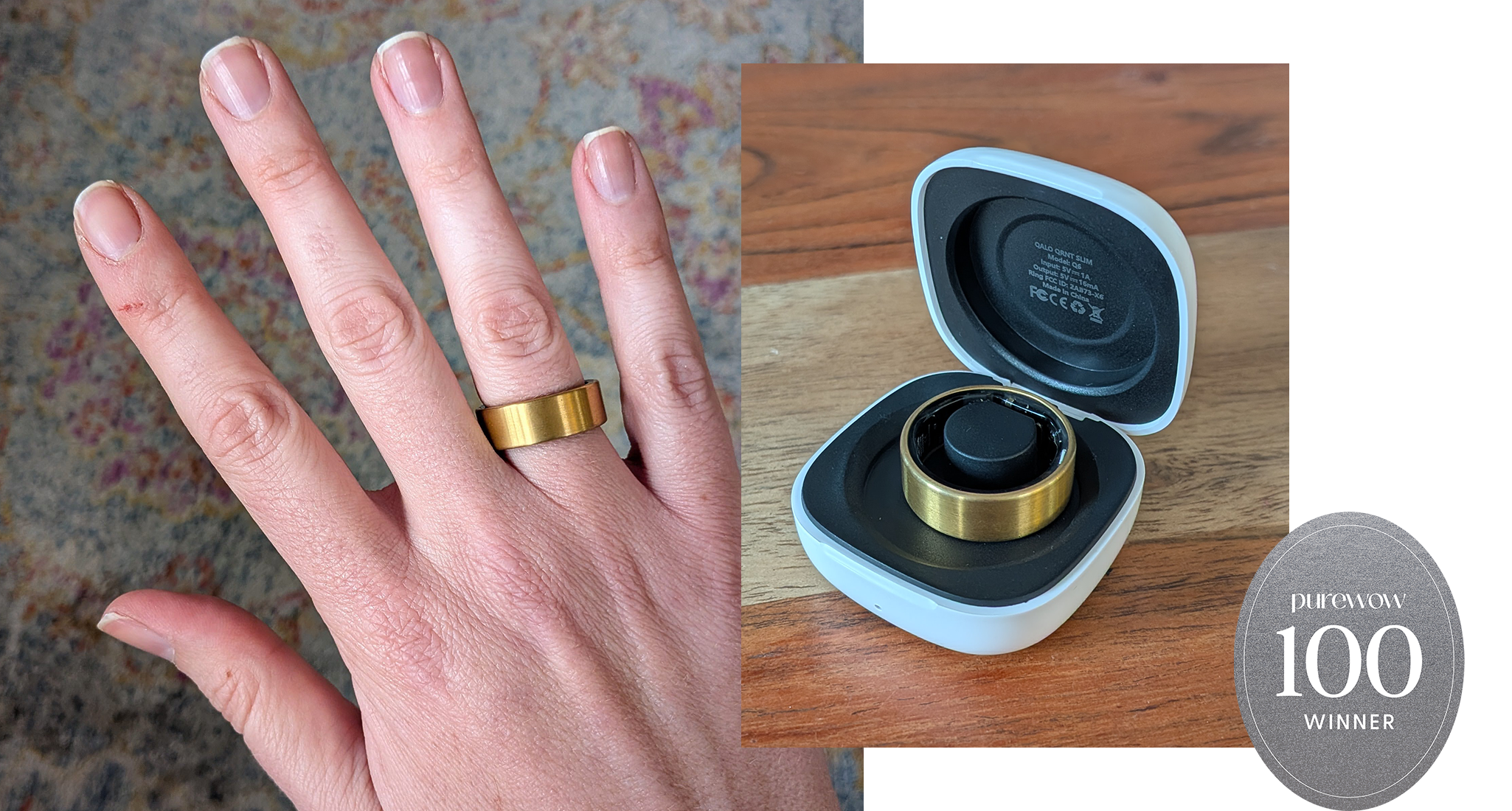
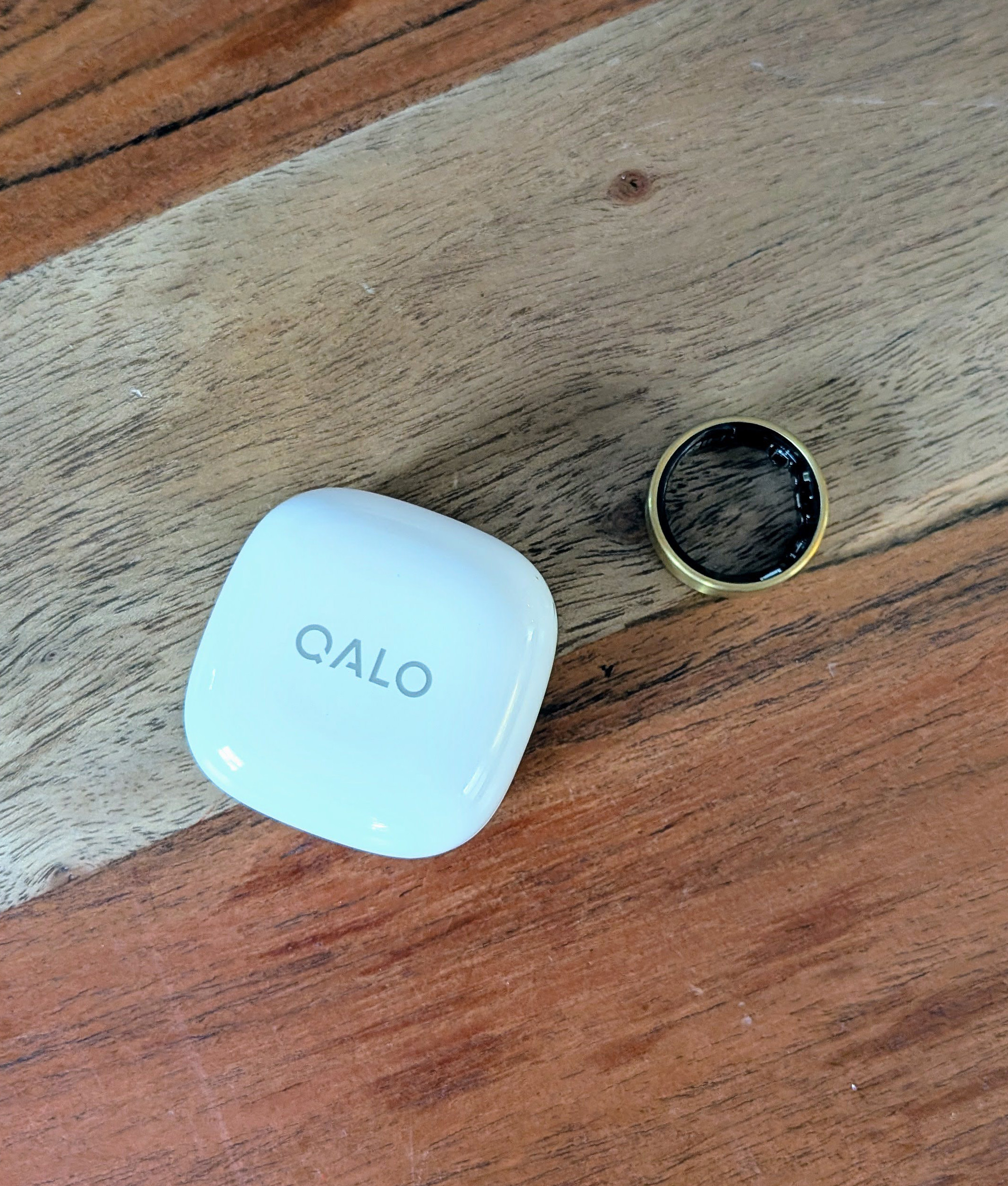
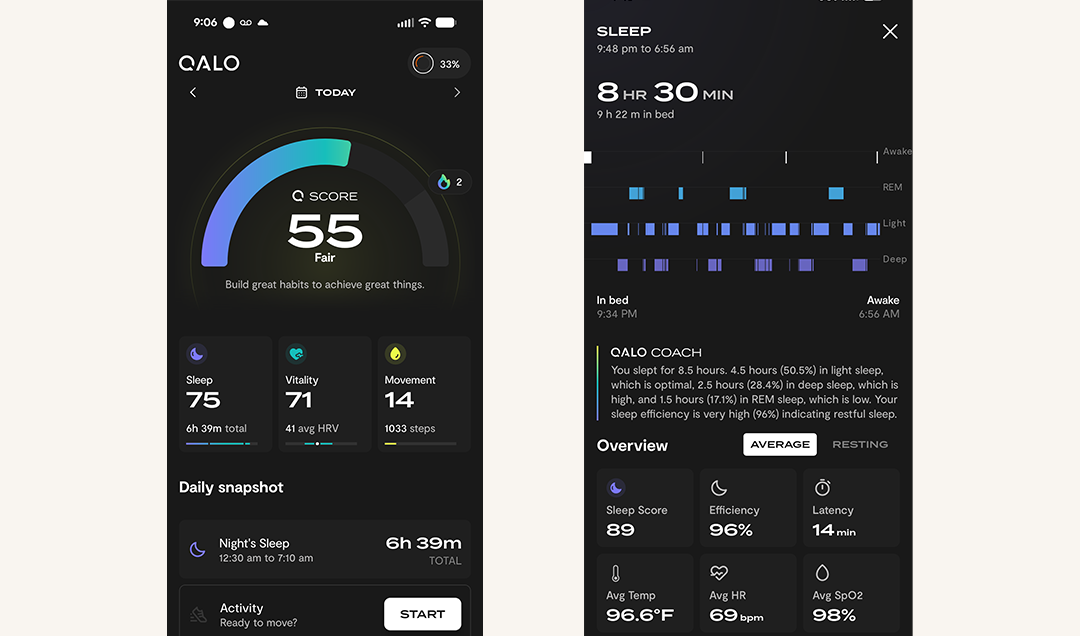
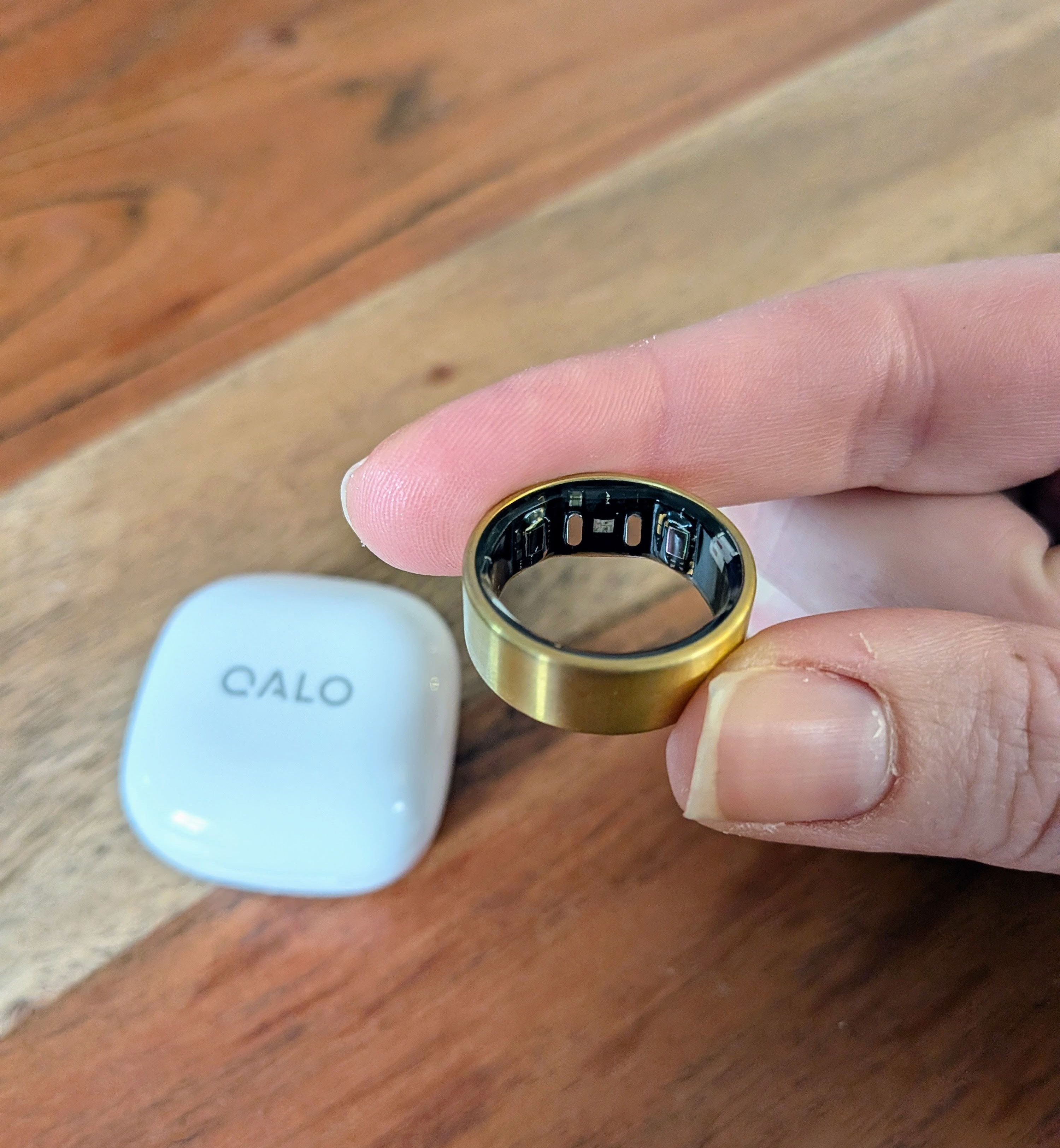
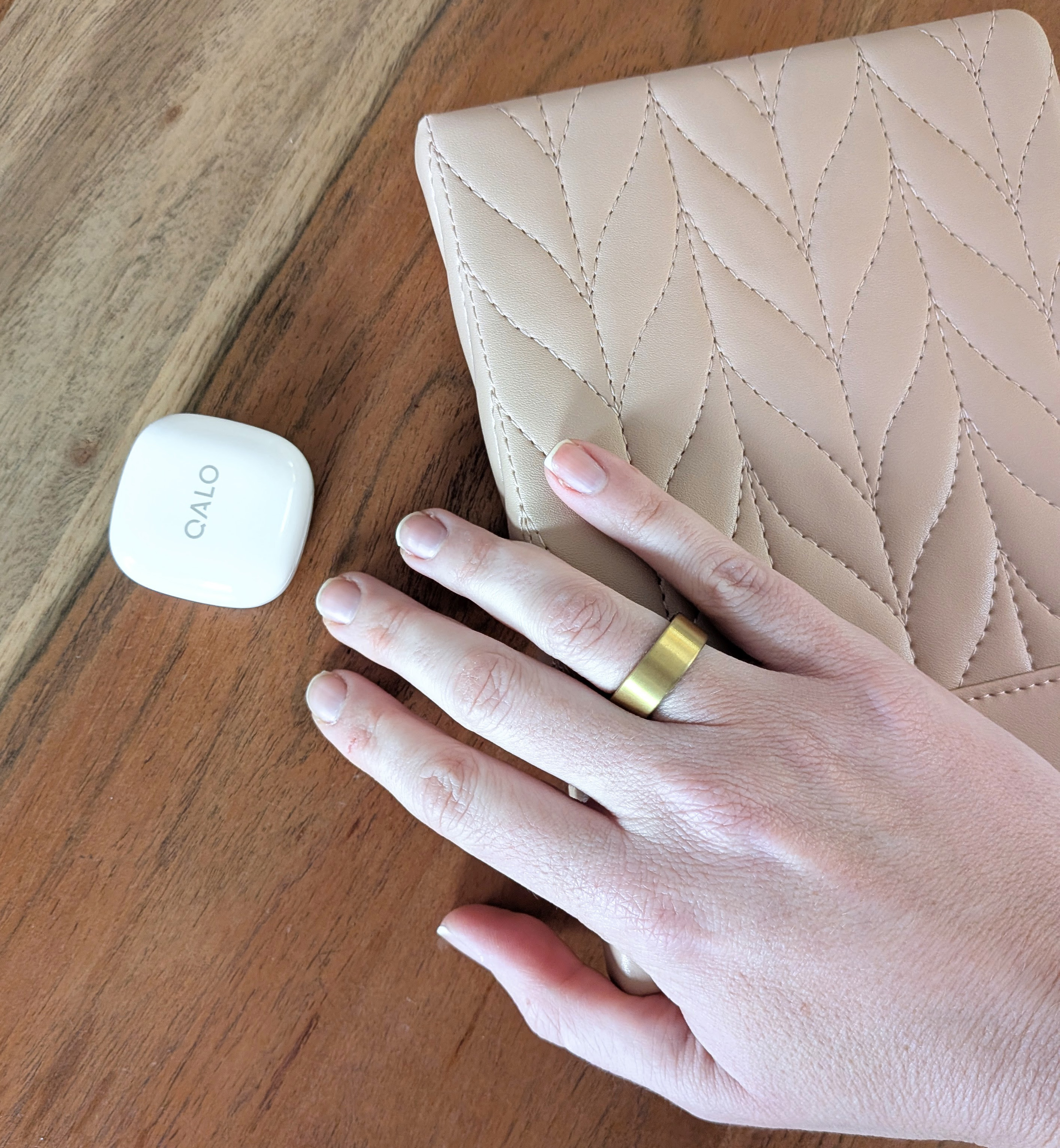
The ring’s insights are divided into three key categories—sleep, movement and vitality (aka heart rate data)—which combine to provide you with a Q score, or quality of life rating. It’s designed to provide a holistic, at-a-glance look at how you’re doing, based on a zero to 100-point scale.
Pretty quickly, I found myself trying to optimize it: a 72?! Surely, I can do better than that! And on the flip side, I laughed and shared with friends the moments when I thought I was doing OK, only for my Q score to provide sobering reality check. Yeah, I was up with my toddler a lot the night before, and I was stressed about my washing machine breaking down, spewing gallons of water throughout my garage and prompting a visit from the city utilities department. But a 26?! Really?!
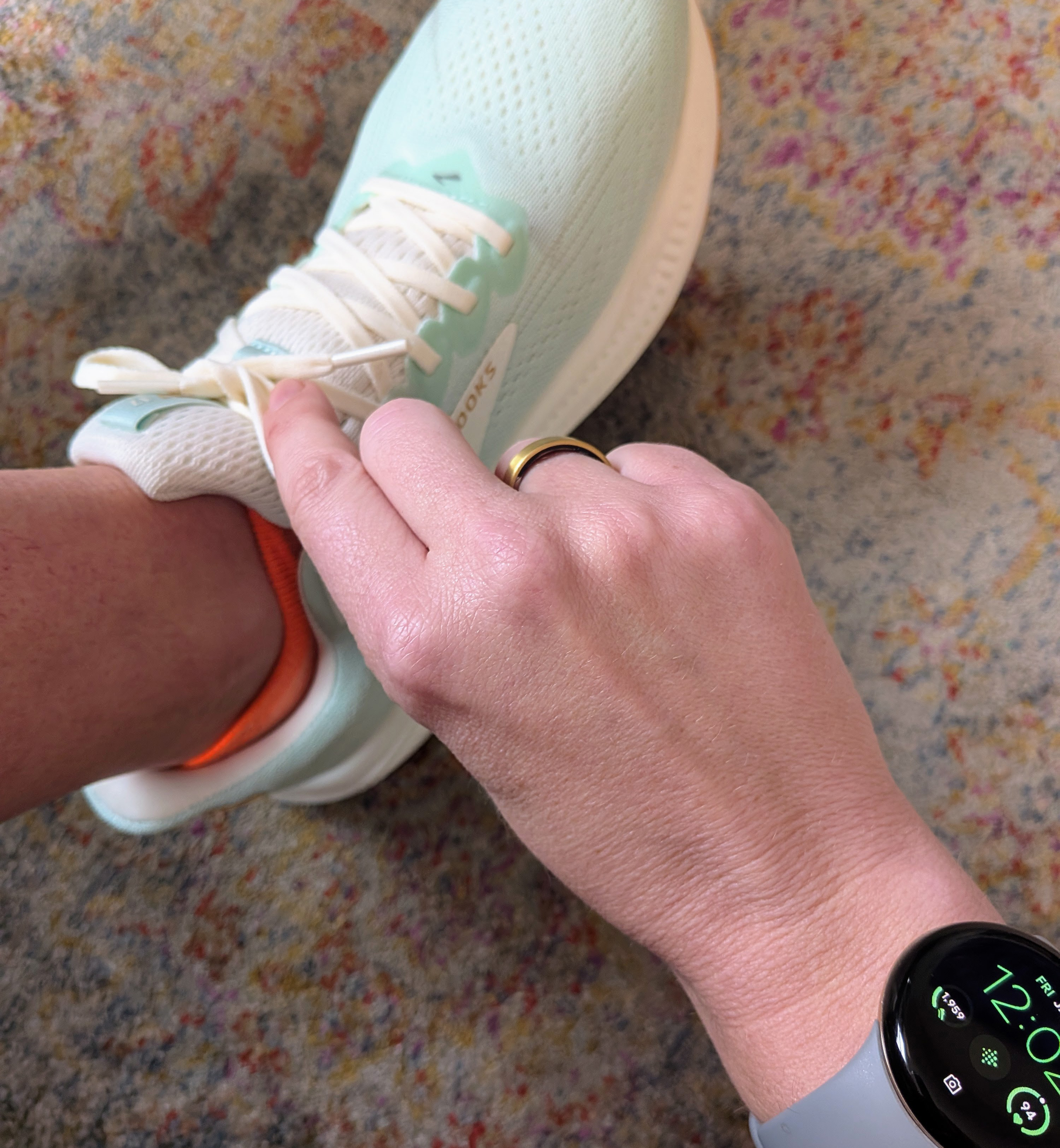
It got me to take a step back and take a moment to myself, since I tend to be the type to push down any negative emotions until I randomly implode. Turns out, a walk around the block lowered my stress levels (by my own assessment, though the app’s stress monitor concurred) and got me closer to my step goal for the day. (The heart rate monitor and step counts were consistent between the ring and my Pixel 2 smartwatch too.)
Soon, I found myself routinely checking the app and budgeting in more breaks throughout the week to exercise in general, even if that simply meant a short walk around the block. My 5,000-steps-a-day average soon creeped to 8,000. This year, my goal is surpassing 10K. (Baby steps!)
Beyond being a source of motivation, I was impressed with the ring's durability; it remains scratch- and scuff-free, and it’s gotten wet repeatedly without issue. (QALO says the ring is water resistant in fresh water, with a maximum depth of 1.5 meters for up to 30 minutes.)