I Took Gordon Ramsay's Masterclass in Making Scrambled Eggs and...WTF?!

The 90-20 technique is a game-changer

PureWow editors select every item that appears on this page, and some items may be gifted to us. Additionally, PureWow may earn compensation through affiliate links within the story. All prices are accurate upon date of publish. You can learn more about the affiliate process here.

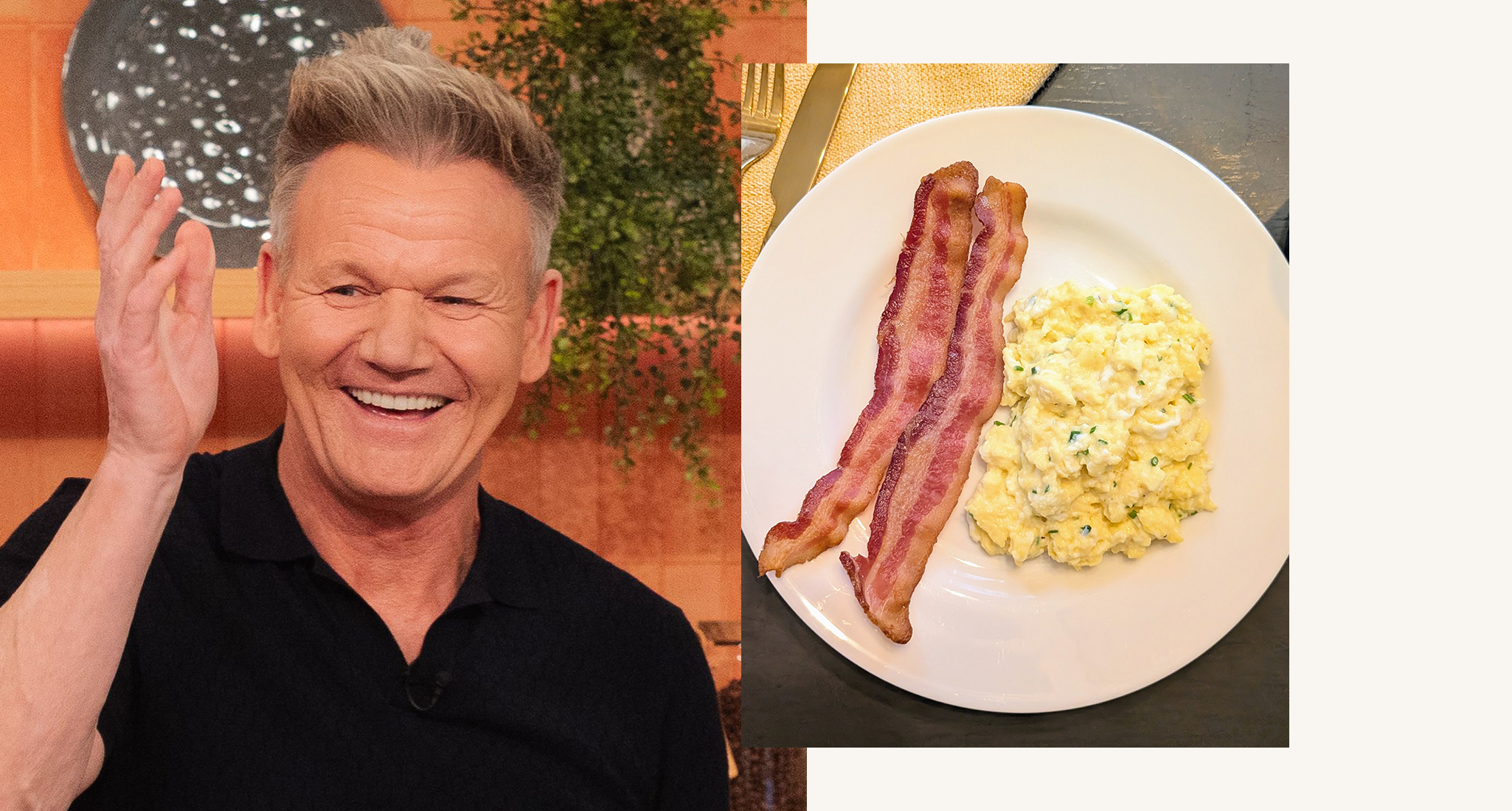
testing gordon ramsay's scrambled eggs based on masterclass series
original photo: candace davison

“Gordon James Ramsay, you want me to put what in my scrambled eggs?!” I muttered aloud as I scanned the ingredients list a second time. But there it was, as plain as day: sea urchin tongues.

As in, the gonads of a sea urchin.

This was not a joke. It was one of the eight ingredients listed in making the MasterChef’s famous scrambled eggs. Granted, this was his elevated take, a lesson within his multi-part Gordon Ramsay Teaches Cooking series for Masterclass, the virtual learning platform.

But still, sea urchin tongues?!

Thankfully, while Ramsay said the ingredient would add “luxuriousness” to a scramble, it wasn’t make-or-break. The true skill “is stopping [the eggs] from overcooking.” His technique is so renowned that when you search for the fluffiest scrambled eggs, “Gordon Ramsay scrambled eggs” shows up as a top related query; I had to give it a shot. So, I got out the eggs, butter, crème fraiche, chives and white truffle oil and got to work.

What Sets Gordon Ramsay’s Scrambled Eggs Apart from Other Methods

gordon ramsay scrambled eggs test

1. Ramsay Recommends a Small, Nonstick Pan

“I never make scrambled eggs in a stainless-steel pan; the worst thing you can do,” he shares. “Making it in a nonstick pan lifts and folds those eggs, so they get creamier and creamier.” (That felt like sweet validation, as I typically use a nonstick pan.)

cooking eggs on and off heat
original photos: candace davison

2. He Doesn’t Beat or Season the Eggs Right Away, Either

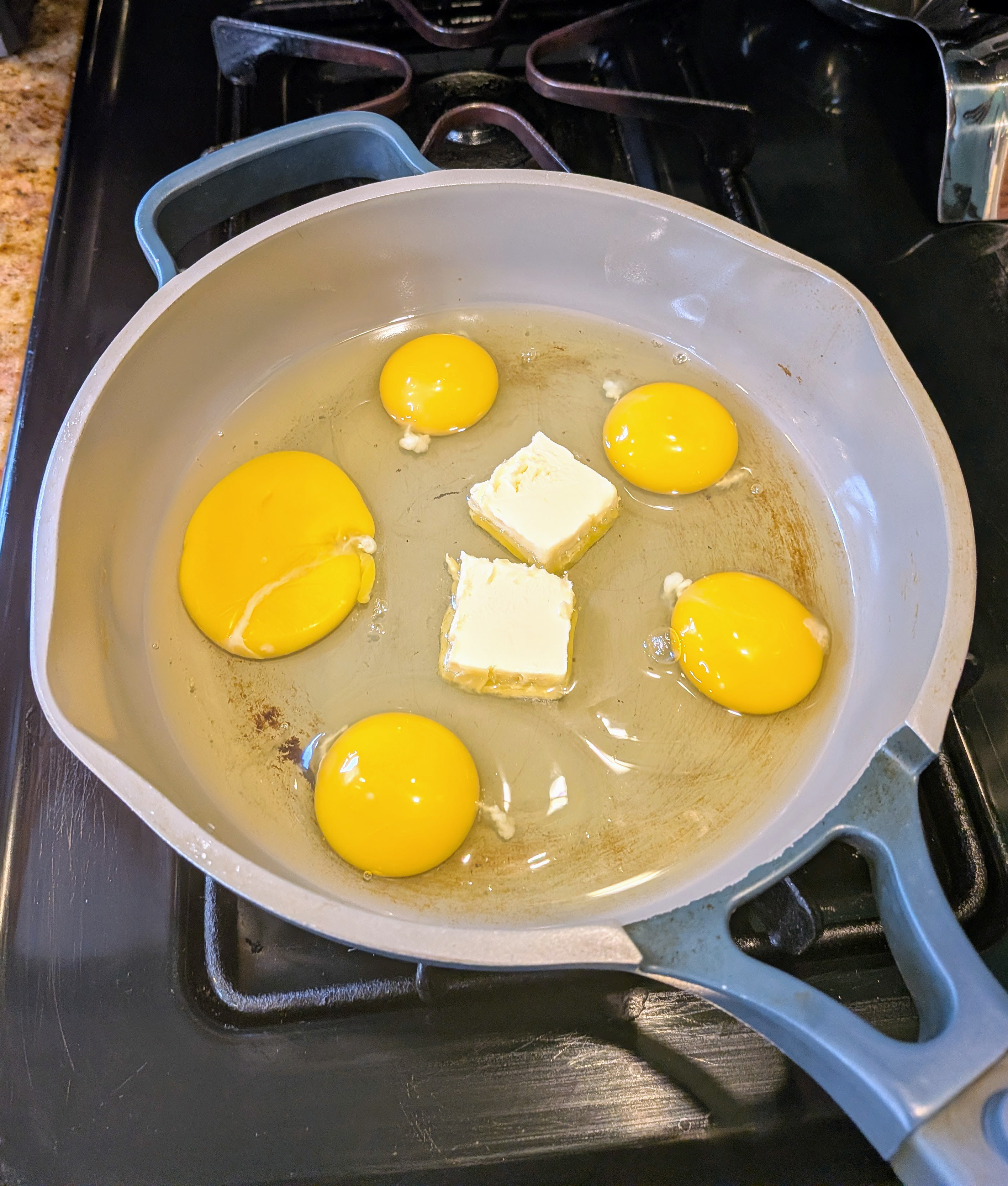
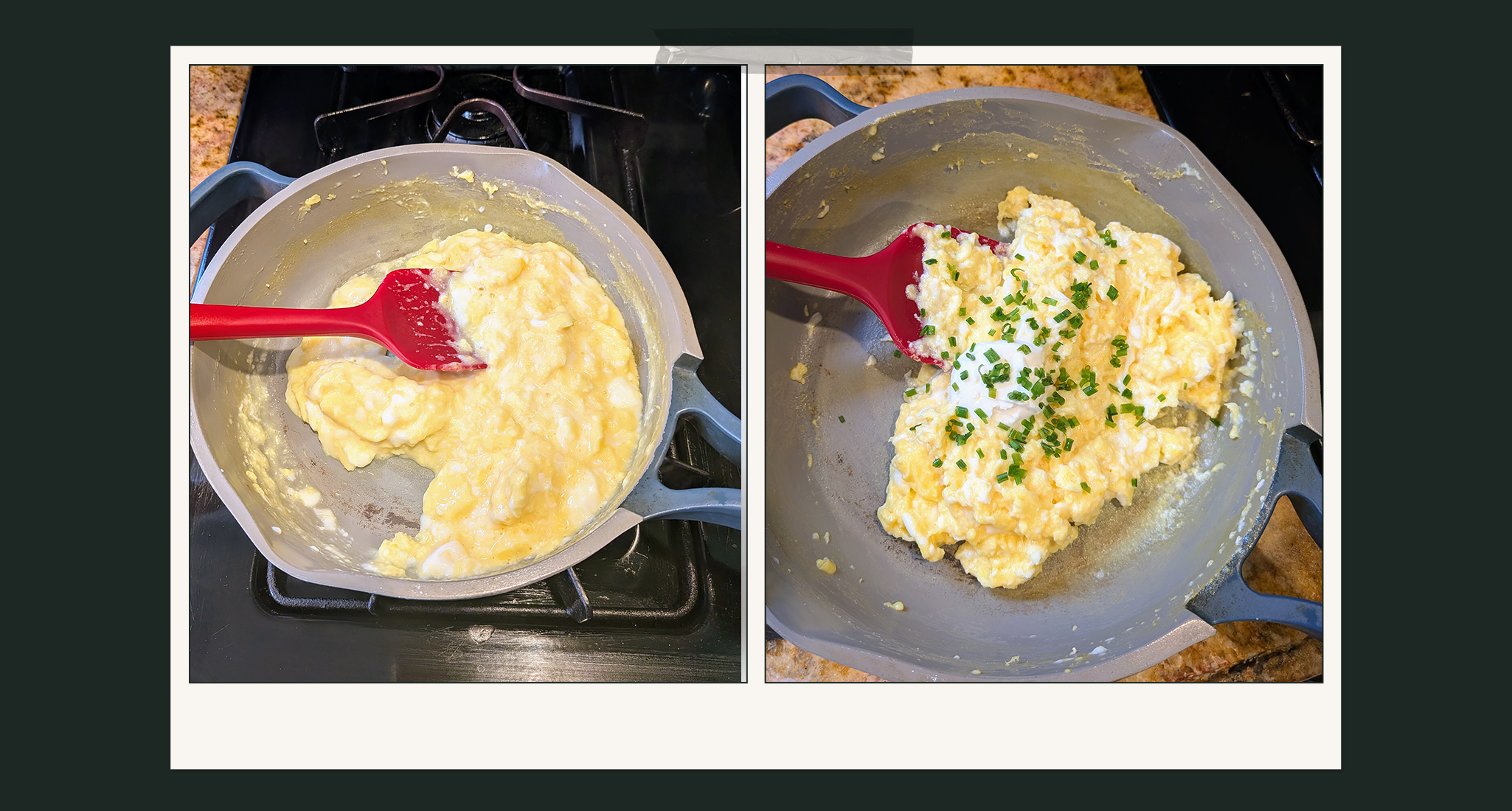
Seasoning freshly cracked eggs “turns them runny, and before you start cooking them, they go gray,” he says, instead adding pats of butter, then turning on the heat. As the pan starts to warm, you whip up the eggs with a silicone spatula and continually turn the egg mixture, scraping down the sides of the pan so everything cooks evenly. To avoid overcooking, I typically use medium-low heat, but Ramsay opts for medium; I was nervous about the higher heat, but that’s where another tip from the restauranteur came in handy: Once the pan is heated—about as long as it takes to whisk the eggs and finely chop the chives for the garnish—take the pan off the heat and whisk again. You’re deliberately slowing down the cooking process, allowing the butter to infuse the eggs and prevent runniness.

Then you put the pan back on the burner.

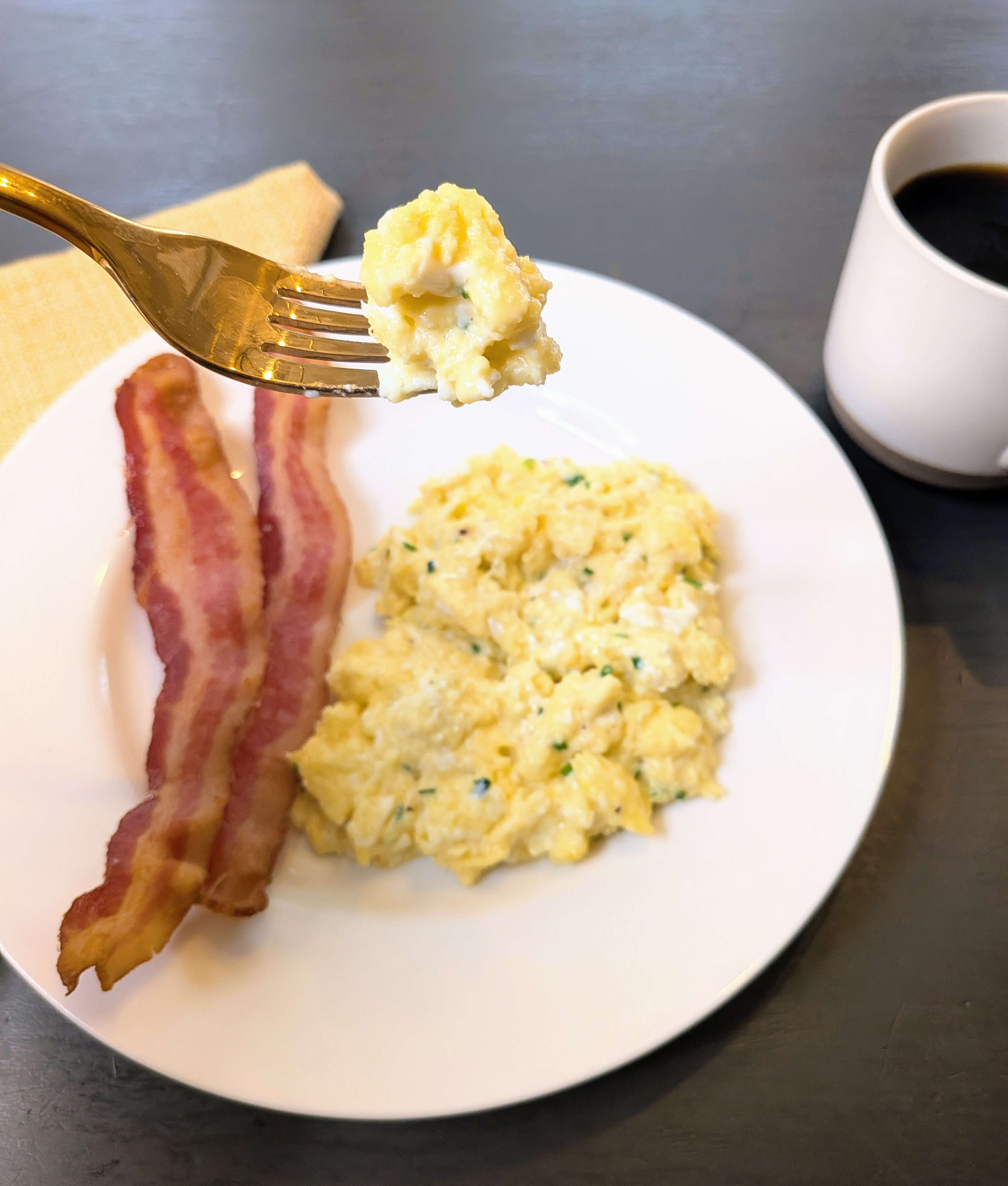
eggs on plate with bacon
original photo: candace davison

He’ll even time it out for you: “On for 90 seconds, off for 20 seconds,” he instructs. Repeat.

At about the 3 ½-minute mark, when the eggs have thickened, you can remove them from the heat. That’s when Ramsay adds the sea urchin, a teaspoon of crème fraiche, a hearty pinch of chives, salt and pepper.

“It’s rich, it’s creamy, it’s delicate and it’s so humble,” he says.

To really elevate the dish, he places a sea urchin tongue under and atop the eggs, then adds shaved white truffles on top, though the recipe says you can substitute white truffle oil, as I did.

The Verdict: OK, Maybe I Should Spring for Sea Urchin Tongue

trying gordon ramsay's scrambled eggs
original photo: candace davison

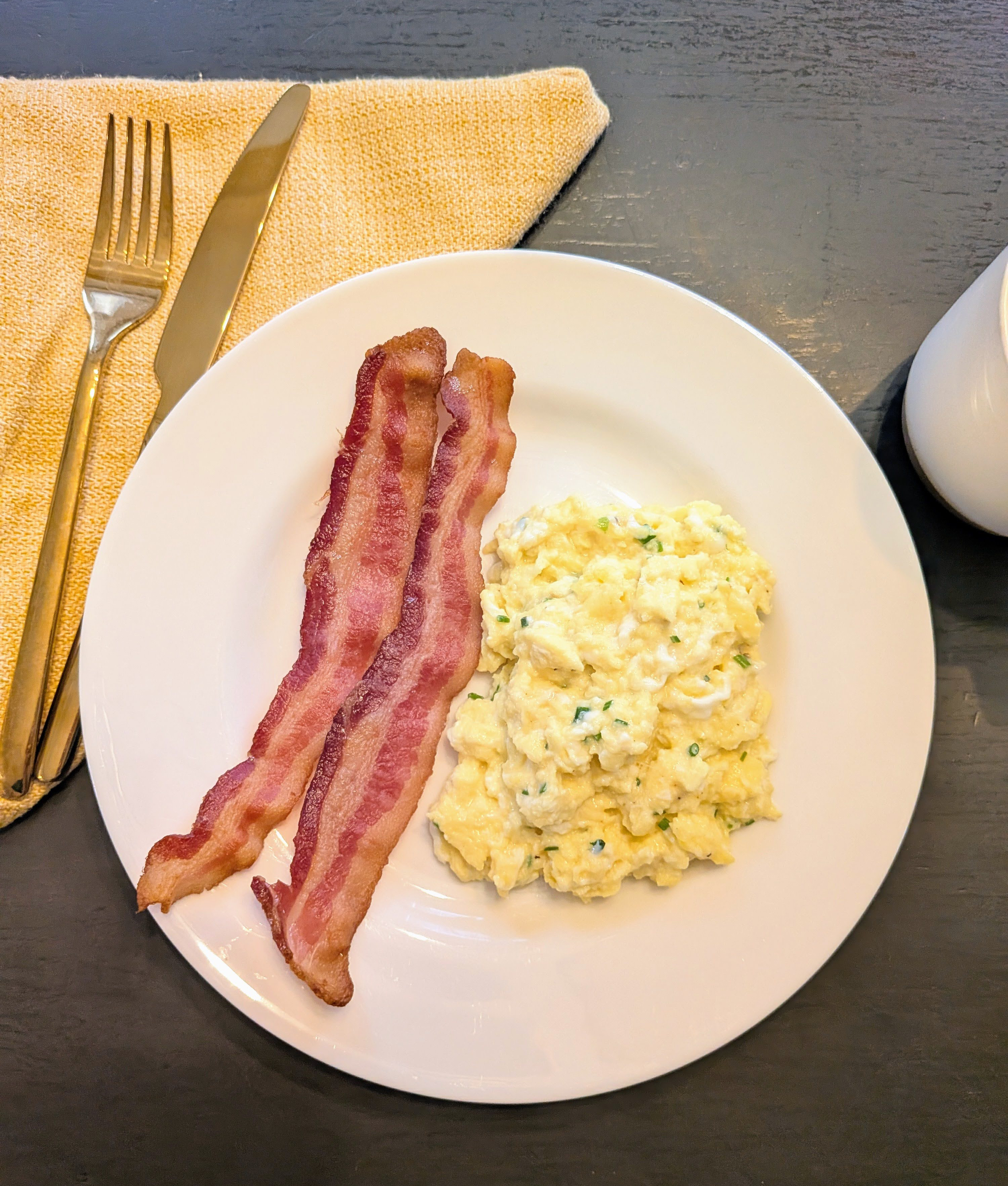
I can’t speak to the sea urchin element, but I can confirm the eggs turn out rich, creamy and delicate on their own. And dare I say even more humble, given the simpler ingredients? This makes for a very soft scramble, the kind of eggs you could spread on toast. There’s nothing bouncy or rubbery about them.

The crème fraiche really adds to the creaminess, and the chives shine through in every bite. If you’re not big on onion-y flavor, you may want to omit them, but I enjoyed how they livened up the dish, requiring minimal salt. (I also tried them without the truffle oil, and while that adds an earthiness that takes the eggs from everyday breakfast to showstopper at brunch, you can omit that too. The method stands on its own.)

Ramsay’s elevated scrambled eggs is just one of many lessons within his two-part series for Masterclass, which includes a mix of essential cooking techniques (like knife skills and how to break down a whole chicken or lobster), life advice and several recipes that feel milestone-celebration-worthy, like beef Wellington and lobster ravioli (with pasta made from scratch, of course).

To try it yourself, as well as access the full Masterclass library (which spans topics like improving your singing with Christina Aguilera to even more cooking classes from the likes of Thomas Keller, José Andres and Alice Waters), you can sign up for a Masterclass subscription. Plans start at $10/month, billed annually.


candace davison bio

VP of editorial content

  • Oversees home, food and commerce articles
  • Author of two cookbooks and has contributed recipes to three others
  • Named one of 2023's Outstanding Young Alumni at the University of South Florida, where she studied mass communications and business