
Aprons Have Gone High Fashion—But It’s Giving Me the ‘Trad Wife’ Ick

I’m not falling for this propaganda

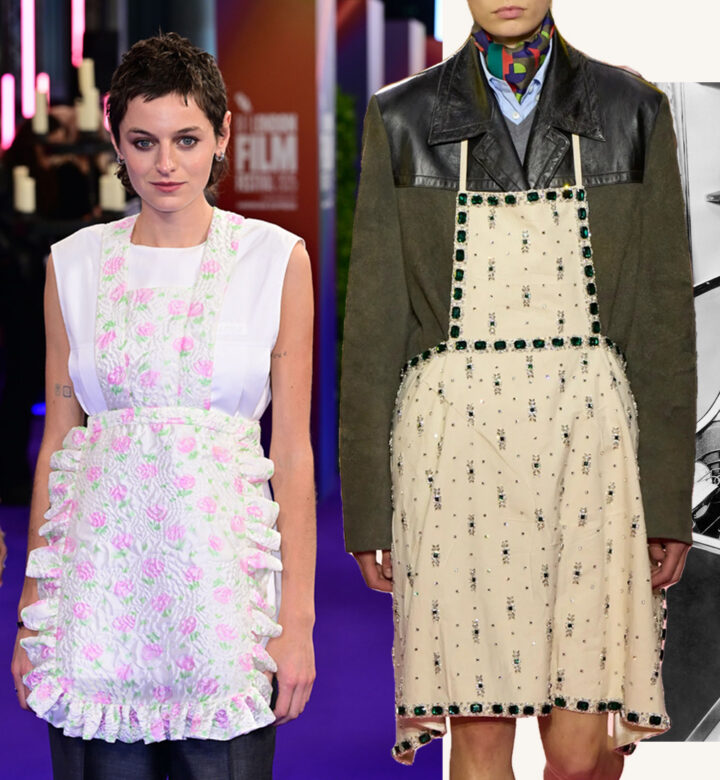
Anti-Apron Trend: Miu Miu aprons, Emma Corrin, 1950s housewife
Anthony Harvey/VTT/Shutterstock

I believe that fashion, at its highest form, is art. And like art, it’s meant to be controversial—it’s meant to make you think. But to reference Miranda Priestly’s cerulean speech in The Devil Wears Prada, even the loftiest fashion trends trickle down to real life. Fashion has influence, it shapes (and dresses) the culture. Usually, I’m all for the fresh crop of styles and ideas that step off the runway, and I’m fascinated by the ways in which they take form in the everywoman’s closet. But now that aprons (yes, kitchen aprons) have started trending as a fashion statement, I can't help but to step back and examine the implications—which have left me pretty disturbed.

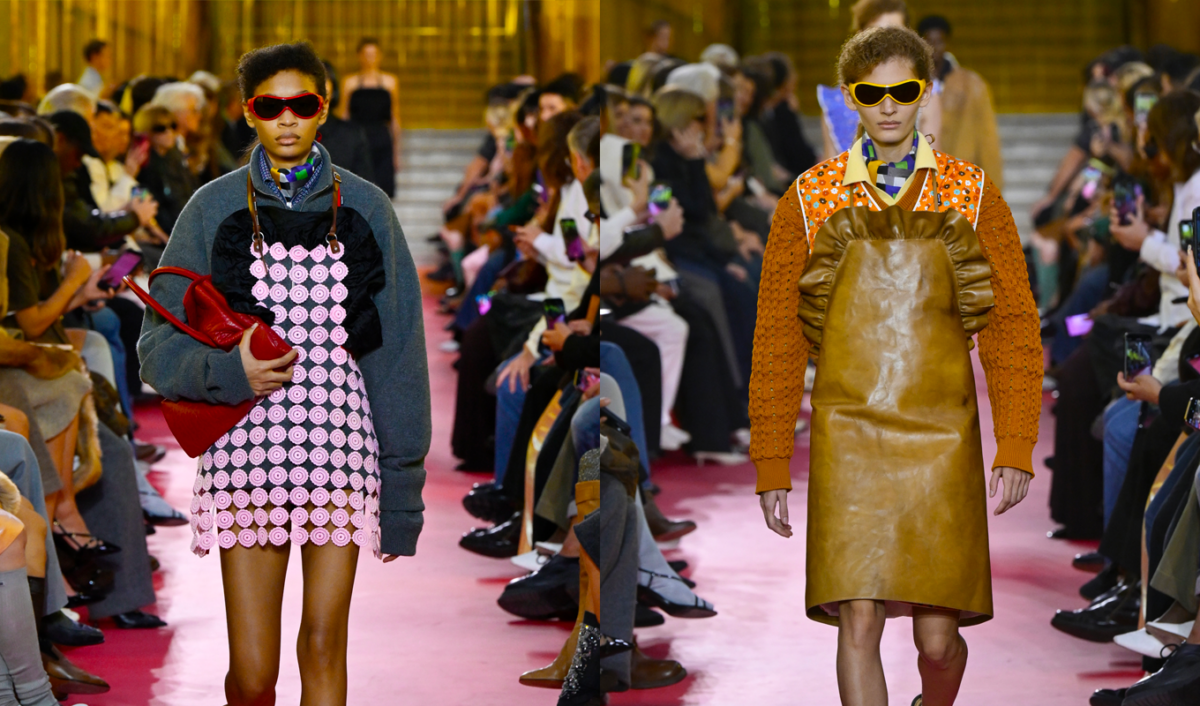
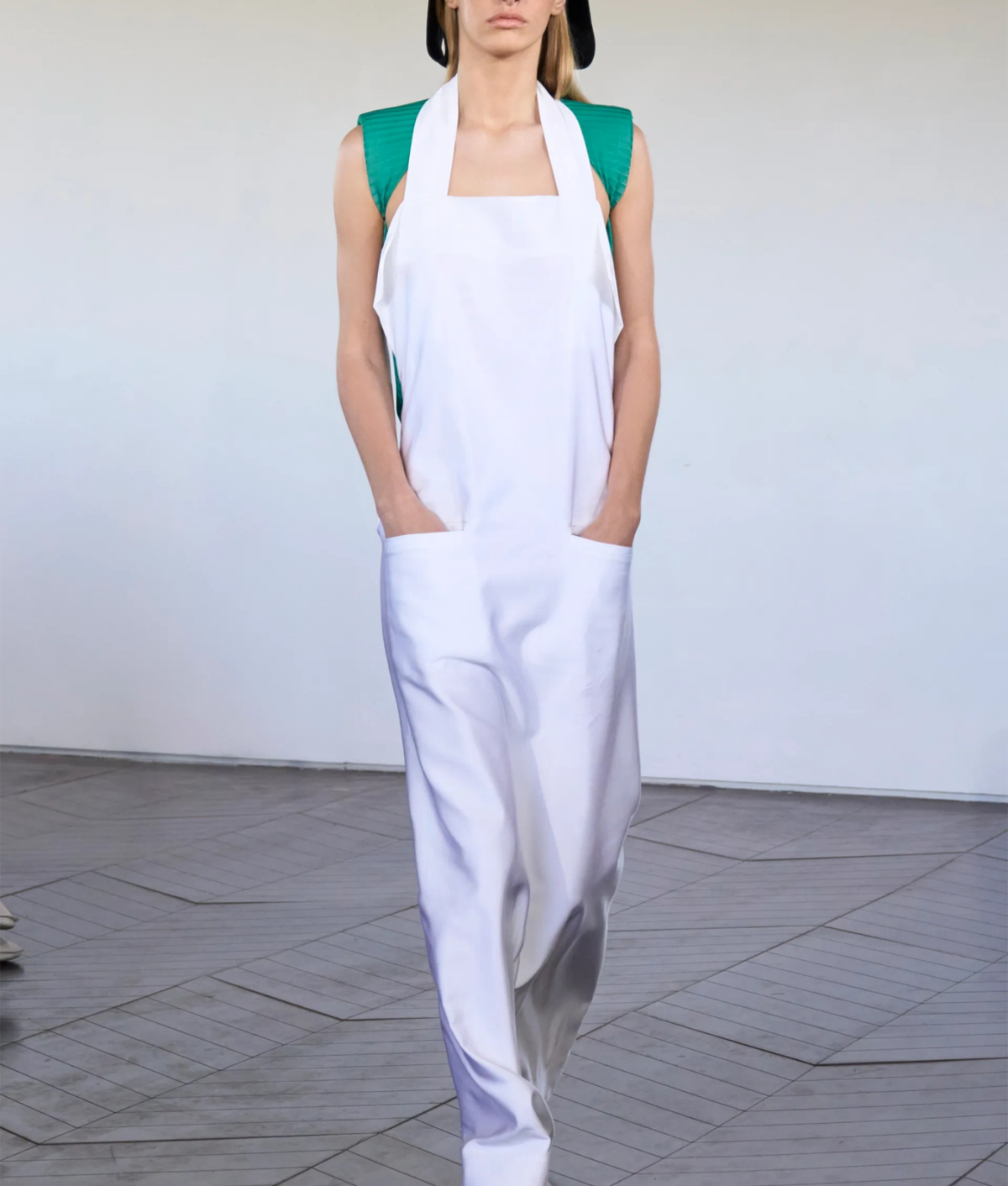
For spring/summer 2026, Miu Miu sent frilly, floral and bedazzled aprons down the catwalk. Talia Byre, meanwhile, turned them into eveningwear. Stars like Emma Corrin and Chloë Sevigny have worn aprons to red carpet events. At a more grounded level, apron skirts—lacy, feminine, tied at the waist—are picking up as a layerable accessory.
miu miu spring summer 2026 aprons 1200x706
Miu Miu Spring/Summer 2026 (Photo: Shutterstock)

This trend didn’t come out of nowhere. Over the past few years, influencers like Hannah Neeleman (aka @ballerinafarm) and Nara Smith have, purposely or not, popularized the “trad wife” lifestyle. To their millions of followers, they extol the virtues of making meals from scratch—in Neeleman’s case, from the produce grown on her farm. Most of their content is filmed in the kitchen, baby on one arm, whisk in the other. They sell an idyllic image of gender roles and tradition—one that is, of course, simply an illusion. Many see them as promoting the “soft life” of homemaking and family-rearing, but both of these women have turned their identities into brands. They’re not just baking bread, they’re building businesses—a complete contradiction of the philosophy they’re romanticizing.

I was raised by a stay-at-home mother, albeit one who did not own an apron and who definitely didn’t shun packaged foods, but who was always proud to write “homemaker” as her profession on forms. Her job was raising me and my sister, and trust me, I know it was a job. But, having come of age in the ‘60s and ‘70s, in the era of bra burning and Roe v. Wade, one thing she always reminded me of was choice. It was her choice to be a full-time mom, and she was thrilled with my choice to pursue a career in journalism. But not everyone thinks it should be. 

talia byre apron dress 1 1200x1412
Talia Byre Spring 2026 (Photo: Shutterstock)

What were once fringe ideas of regression are increasingly becoming more mainstream, touted by “manosphere” podcasters, conservative talking heads and even high-ranking government officials. United States Secretary of War Pete Hegseth, for one, reposted (and praised) a video on social media in which ultraconservative Christian pastors advocate for repealing the 19th amendment—and relegating women back to the sole roles of “wife” and “mother.” Last month, the New York Times published a report on “The Women Who Believe That Women Should Lose the Right to Vote.” It is even more horrifying when you realize that the call is coming from inside the house.

In the midst of this hard-to-ignore emboldening of the patriarchy, is it any wonder that the emergence of aprons as a cutesy fashion trend only serves to make my stomach churn?

Listen, I can grasp the not-so-subtle irony at play here. Do I think Miuccia Prada, one of the most powerful women in the fashion industry, wants us all to get back into the kitchen? Of course not. But in a political climate where women’s rights have been legislatively gutted, where a “trad wife” movement continues to gain momentum and where the people in power openly express their desire to take society—and a woman’s place in it—backwards, attempting to reclaim this 1950s symbol of domestic servitude falls flat. At best, it’s tone-deaf. At worst, it perpetuates the propaganda. I, for one, won’t be falling for it.

The Politics of ‘Good Hair’ Are Alive and Well, Even in 2026


stephanie maida

Stephanie Maida

Senior Commerce Editor

  • Oversees PureWow's coverage of sales and deals, celebrity commerce and new launches across categories
  • Has worked as a writer and editor for 10+ years
  • Studied journalism at New York University