Review: Is the Ford Mustang Mach-E The Cool Mom's Alternative to a Van?

Yes, and here’s why

mustang mach-e
Candace Davison

Full disclosure: I grew up in a Mustang world. I was brought home from the hospital in a Boss 302. My first three cars were Mustangs (an ’89, a ’91 and a 2004) that I obsessively customized (chrome rims, subwoofer, metallic sonic blue paint—I turned 16 when Pimp My Ride was dominating MTV, okay?).

I loved the zippiness of the car, but—like my mother before me—found myself trading in the sporty two-door for a practical SUV once my family expanded. I needed a more substantial backseat and more room overall. So, when I first spotted a Mach-E at my daughter’s daycare, I thought someone had slapped a Mustang emblem on the back of their crossover. A little research later, and I was very intrigued. Ford had expanded the Mustang brand to an electric, compact crossover car. It had four doors—and a legitimate backseat—along with both a trunk and frunk, since there’s no gas engine under the hood.

Could this crossover handle my family of four and our piles of stuff we haul to school, Girl Scouts, ballet and everywhere in between? For one week, I drove the car nonstop, from everyday errands to two-hour road trips, to see how it’d fare.

Spoiler: I fear my Kia’s days are numbered.
mustang mach e test drive 1200x706
original photo: candace davison

The Electric Car’s Learning Curve Is Minimal

Despite knowing several people with electric cars, I have always had hesitations: How long do they take to charge? How easy is it, really, to find a charging station when you need one? How much will this impact my electricity bill? And, on the most basic level, how different is it from driving a gas-powered car?

Let’s start with the last question and work our way backward. The drive isn’t too different from other modern cars, honestly. The Mach-E powers on with a press of the start button, and the biggest learning curve is the regenerative braking. It essentially captures the energy lost when you slow down the car, sending that power back to help charge the battery. As a result, the Mach-E stops more abruptly, and you only need to use the gas pedal (but it also can extend the longevity of your brake pads, since you’re not using them as much). This takes some getting used to—I practiced in an empty parking lot at first, but I quickly got the hang of it, and it starts becoming second nature. However, you can easily adjust the controls to turn off the regenerative braking feature and drive as you normally would, using both pedals.

mach e ford app 1200x1412
ford app

The Ford App Is Everything

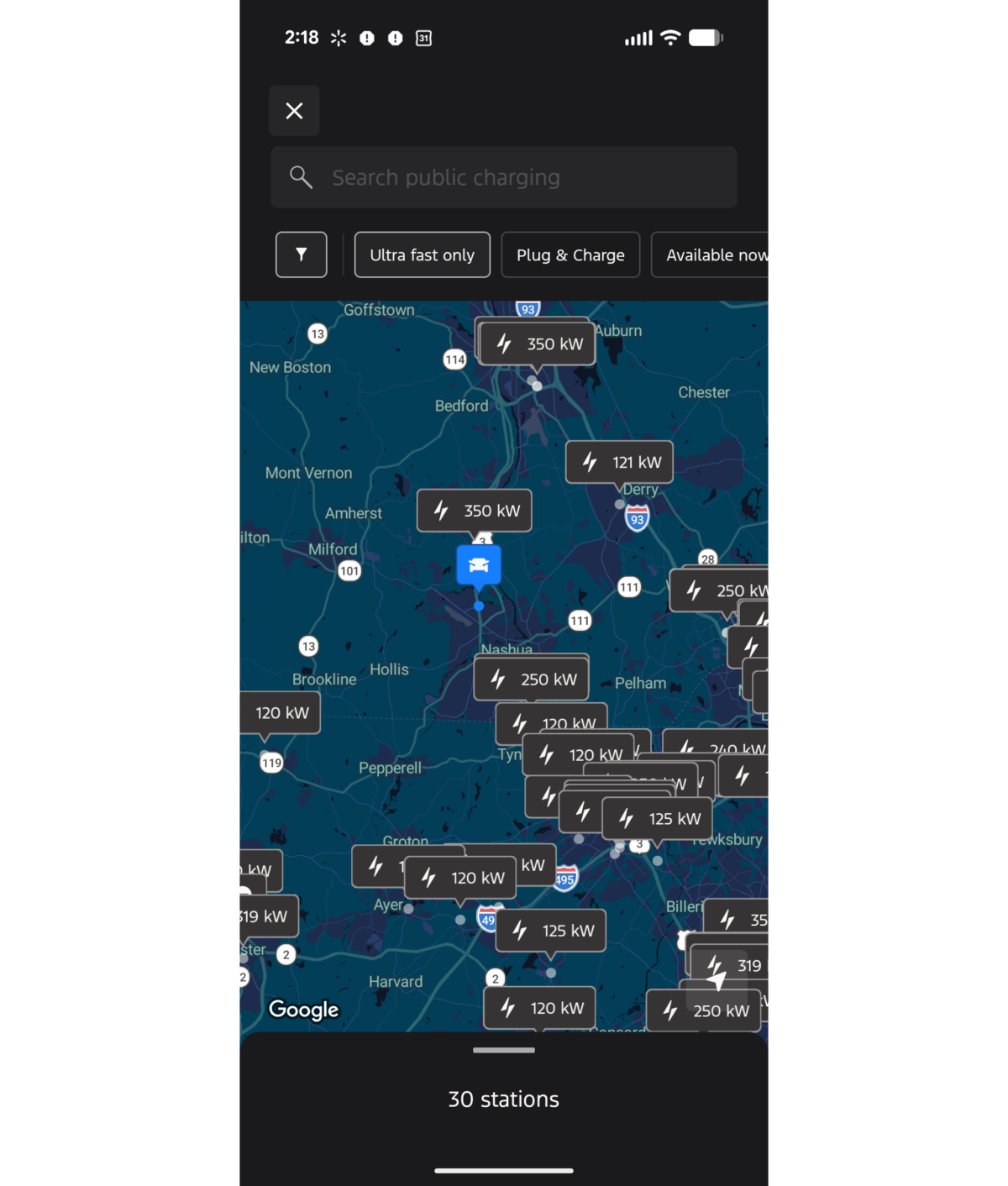
Traditional keys have got nothing on apps these days, and the Ford app is remarkably responsive and easy to use. You can remotely warm up or cool down the car (no scorched bottoms on seats!), lock and unlock the car, locate it via GPS if you forgot you parked at Goofy 7 at Disney World, even schedule service appointments. But the real gem is the BlueOval Charge Network, which lets you use one app and one membership to charge at 23 different companies, from Shell Recharge and Pilot Flying J to EV Connect and Tesla Superchargers. (A perk, so you’re not scrambling to download a bunch of apps and enter your credit card info—and clog your phone’s storage—every time you take a road trip.)

charging mustang mach-e
original photo: candace davison

Finding a Charging Station Is Easy

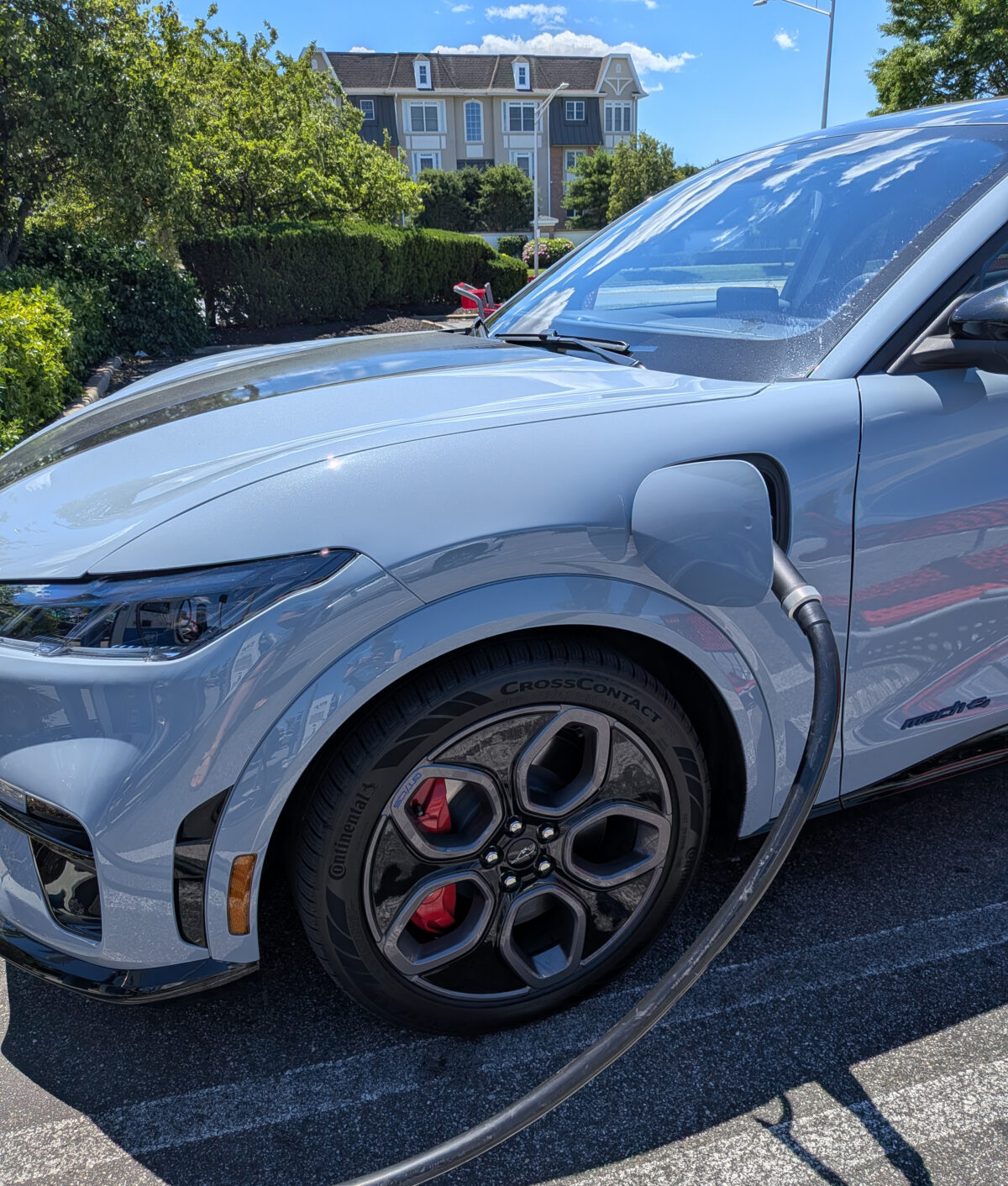
With more than 80,000 EV charging stations and more than 250,000 ports nationwide, per August 2026 Motley Fool data, finding a place to charge the vehicle is getting easier by the day. This is also where the Ford app (and touchscreen on the dashboard) came in handy; I could use either to easily search for charging stations along my route and filter by charging speed. I could also see how many ports were open and available, so I didn’t have to wait for someone else to finish charging. Even when my charge was down to 30 percent, I got it back to 85 all before completing a Target run. (The charge cost $41 and got me roughly as far as my Kia Sportage does on a full tank, which costs about $50 to fill these days.)

That said, when I surveyed five people who own the Mach-E or a similarly sized EV, they all said they do almost all of their charging at home, using a high-powered (level 2 or level 3) charger. (A level 2 delivers about 10 to 20 miles of drivability per hour of charging, whereas a level 3 can get you 60 to 80 miles in 20 minutes.)

Based on Kelley Blue Book research, it’d cost about $61 a month to charge an EV at home, and about $169 for the same amount of energy at charging stations. When I polled my EV crowd, they said those numbers reflected what they’d experienced, with one Tesla driver estimating he spent closer to $40 or $45 a month, but he tends to only drive 20 to 30 miles a day.

mustang mach-e roof
original photo: candace davison

It Packs Luxury-Level Comfort

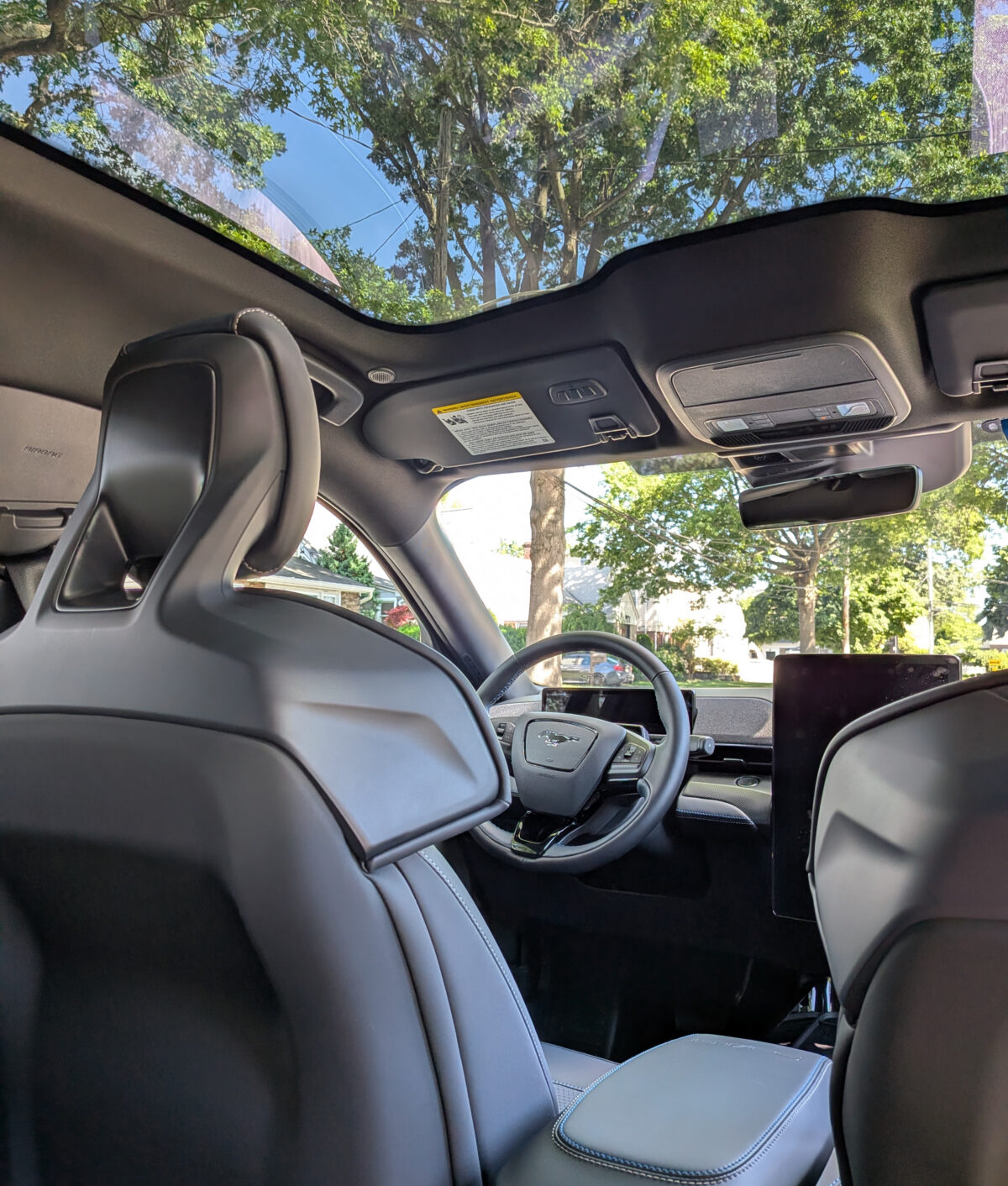
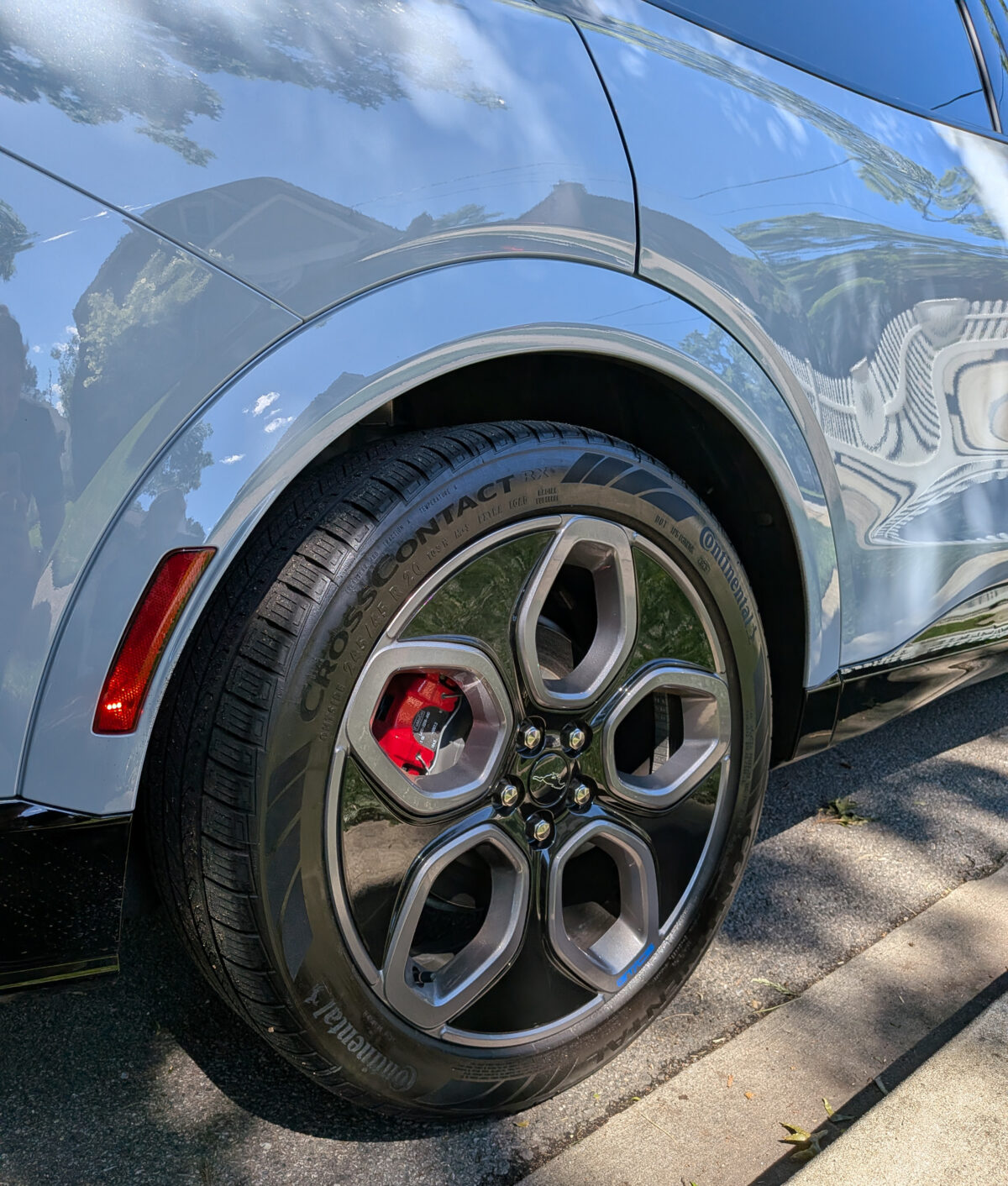
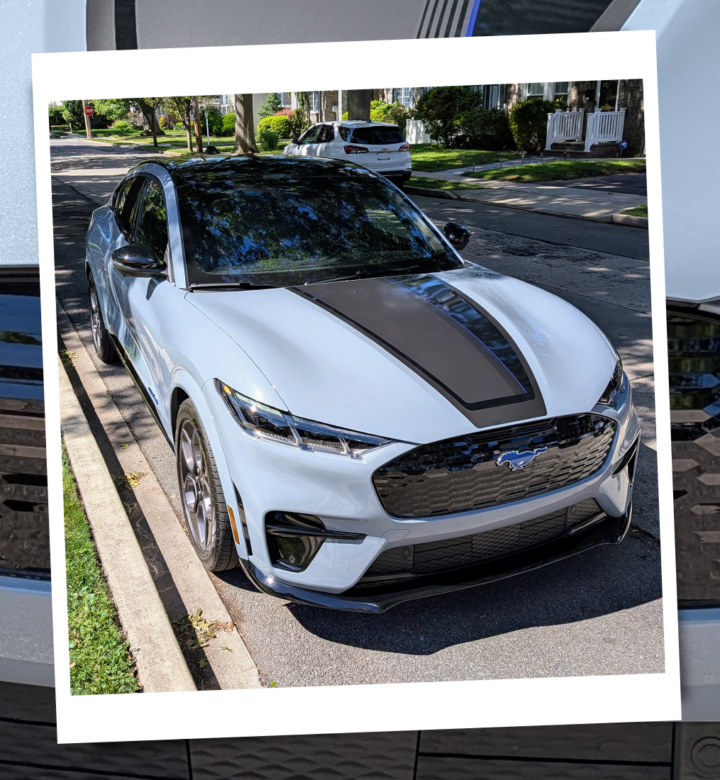
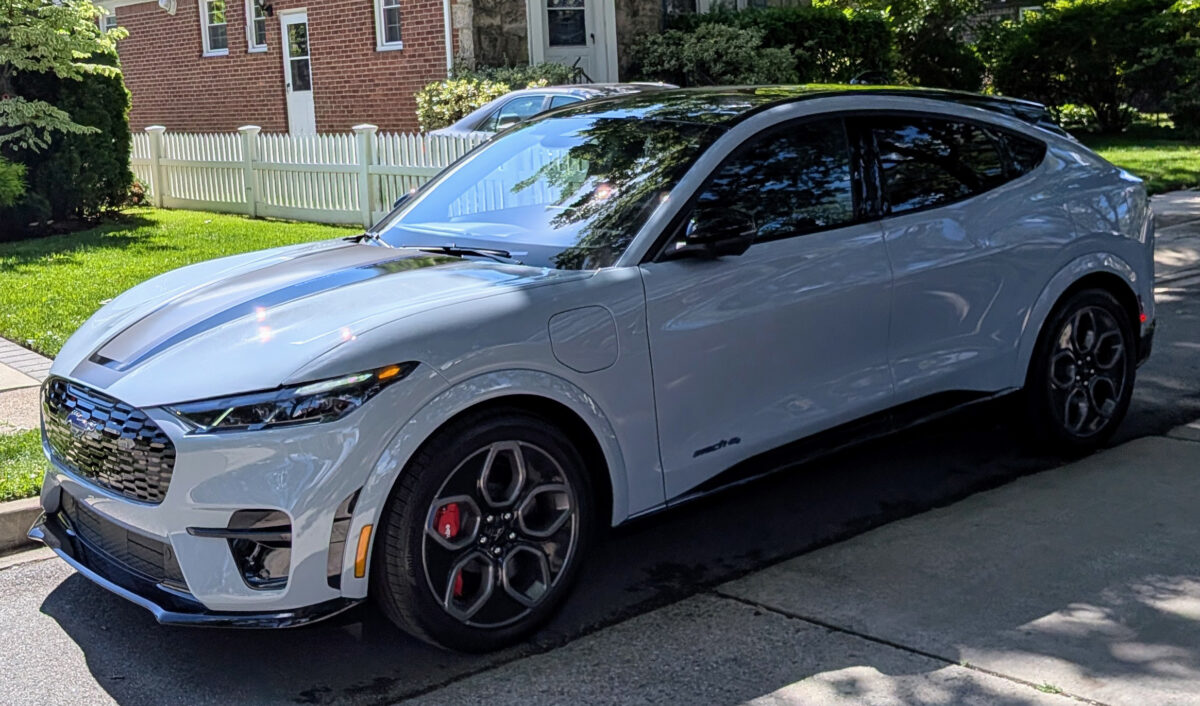
I was spoiled with this loaner, testing the Mustang Mach-E GT California Special, which is about as luxurious as a crossover gets. As sleek as the 20-inch carbonized gray wheels, hood stripe and illuminated pony badge are, the true jaw-dropper is sitting inside. The seats are cushy and supportive, so your bum doesn’t go numb mid road trip, the Apple CarPlay and Android Auto connects seamlessly, and the Bang & Olufsen sound system boasts 10 speakers and a subwoofer, providing the kind of immersive audio my Pimp My Ride-era self only dreamed of.

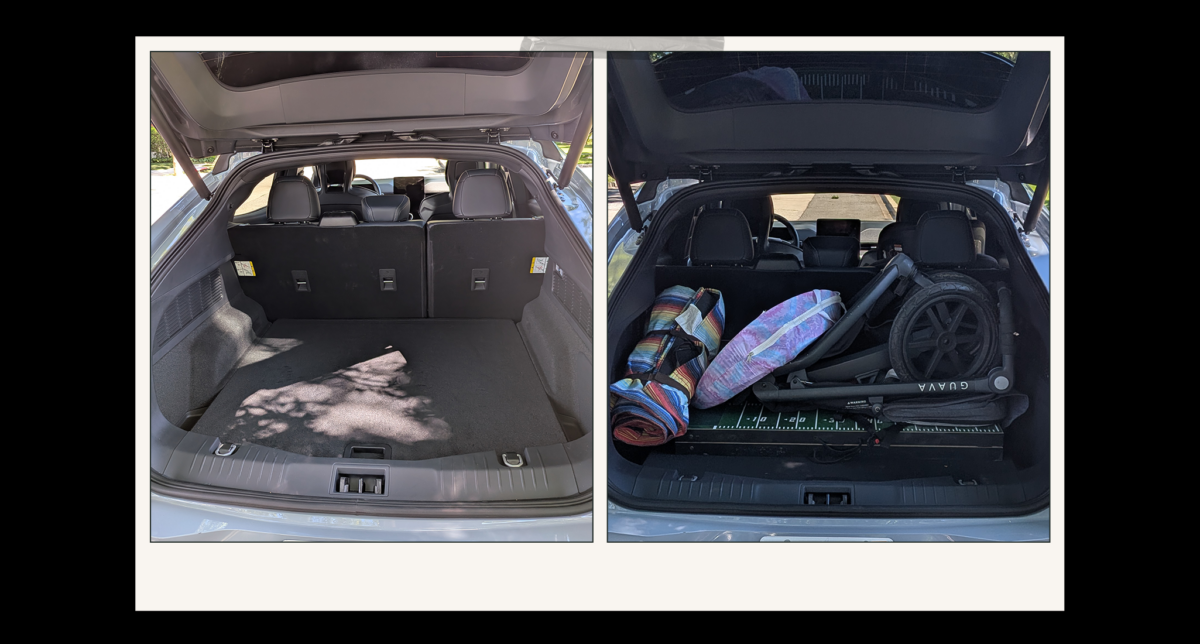
Better yet, as a mom and recipe developer (so! Many! Groceries!), my car is always bogged down with enough bags to require multiple trips in and out of the house. We had plenty of room for our stuff, thanks to the trunk and frunk space, and the backseat could comfortably fit an adult—even a tall one like me or my husband (I’m 5’11” and my husband is 6’3”). I couldn’t say the same for the traditional Mustangs of my past.

mustang mach-e wheels
original photo: candace davison

It Has Serious Pickup

Now, for the feature my kids loved most: The Mach-E’s acceleration is stomach-dropping—in a good way. That electric power means there’s no lag merging onto highways and interstates, which is ideal for getting around New York’s congested roadways. The upgraded performance models can go zero to 60 in 3.3 seconds, and while I didn’t test it to that degree, I can say I had no complaints here. (My 3-year-old actually cried when our loan was over, saying, “I’m going to miss fast car.”)

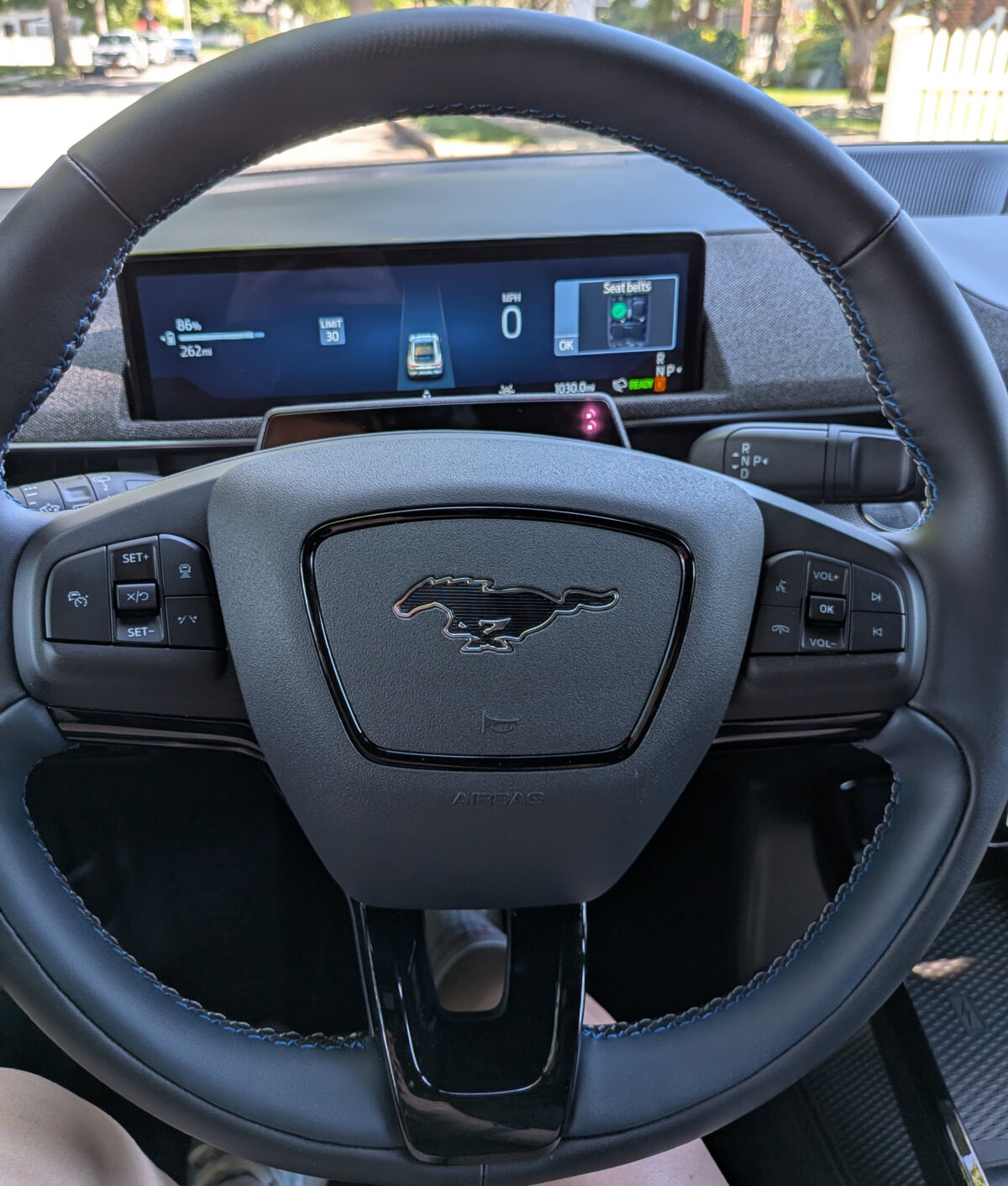
mustang mach-e steering wheel
original photo: candace davison

The Two Considerations to Make

While significantly more spacious than the traditional Mustang, the Mach-E still has a pretty compact footprint. That makes it great for maneuvering, but it’s ultimately a five-seater; larger families may want to look into a bigger vehicle overall. For a family of our size, though, it works.

Cost is another consideration. The starting MSRP of $37,795 is in line with many other similarly sized EVs, though the GT California Special I borrowed—with all of the bells and whistles—clocks in at $65,185.

trunk space in mustang mach-e
original photos: candace davison

The Bottom Line: It’s the Ultimate Sporty-Meets-Roomy Combination

I had resigned myself to sluggish and bulky SUVs, figuring that’s just the season of life I’m in, but the Mach-E convinced me otherwise. It brought back the wind-in-my-hair, free-spirited vibe of my college days (especially given all the natural light from the panoramic fixed-glass roof) while allowing me to still be a practical mom who needs to haul all of the supplies for a Back-to-Hogwarts party and two dance recitals. (To that end, it also has a five-star government safety rating.)

Who says you can’t have it all—at least when it comes to your daily drive?


candace davison bio

Candace Davison

VP of editorial content

  • Oversees home, food and commerce articles
  • Author of two cookbooks and has contributed recipes to three others
  • Named one of 2023's Outstanding Young Alumni at the University of South Florida, where she studied mass communications and business