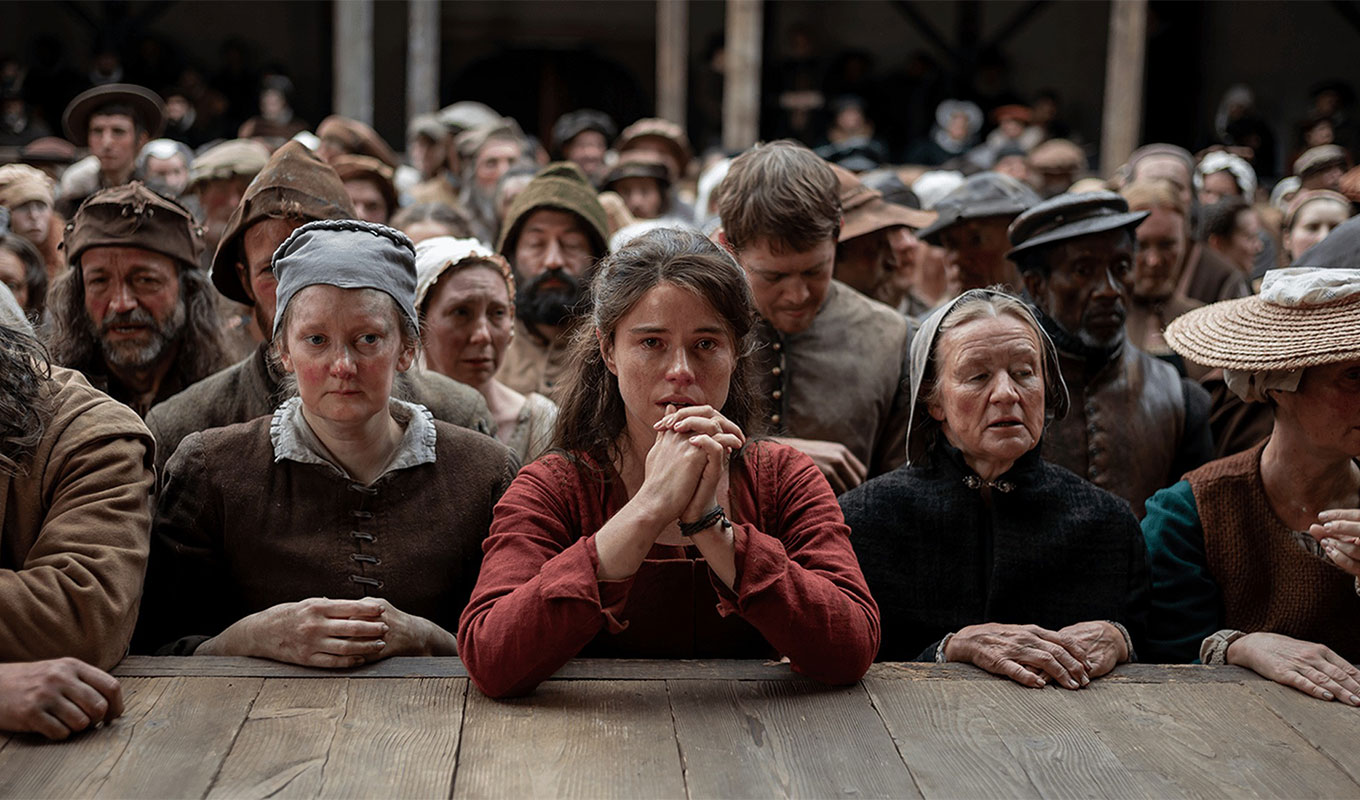
Chloé Zhao’s new cinematic masterpiece, Hamnet, follows in this tradition—taking Maggie O’Farrell’s breathtaking 2021 novel (my favorite of the past half-decade) and rendering it absolutely devastating for mothers everywhere.
Like the book, Hamnet loosely follows the real story of Shakespeare’s wife, Agnes, imagining her life leading up to and after the death of her son, Hamnet, and speculating on the connection between said death and the Bard’s most famous (and similarly named) play. The book jumps back and forth in time, beginning with Hamnet’s desperate quest to find a doctor after his twin sister Judith falls ill with the plague and then jumping back to explain how Shakespeare and Agnes ended up together in the first place. The movie, meanwhile, moves chronologically, a decision that was probably better for cohesion and audience-comprehension, but I found less effecting. It also devotes more narrative to Shakespeare himself (Paul Mescal) who was largely off-screen in the book.
Still, the gut-punch of a child’s grave illness is just as immediate—perhaps more so—as we’re ushered, midway through the film, into a scene that is every mother’s worst nightmare. Jessie Buckley is transcendent in the role of Agnes, with a weathered, freckled face capable of both raw pain and hardened perseverance. And, much like the book, what the movie does so well is make 16th century England feel both immediate and relatable. Like, should we all start making poultices and drying thyme by the hearth?