The ‘Princess Treatment’ vs. ‘Bare Minimum’ Debate Proves TikTok Still Doesn’t Get It

Effort > Etiquette

princess treatment universal 1
Dasha Burobina for PureWow

It was a Thursday night at Cozy Royale in Brooklyn—three of us tucked into a booth with smashburgers and martinis. Across from me sat Kayla, newly single and mid-rant, while our friend Neil scrolled his phone with the breezy detachment of someone who avoids long-term relationships like the plague.

Kayla slammed her glass down. “Do you know how exhausting it is to be with someone who does the bare minimum?” she exhaled. “I was always the one to make the reservations, remind him of the plans—even pick out his outfits. I felt like I was his mother.”

Neil didn’t even look up. “Maybe he just didn’t want to disappoint you.”

Kayla scoffed. “Disappoint me? I would’ve settled for him learning to boil pasta water.”

I smirked, but mostly out of recognition. Kayla’s situation wasn’t unique—it was the same quiet burnout a lot of women feel. “You know, it’s strange,” I said. “Every story I’ve written lately circles the same dating paradox—one person’s begging for more effort while the other’s convinced they’re already doing their best. It’s like we’re stuck negotiating the definition of ‘enough.’”

That’s when Kayla grabbed her phone. “Oh my god. Please tell me you’ve seen the ‘Princess Treatment’ video on TikTok.” 

She turned the screen toward me, playing Courtney Palmer’s viral video (above). “Let’s talk about princess treatment,” Palmer says. “If I’m at a restaurant with my husband, I don’t talk to the hostess. I don’t open any doors. I don’t order my own food… I wait for my husband.” She clarifies, “You’re just letting your husband [or boyfriend] lead and be masculine. He makes the reservation—you let him take care of it. It's the fun part of being a princess, of being feminine and letting your man take care of you… You don't need to overspeak or overexert yourself—the most elegant, lovely women are often soft spoken. They're not loud.”

Needless to say, the video had over 7 million views in less than two weeks—half the comments echoing my first reaction: “What in the Betty Draper nightmare is this?”

“Seriously,” Neil nodded in agreement. “This is what dating advice is now? ‘Sit quietly and wait for the man?’ So much for feminism, Kayla.”

But Kayla rolled her eyes. “It’s not about feminism. It’s about effort. After my ex, I’d kill for a guy who just…handles things. Makes the reservation. Takes the lead. Lets me relax without double-checking everything.”

I thought out loud, “Well, women plan the dates, send the reminders, manage the moods, buy the gifts—and then we’re told we’re asking for too much when we want the same in return. I think you're saying this is about men matching the effort we already put in.”

Kayla nodded. “Exactly.”

“But that's what drives us insane,” Neil countered. “Every month there’s a new TikTok telling women what they deserve, and suddenly, the goal post moves. First it’s, ‘We want equality.’ Then it’s, ‘We want to be taken care of.’ Like—pick a lane. You can’t ask a guy to plan the date and then get disappointed when it’s not a scene out of The Notebook.”

Kayla raised an eyebrow. “You mean when he plans one date a year?”

He softened. “Your ex was an idiot, OK. But it feels like no matter what we do, it’s never enough. Hang back, and we’re lazy. Take charge, and we’re controlling. The expectations keep moving and you guys don’t even give us credit for trying.”

This is when our friend Jasmine slid into the booth and shifted the debate to Taylor Swift’s new album. But later that night, scrolling TikTok, I saw our conversation taking shape online. Palmer’s original video had splintered into a new trend: Princess Treatment vs. Bare Minimum.

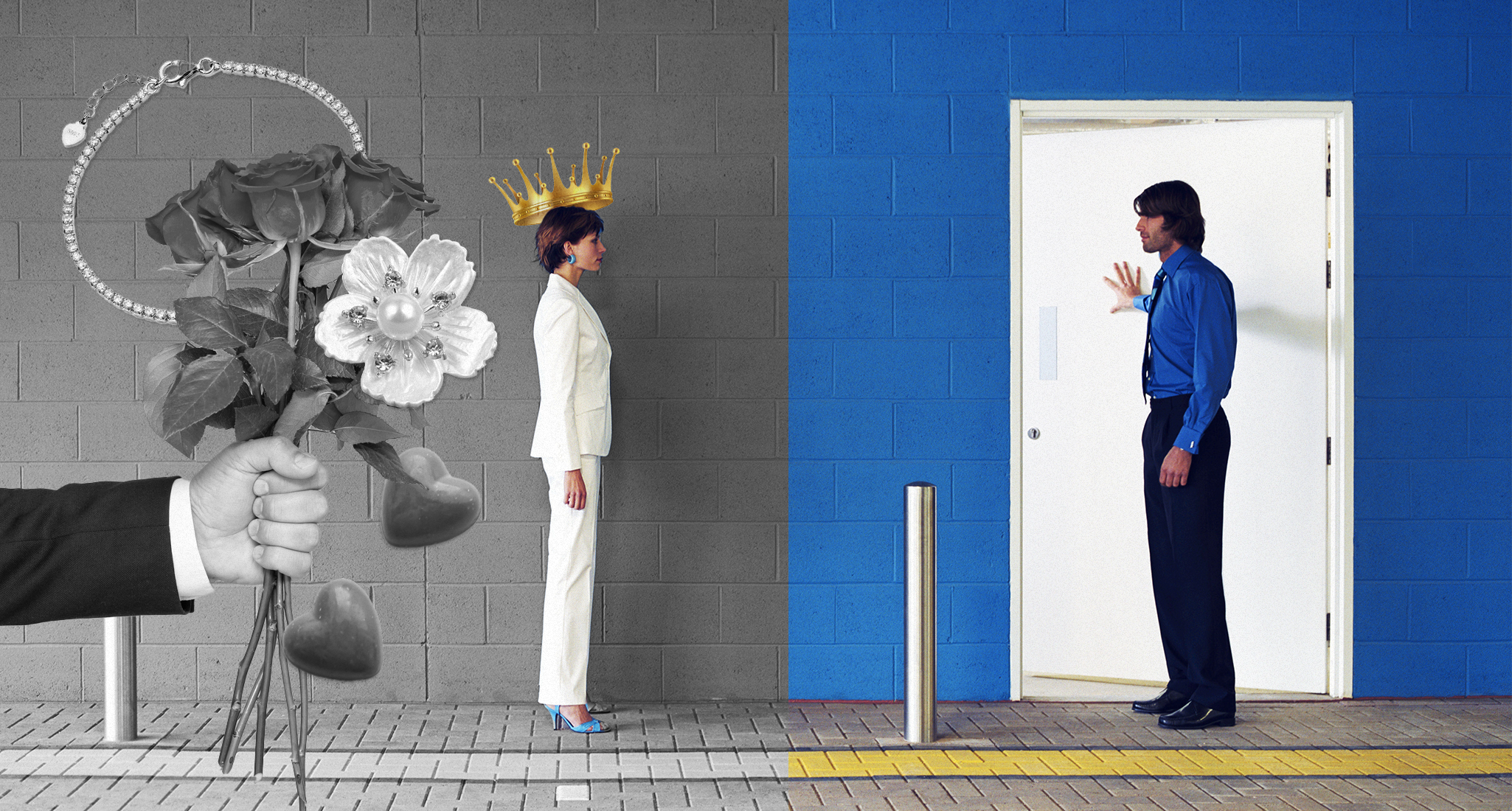
Basically, it’s a viral game where women spray their boyfriends with hoses for failing to distinguish romance from basic relationship maintenance. On its face, it’s satire. But underneath, the message is clear: effort is being graded on extremes. Either you’re pampered like royalty or you’re settling for crumbs. No in between.

Which brings me back to the split I’d watched play out at our table. Kayla wasn’t asking to be adored like royalty—she was exhausted from mothering men. For her, “princess treatment” meant effort that didn’t require her to carry the weight of the relationship. Neil, meanwhile, wasn’t opposed to showing up—he was drained by the feeling that male effort is always graded against an invisible standard (and rarely passes).

This is the larger conversation we should be having. TikTok rewards this kind of black and white thinking because it feeds the algorithm. Feel like your boyfriend isn’t doing enough? Here’s a creator who will tell you to “break up immediately if he doesn’t do these five things.” Sick and tired of your girlfriend complaining? Here’s another creator who says, “high-value men should always be worshipped by their partners.” But real relationships are far more complex. They live in the messy middle, where effort looks different depending on the day, the fight you had last week or how much sleep you got.

Here’s my takeaway: It’s the 21st century. Women are more than capable of ordering for ourselves—and men, for the most part, have moved past 1960s sexism. So to me, “princess treatment” isn’t about regressive gender roles, just as the “bare minimum” isn’t about meeting rubric requirements. Both are overcorrections for the same thing: how expectations are being communicated and met. Instead of letting TikTok dictate what women should demand—or chastise where men are supposedly falling short—we should be getting clear on what feels like ‘enough’ in our own relationships. What effort looks like, what makes us feel seen and heard and how we reach consensus when we tune out the trends.

At the end of the day, it’s lovely to have a man make a reservation. But real princess treatment isn’t about dinner plans—it’s about being on the same page.

profile pic WP

Associate Lifestyle Editor

  • Writes across all lifestyle verticals, including relationships and sex, home, finance, fashion and beauty
  • More than five years of experience in editorial, including podcast production and on-camera coverage
  • Holds a dual degree in communications and media law and policy from Indiana University, Bloomington