
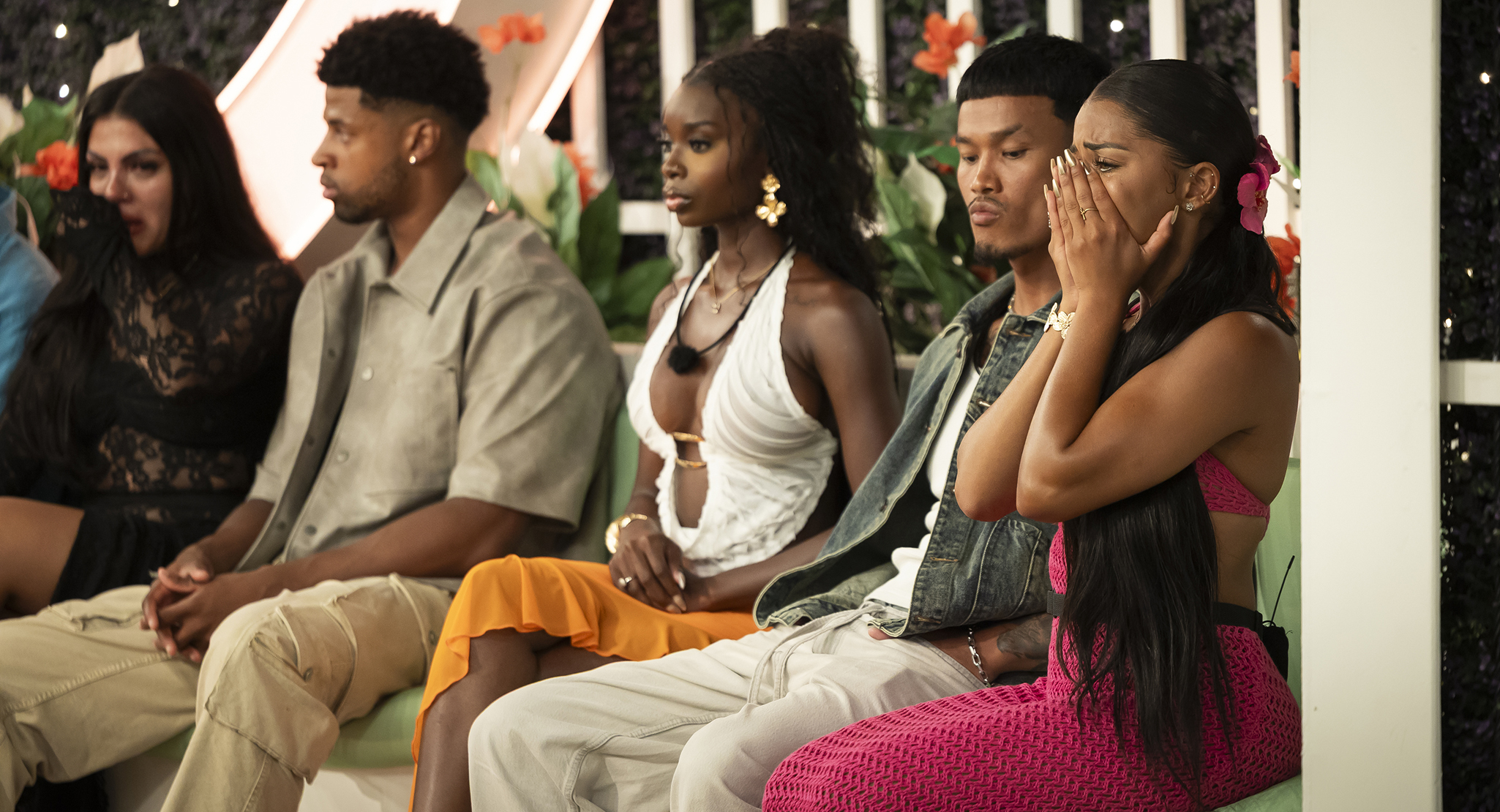
If Love Island felt a little too familiar this season, it’s not just because you’ve binged three back-to-back episodes. It’s because the logic of the show—testing every connection, flirting with possibility, “seeing where it goes” before ever locking anything down—has become the unofficial blueprint of Gen Z dating. We swipe, we stalk, we abide by TikTok’s dating rules—and still, many of us end up in the dreaded situationship spiral. Why? Because all this evaluating has created a game of vulnerability chicken: no one makes the first move toward commitment, and everyone’s afraid to care more than the other.
Nowhere was that fear more visible than inside the villa. After every episode, my friends and I would flood the group chat: “Why is Chelley acting like Ace isn’t the only guy she wants?” “Nic is literally allergic to making a decision.” “Huda’s default setting is protect-at-all-costs.” But beneath the snark and dramatic voice notes, we weren’t just breaking down the show—we were diagnosing our own love lives. The Hinge match who “isn’t really on here.” The two-month thing that disappears the moment you show actual interest. The guy who watches every single Story but refuses to text first.
Because that’s what Love Island has become: a mirror. Not just for hookup culture or dating-app fatigue, but for how Gen Z has weaponized emotional intelligence as a form of emotional armor. We can name our attachment style, draw a boundary, decode a red flag—all before the second date. We talk about “protecting our peace” like it’s gospel. But somewhere along the way, self-preservation blurred into self-sabotage. We want intimacy—desperately—but only if it arrives in the exact right packaging. If it doesn't, we convince ourselves there’s something (someone) better just around the corner, and call our detachment “standing on business.”
For all the skin-to-skin contact and pillow talk, Season 7 felt like a crash course in emotional hedging. (Here’s looking at you, Huda and Chris.) The chemistry was there—undeniable. But instead of leaning in, we watched Huda try to outrun rejection. She seemed so convinced vulnerability would end in heartbreak, she did what so many of us do: test, retreat, stay vague. Emotional intimacy became a chess match—every feeling held hostage until it’s safe (read: never) to play it.