I thought I was doing my health and wellness a solid by scheduling an annual mammogram—but when I was told I had fibroglandular density, also known as dense breast tissue, I didn’t understand why my doctors told me to consider further cancer screening. Should I be alarmed? (No.) Would it be OK to blow it off? (Also no.) Why am I just hearing about dense breasts now? Turns out, approximately half of women have dense breasts, according to the CDC. And this condition not only makes detecting abnormalities harder, but it is linked with a higher incidence of breast cancer. (While I have you here, take this short test to estimate your breast cancer risk.) I wanted answers on this and other specifics of breast health, so I turned to a medical professional for a rundown on what we all have to know—especially those of us with dense breasts. Here’s an edited version of my download with a medical breast health expert.
What Every Woman Should Know If They Have Dense Breasts
And no, you can’t tell by appearance or touch
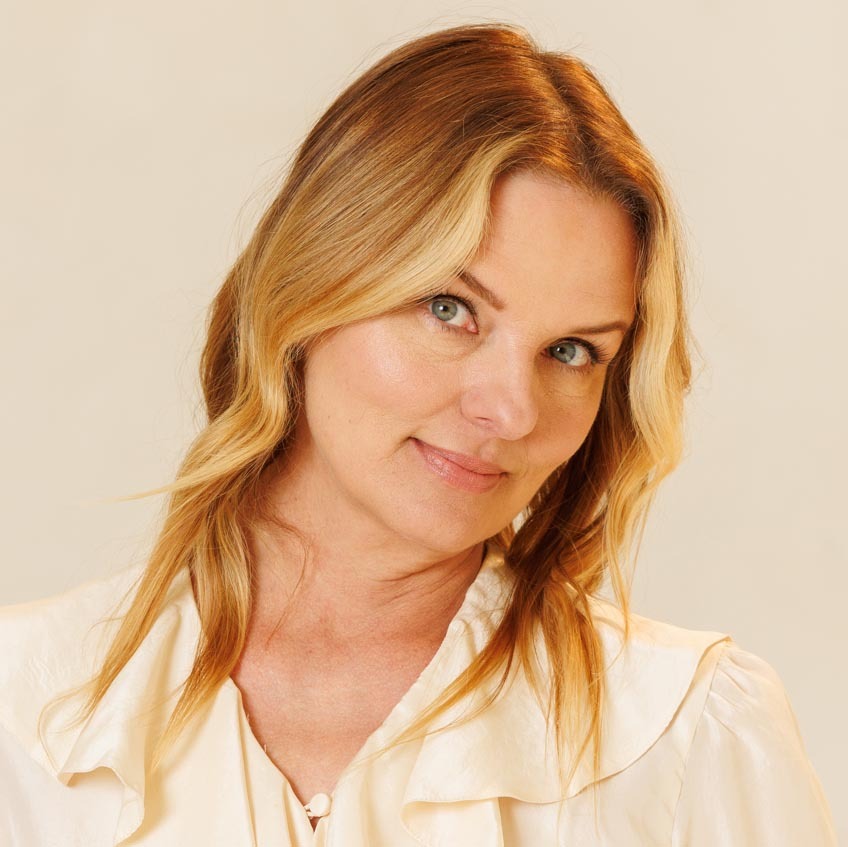
Meet the Expert
Dr. Rachel Brem, MD, is board-certified in Diagnostic Radiology. She is a professor of radiology and the vice chair of radiology at The George Washington University School of Medicine & Health Sciences. Dr. Brem has published more than 80 journal articles and manuscripts related to breast cancer, She is an advisor to BeSound, an innovative breast imaging platform launching in Los Angeles in winter 2026.
First Off, What’s Standard Breast Screening Protocol?
The standard protocol is to begin screening at age 40, unless you have a first-degree family member with breast cancer. In that case, screening should start 5 to 10 years earlier than the age of onset in the family member. Screening occurs using a mammography machine, generally a 3-D X-ray machine, which looks the same as a 2-D machine. The difference is that 3-D images are taken at multiple angles, but the cumulative radiation dose is the same for both 2-D and 3-D mammograms.
What Are Dense Breasts?
Dense breasts mean that your breast tissue has more fibroglandular tissue compared with fatty tissue. Both dense tissue and tumors appear white on a mammogram, which can make early detection a little trickier. Dense breasts aren’t just a technicality—dense breast tissue is an important factor in both risk assessment and screening strategy. I’ve seen firsthand how understanding what dense breasts actually mean can empower women to take proactive steps in their health.
Is Dense Breast Tissue Common?
About half of women over 40 have dense breasts, and breast cancer rates are rising among women under 40—even in their 20s. Studies show that cancers can be missed in up to 30 percent of women with dense tissue if only a mammogram is used. This is why new developments in screening strategies, supplemental imaging and personalized risk assessments are so important. Knowledge is power—knowing your breast density helps you take control of your health and make the best decisions moving forward.
How Do You Know If You Have Them?
You can’t feel dense breasts; they can only be identified through imaging. Mammograms classify tissue into four categories: almost entirely fatty, scattered areas of fibroglandular density, heterogeneously dense and extremely dense. The reality is that most women don’t realize this until they get their results, which is why new legislation and notifications are so important. Knowing your breast density is the first step toward informed decisions about your breast health.
Is There Increased Awareness Now?
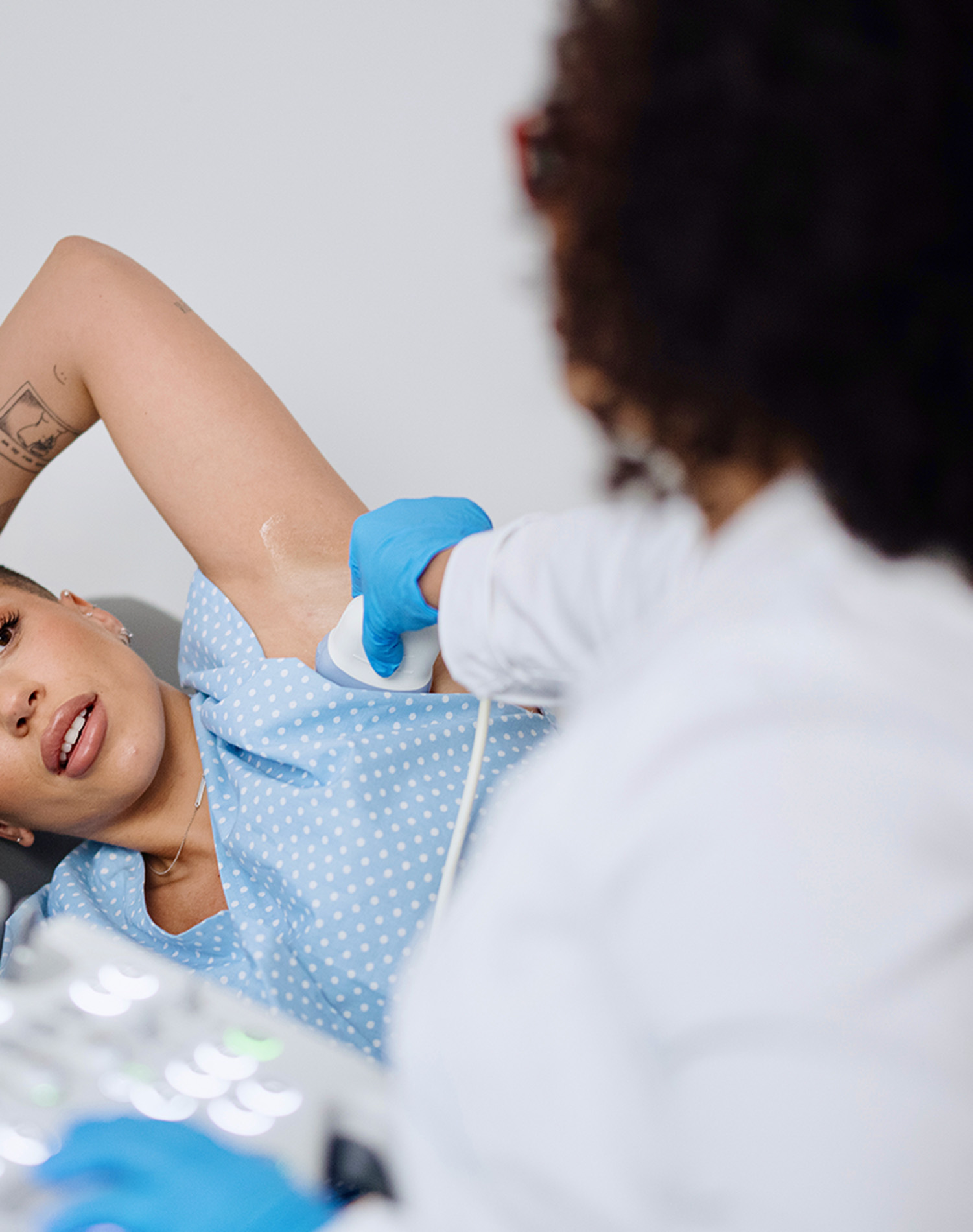
Absolutely, and we’re still working towards more each day. When I was growing up, breast density wasn’t something we talked about. Today, awareness is increasing thanks to advocacy and education from organizations like the Brem Foundation and BeSound, a breast imaging platform that works with OB/GYN and other medical practices to bring ultrasound and photoacoustic imaging technology directly into their offices. [Note: Dr. Brem is careful to state as a disclaimer that while it’s not a replacement for mammography for women 40+, ultrasound technology can support earlier cancer detection in women with dense breast tissue and photoacoustic imaging can reduce unnecessary biopsies, enhancing diagnostic confidence.]
What Is the Connection Between Dense Breast Tissue and Breast Cancer?
Dense breast tissue is more than just a term, it’s a real factor in breast cancer risk. Women with dense breasts have a higher risk of developing breast cancer, and dense tissue can hide tumors on mammograms. This “masking effect” makes early detection more challenging, which is why awareness and follow-up screenings are so important. Understanding your own breast density helps you and your doctors plan smarter, more personalized screenings.
Dense tissue creates a Catch-22: You don’t know your breast density until you have a mammogram, and this is particularly an issue in women under 40, where the incidence of breast cancer is higher. Dense tissue also increases your risk of breast cancer while making it harder to identify cancer on a mammogram. So while your mammogram might not detect breast cancer, if it does detect dense breast tissue, you'll want to have additional screening. But if your physician or insurance company does not view additional screening as an imperative, you as a patient will need to be super-informed and prepared to advocate for additional testing.
The most commonly used, accessible and cost-effective way to screen is with an ultrasound. Although an MRI detects more cancers than an ultrasound, it is less available, more expensive and requires an injection. Therefore, for most people without family history of breast cancer, ultrasound is the preferred option for dense breast tissue screenings, although MRIs are valuable next-step options too.
Are Online Risk Assessments Useful?
Online risk assessment tools are indeed useful and can prompt discussions about additional screening. The Tyrer-Cuzick model, which is also available on the BeSound website, is the most widely used.
Why Follow-Up Screenings Are Important
If your mammogram shows dense tissue, follow-up screenings aren’t optional, they’re essential. Following up early can save lives—it’s about catching cancer as early as possible, when it’s most treatable. I always encourage women to stay proactive and advocate for the screenings that make sense for their individual risk.