

Martha Stewart’s Ingenious Cookie Hack Will Change How You Bake (I Know, I Tried It)

You’ll never guess what she uses.

PureWow editors select every item that appears on this page, and some items may be gifted to us. Additionally, PureWow may earn compensation through affiliate links within the story. All prices are accurate upon date of publish. You can learn more about the affiliate process here.

martha stewart sushi mat cookie hack: martha stewart and cookies on a lined sheet pan, side by side
Taylor Hill/Contributor/Getty Images/Taryn Pire

Confession: I’m a food editor…who hates baking. All the creative freedom that I love about cooking is largely off the table when it comes to desserts that basically double as science experiments with their exact measurements and meticulous techniques. If the recipe wants me to knead, roll, frost or proof, I’m not making it. And TBH, I typically don’t have the finesse to master much more than store-bought brownie mix.

That said, I’m always up for a challenge, and I’ll never turn away from a celebrity chef-approved hack that allegedly makes baking less of a chore. Enter Martha Stewart’s tip for forming perfectly round slice-and-bake cookies. She uses a—wait for it—sushi mat to roll the dough, so you won’t need to worry about uneven baking or sloppy shapes. But does it really work? I reluctantly tried the hack at home to find out.
Martha Stewart’s One-Pan Pasta Recipe Is Wildly Popular—but How Does It Taste? Here’s a Food Editor’s Review


The Hack

Stewart initially shared the trick in a 2015 episode of Martha Bakes on PBS, for which she prepared recipes starring green tea. “We have a little trick, and it’s very Japanese, for making the rolls perfect,” she says as she prepares the dough for green tea cookies. “And that is to use a bamboo mat, which is what the sushi chefs use.”

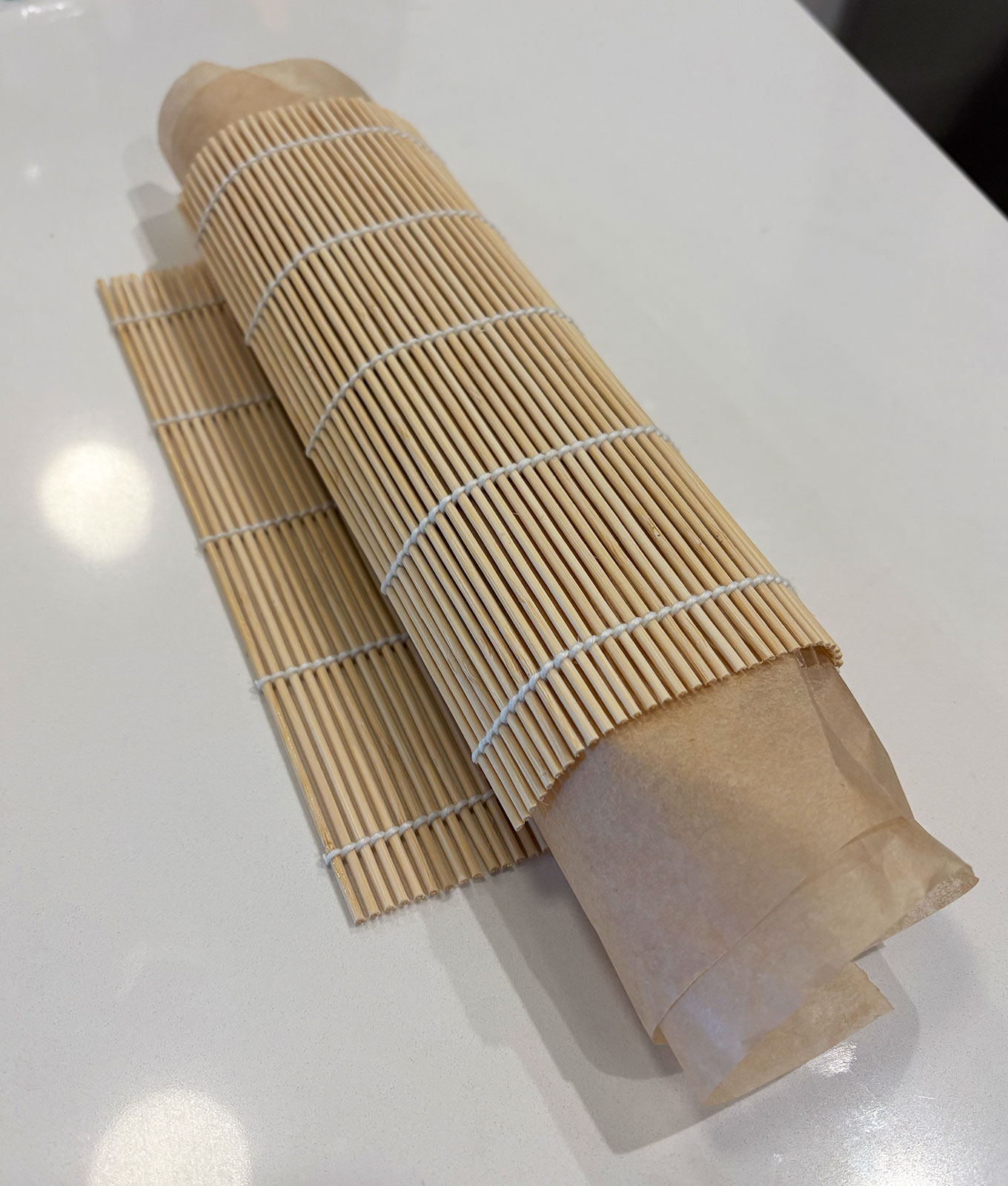
She forms the dough into a log with her hands, then places it on a sheet of parchment paper. Then, she places a sushi mat underneath the wrapped dough, moving the log to the bottom of the mat. She then rolls the mat over the dough until the entire mat is rolled, saying, “This should help you get a perfect round.”

The clip then jumps to her holding a rolled, frozen log of dough with the parchment cinched at the edges, like a wrapped hard candy. Finally, she shows off the green tea cookies, which are uniformly round and magazine-worthy in appearance.

martha stewart sushi mat cookie hack: log of cookie dough wrapped in parchment in a sushi mat
Taryn Pire

The Test

Like I said, I don’t have the skill or patience for most baking projects…but this felt approachable nonetheless. First, I ordered a sushi mat ($4 at Amazon). Instead of preparing new cookie dough, I thawed some leftover thumbprint cookie dough I’d prepared for a previous test of Martha Stewart’s three favorite butters. Once it was soft, I placed it on parchment paper and formed it into an imperfect log. Next, I used the sushi mat to roll it more tightly and neatly.

When I first unraveled it, there were still random indentations from how I’d manually formed the log. I rolled it tightly in the parchment, then rolled it by hand on the counter to smooth them out, then repeated these steps with the sushi mat. I kept turning the log inside the parchment so there was as little of a flat bottom as possible. When I unraveled it again, it looked much smoother, sort of like a Mexican-style tamale.

I tightened the edges of the parchment and placed the dough in the freezer for 10 minutes (an Ina Garten hack I learned for another PureWow test), so it wouldn’t be too soft to cut. Next, I removed the dough and sliced it into cookies. It was still a bit soft, so I rotated the log with every cut to keep it from getting a flat side, as well as rounded the cookies’ edges by hand a bit more.

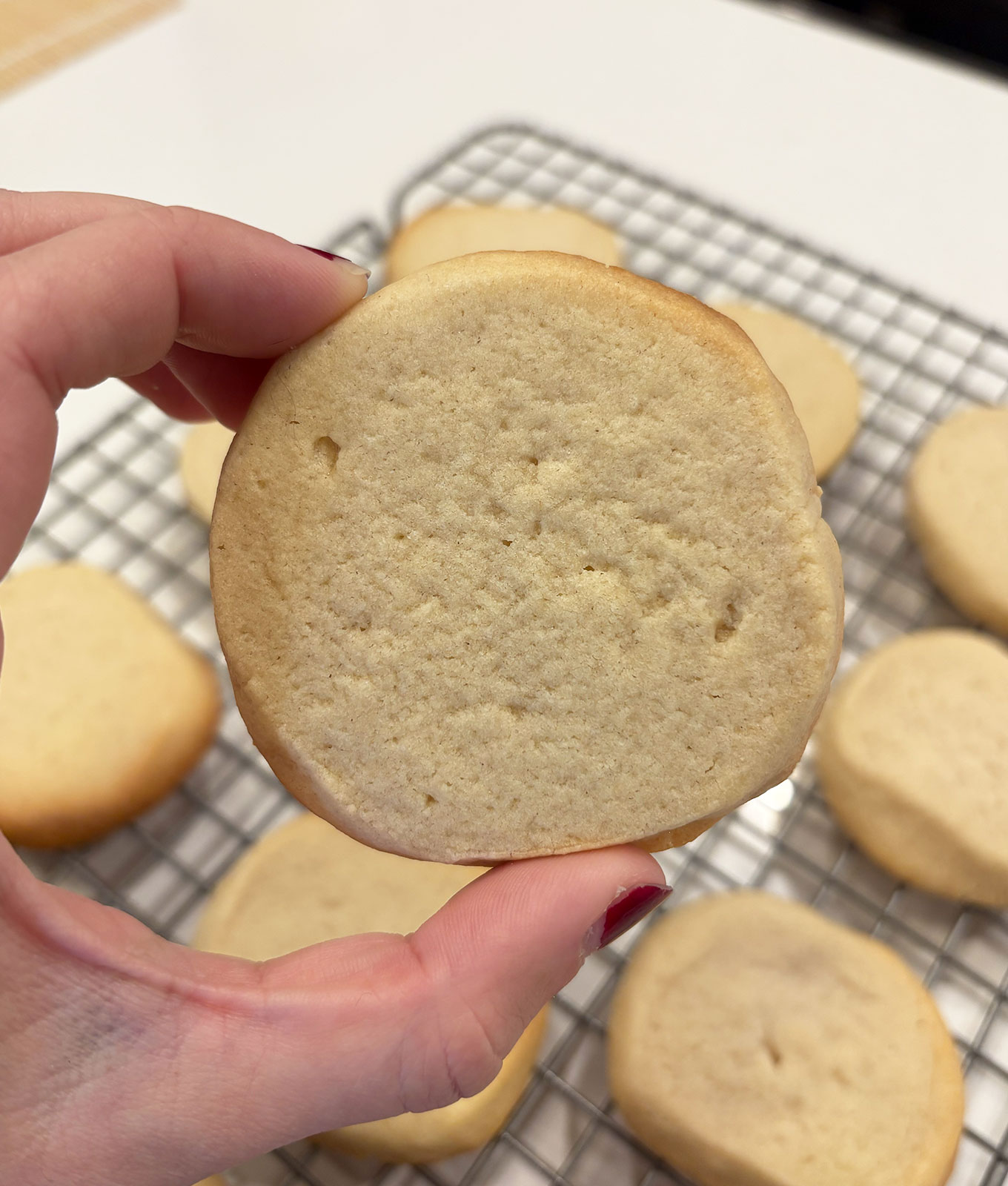
martha stewart sushi mat cookie hack: hand holding up a shortbread cookie
Taryn Pire

The Results

Whether it was user error or an oversimplification in the YouTube clip, Martha’s sushi mat hack only mostly worked. I’d suggest spending more time than shown in the video making the log as seamlessly round and smooth as possible before chilling it. I’d also chill it a bit longer (maybe 20 minutes) to help it keep its shape better as you slice it post-refrigeration.

That said, the cookies *were* more uniform than if I’d molded the log or each individual cookie ball by hand, and once they were baked, they looked even more similar in size and appearance. So, don’t be too discouraged if they don’t look perfect before baking. (You can also use a glass or cookie cutter to make them slightly rounder post-bake by placing it over the cookie while it’s still warm and gently rotating the glass to mold the edges.)


taryn pire 3

Food Editor

  • Spearheads PureWow's food vertical
  • Manages PureWow's recipe vertical and newsletter
  • Studied English and writing at Ithaca College