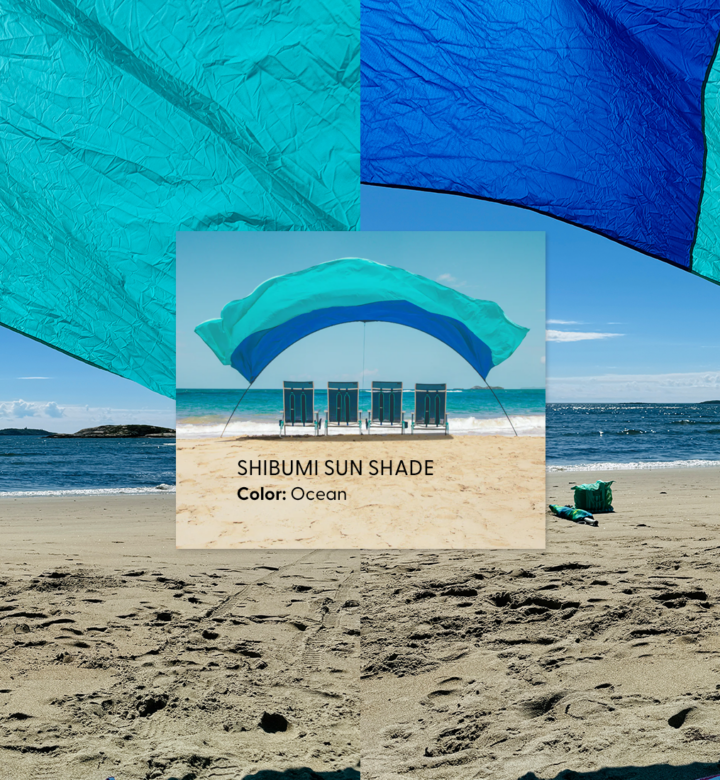
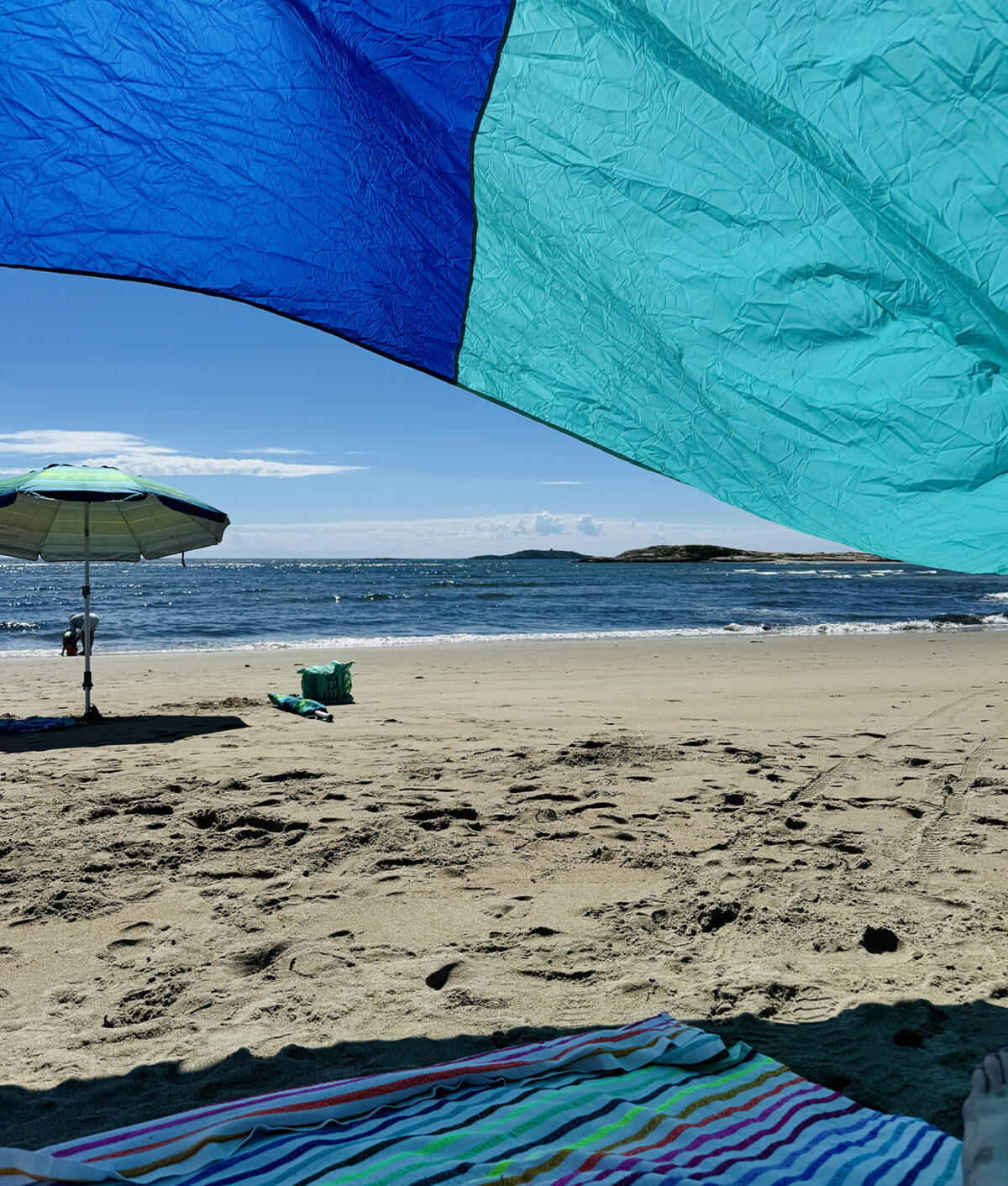
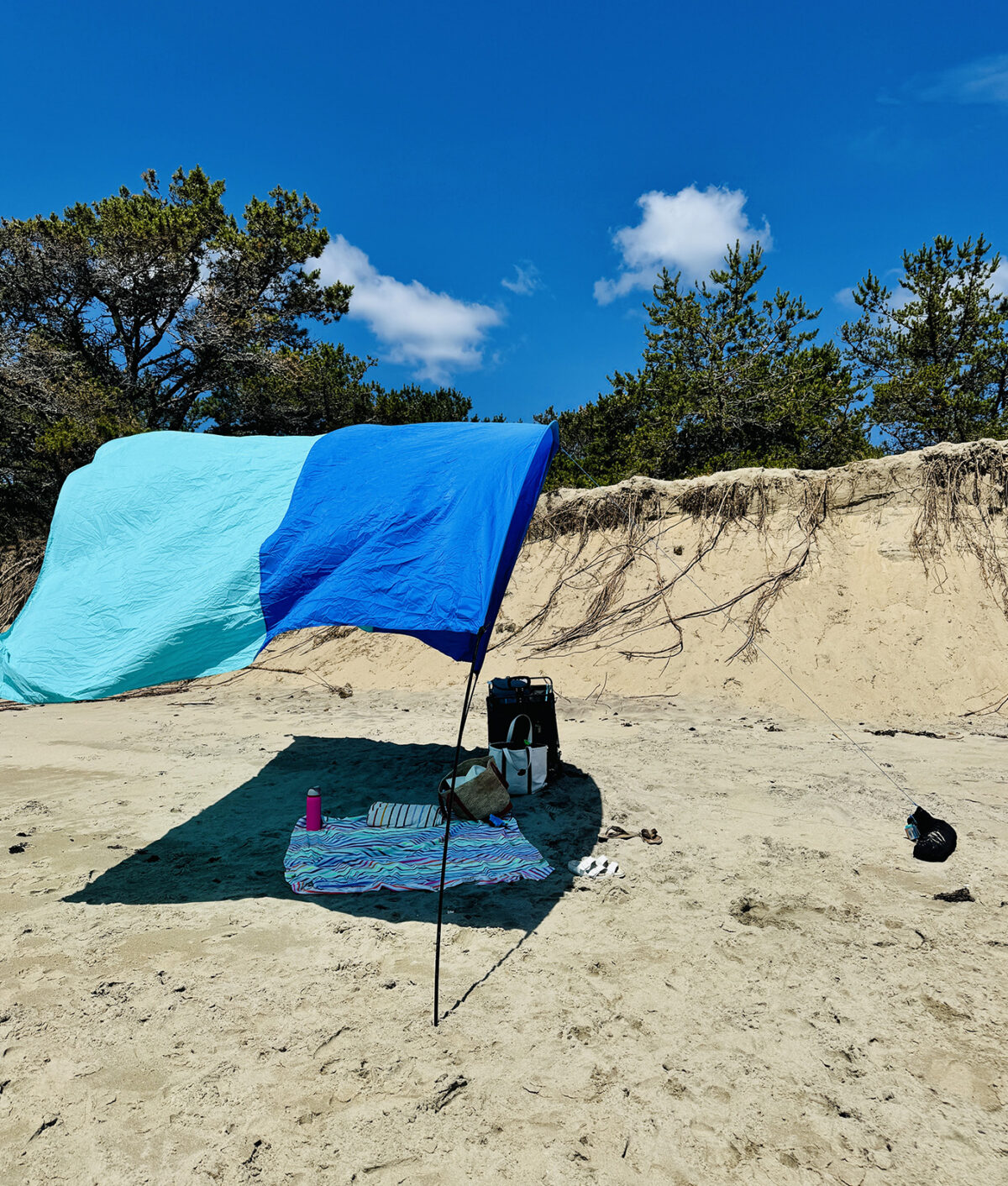
But (but!) I can’t leave this discussion without conveying that my experience with Shibumi was so positive. To be frank, I don’t remember the sound of the shade. What I do remember is the easy set-up, the ample shade that was provided, not to mention the subtle breeze versus the stale air inside a super-hot beach tent. In terms of the footprint, it didn’t feel any larger than a typical group of umbrellas. Additionally, it meant that most of our party—definitely the kids—could all easily (and equally) center their towels beside each other, minus any parental worries about who had a shoulder peeking out in the sun.
In terms of public safety, horror stories related to poorly anchored beach umbrellas live rent-free in my head. (I was once at a NJ beach where medics had to be called after an umbrella head-bonking incident.) Visibility for lifeguards is a separate issue, but even Myrtle Beach—where policies seem to be the most stringent—has acknowledged that wind-powered shades like the Shibumi weren’t around when blanket policies were created. They’re even considering a trial period in the future (though not for 2026) to allow them and see how it goes.
I will acknowledge that I used my Shibumi on a beach that’s beloved for it’s lack of crowds. Is there the potential for things to get more complicated with a sea of sun shades? Sure.
For the many, many people who own a Shibumi—me!—and still want to use it, the company now has a full list of beaches that won’t accept them in the FAQ section on their website so that beach-goers can plan ahead. They also seem to have enhanced their product with a new Quiet Canopy that has a “softer, more pleasing sound at all wind speeds.” Proof they’re listening and making tweaks.
Will I add a beach umbrella to my summer arsenal? Perhaps. But a Shibumi is still my #2 beach essential. Sunscreen is forever and always #1.