My Daughter Thinks About Santa Year-Round. We’re Jewish

Will my 4-year-old spill the beans about Santa to her class?

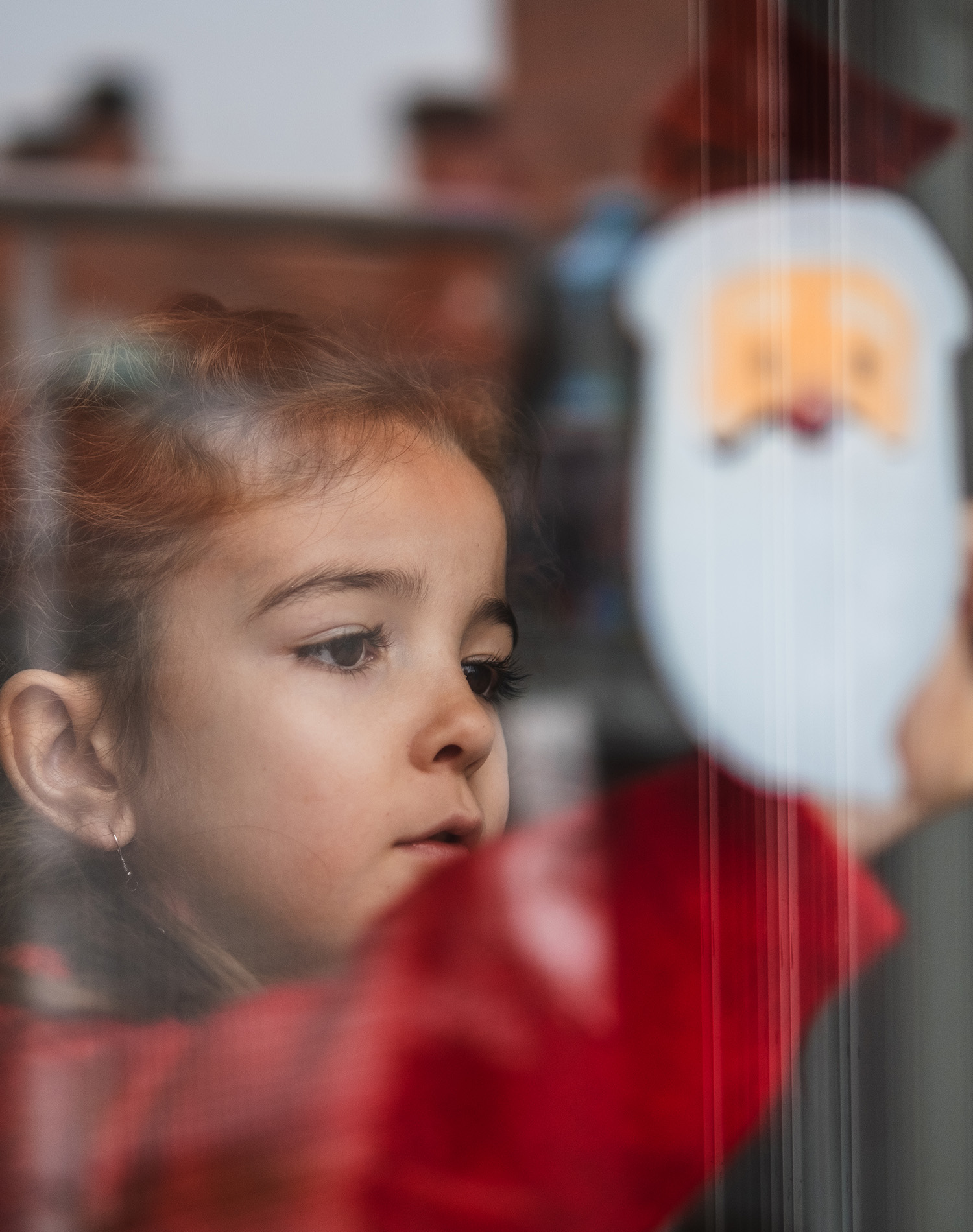
Little girl looks through Christmas decorated window
SBenitez/Getty Images

A construction paper fireplace, replete with a burning Yule log, candy cane garland and stockings was the centerpiece of my daughter’s play space at daycare during the holidays. So, when the Santa Claus commentary started rolling in, it seemed seasonally appropriate: “Santa!” my then 3-year-old old would announce as we drove by fancy Christmas decorations. But when the snow melted and seasons changed, we were still talking about Santa…it was Christmas in July at our house, save for the slight problem that we’re Jewish. But now that she’s 4, I’m hitting a parenting milestone I never thought I, a Jew, would be dealing with: breaking the news that Santa isn’t real. And every time I try to think about how we should approach it, I talk myself into circles. How do I break this news to her without ruining it for the whole classroom? Do we talk about religion? Fantasy? Both?

“For preschoolers, imagination and reality often overlap,” explains Alisha Simpson Watt, a licensed behavior analyst and founder of Collaborative ABA Services who specializes in child development. My explanation, then, might need a little bit of seasoning from both buckets—truth and play.

As Simpson Watt puts it: “You can be both truthful and playful by framing Santa as a shared tradition. For example, you might say, ‘Santa is a story many families enjoy, and I get to be one of his helpers.’”

While I’m not sure plopping myself into the mythology is right for our family, I get the sentiment: keep the excitement alive while gently shifting the focus from belief to participation. Maybe for us, it’s simply, “Santa is a fun story for many families! We tell different stories in our house.”

Still, why does it feel easier to answer questions like “Is Cinderella real?” Probably because all the princess-loving kids will outgrow the fantasy around the same time. But my daughter will be one of the few in her class not only learning that Santa is make-believe, but that she doesn’t get all the benefits of believing in him. And while I don’t want to mislead her, ripping off the Band-Aid feels like it could do more harm than good.

To this, psychologist and author Dr. Kate Lund suggests framing Santa as a universal story rather than a personal omission: “You can say, ‘Santa is a really fun story lots of families enjoy, even though it’s not one of our traditions.’ Then add, ‘We can still appreciate the magic of the story without celebrating the holiday itself.’”

We might not “do” Santa, but we do watch holiday movies. We don’t have a Christmas tree, but we play dreidel, eat our weight in latkes, and stuff our faces with Chinese food on Christmas Eve.

Still, there’s the part of me that wants to protect her from feeling left out. Family therapist Nicole Runyon reminds me that a little discomfort can actually be valuable. “It’s OK for children to feel left out,” she says. “Learning to tolerate being different early helps kids build confidence for later in life.”

Cue a reread of the classic We’re Different, We’re the Same.

And since I’m a standup citizen, I still have concerns about the greater good: what happens if my kid becomes that kid—the jerk who spills the beans at circle time? As Dr. Lund notes, “Every family tells the Santa story in their own way, so it’s kind to let other kids enjoy what they believe.” Translation: teach kindness, not censorship. Or as Simpson Watt puts it, expecting a 4-year-old to keep a secret that big is unrealistic anyway.

The holidays, with all their sparkle and noise, have a way of forcing us to define our own boundaries. We’re not going no-contact with Santa, but we’re learning to keep our own kind of wonder.

72 Gifts for Teens That Are Actually Cool, According to Real Gen Z-ers


DaraKatz

Executive Editor

  • Lifestyle editor and writer with a knack for long-form pieces
  • Has more than a decade of experience in digital media and lifestyle content on the page, podcast and on-camera
  • Studied English at University of Michigan, Ann Arbor