
I Hold My Son and Daughter to Different Standards

An expert helped me workshop my bias

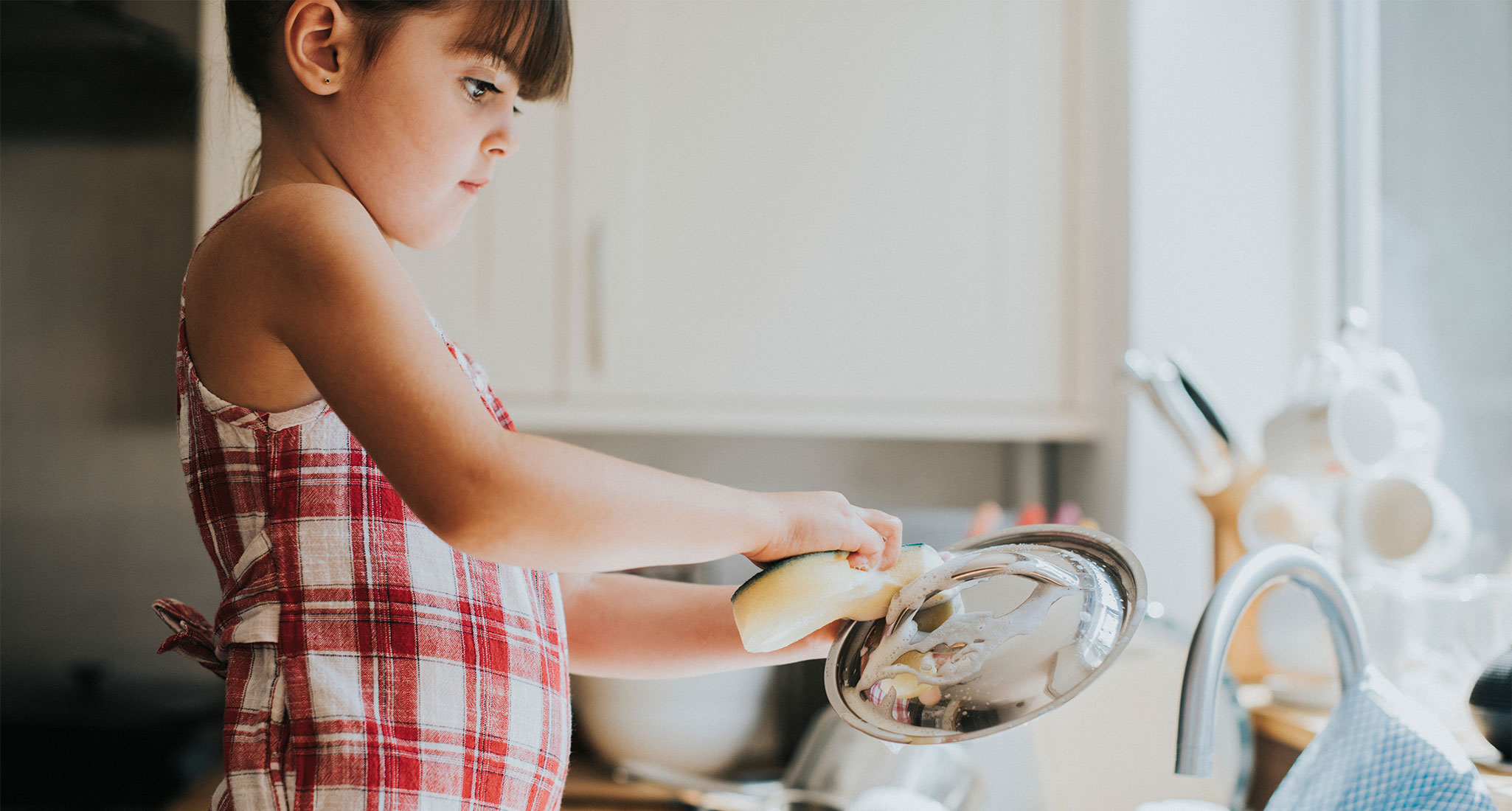
i-hold-my-son-and-daughter-to-different-standards: a young girl washing dishes
Rawpixel.com/Shutterstock

My daughter regularly asks to do the dishes. She also likes making her bed, preparing her own breakfast and generalized sweeping, which is not terribly effective, but nice in theory. In short, she is a parental dream, proving, at age nine, not only helpful, but a full validation of my laissez-faire approach to parenting. Who needs rules? Kids just want to help their parents.

The problem? My 11-year-old son most certainly does not ascribe to this philosophy, leaving breadcrumb-like trails of socks and used tissues around the house and sooner going hungry than lifting a finger to make his own food. (In fact, he’s stealthily found a way to convince his sister to make snacks for him, and I often catch her hustling around the kitchen preparing two trays of pre-dinner crudités.)

This is troubling from the stance of equity and learned helplessness; why do boys inherently feel absolution from the mental load? But it’s doubly troubling, because I fear my husband and I have encouraged this unequal dynamic by subconsciously holding our children to different standards.


Meet the Expert

Laurie Kramer, PhD, is Professor of Applied Psychology at Northeastern University. Kramer served as Founding Director of the Family Resiliency Center and as Associate Dean of Academic Programs at the University of Illinois, where she is now an Emeritus Professor. She is a Licensed Clinical Psychologist in Illinois. Her research, which centers on enhancing children’s sibling relationships, has been highlighted in national and international media.

The Problem of Aptitude

Of course, most parents don’t try to hold their kids to different standards. And of course, my husband and I think boys and girls should be held accountable in equal measure. But the fact remains: Most of us expect more from the people who have previously exhibited aptitude and less from those who have not.

Case in point: If the coffee table is littered with seltzer cans and school supplies, my instinct is to ask my daughter to clear it, even if her brother was the one who made the mess. After all, if I ask her to clean things up, I know it will get done without conflict. And sometimes Mommy is just…tired.

But this cycle isn’t healthy, says Laurie Kramer, PhD, a professor in applied psychology at Northeastern University and an expert on sibling dynamics.  

“We tend to expect that girls are to going be much be more nurturing than boys,” she says. “They’re the ones we ask to help out around the house or to get the diapers. Whereas we expect boys to be a protector of younger siblings or to be the fun one, the good play partner.”

The issue isn’t that we’re wrong. Girls are often more conscientious and attentive to detail, Kramer admits. The issue is that it does a disservice to boys, who “have the potential to be just as conscientious, even if those characteristics don’t emerge until a little bit later.” Plus, it puts an awful lot of pressure on our daughters and can extend to burdens beyond chores and housework.

“This [inequity] applies not just to tangible behaviors that we do at home,”—the dishes, the laundry—"but also the things that we don’t see, the emotional labor,” Kramer says. “Because sometimes we are implicitly asking a particular child to be the counselor, the empath, the one to carry the bad feelings.” (As well as the crudité plates.) And if that child is always the daughter, that teaches a particular lesson to both children.

Equity vs. Equality

So, what can parents do if we notice ourselves assigning more work to one kid over another? Or if our children point out a perceived slight? The first thing is to talk about it, Kramer maintains. “Everyone in the family makes up their own interpretation of what’s going on, and those things often don’t match up across family members. So, we have to have clear communication so that kids can tell their parents, ‘Hey when you did this to my sister and not to me, it felt really bad.’”

quotation mark

“Differential treatment isn’t always a bad thing,” says Kramer. “Kids want to be treated in ways that recognize who they really are, that appreciate their skills, talents, interests and goals.”

She also thinks we need to worry less about tit-for-tat and more about recognizing each of our kids for who they are and what they’re good at—and then working those skillsets into our expectations. Is your son a foodie? Get him cooking Sunday supper. Is your daughter technologically inclined? Have her update the Skylight Calendar each week.

“Differential treatment isn’t always a bad thing,” says Kramer. “Kids want to be treated in ways that recognize who they really are, that appreciate their skills, talents, interests and goals.”

Next, make sure you and your spouse are modeling non-stereotypical chore and caregiving behavior yourselves. Does he do all the driving? Do you send all the Christmas cards? Kids notice this stuff! “Watching a dad do things that a woman typically does in our society?” Kramer says, laughing. “That’s priceless.”

And finally, acknowledge that there are just some chores that nobody wants to do, but need to get done regardless. In other words, it may be time to channel my son’s love of soccer into washing his own uniform. But he also needs to bus his own damn dishes.


jillian quint editor in chief purewow

Editor-in-Chief

  • Oversees editorial content and strategy
  • Covers parenting, home and pop culture
  • Studied English literature at Vassar College