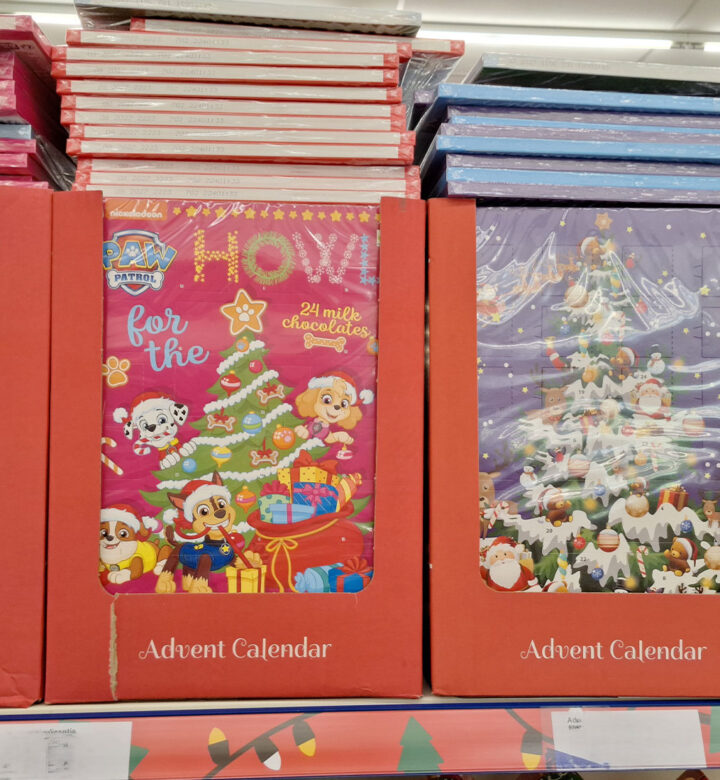
Now, I’m not against Advent calendars. For one, I love the appeal of discovering a new product every morning (or evening if that’s your thing.) Who doesn’t love a beautifully packaged assortment of chotskies you might not otherwise buy yourself? But these days it’s moved away from a precious holiday tradition to an opportunity for brands to convince us that we need more stuff. Oh, and not just any stuff—exclusive stuff. Advent calendars are like status symbols because they’re tapping into the same psychology that makes special purchases so desirable in the first place: exclusivity, aspiration and the feeling of belonging to a club that not everyone can join.
I think about Sephora, which has turned the beauty Advent calendars into a holiday shopping event of its own. And then there’s high end brands like Dior, which has taken the concept to an entirely different tax bracket. Its Le 30 Montaigne Dior Beauty advent calendar is $800. Yes, you read that correctly. Hundreds of dollars to count down to Christmas. At that price, I don’t want miniature surprises. I at least want a staycation and someone to take down my Christmas decorations in January.
The astronomical price tags are only part of the appeal. Limited quantities, early-access opportunities and waiting lists have practically become table stakes for Advent calendars. Some even sell out immediately, while others generate weeks of anticipation and social media chatter. To me, the actual products inside are secondary to the thrill of securing one.
And brands are profiting from the experience. One lipstick is one purchase and one social media post. An Advent calendar is potentially 24 days of content. It’s a marketing department’s Christmas miracle.
And, of course the perceived value isn’t lost on me. Brands love to tell us that their $300 Advent calendar contains $700 worth of products, which sounds like a fantastic deal until you realize you’re congratulating yourself for saving $400 on things you didn’t need in the first place. Gotta love girl math.
The irony is that Advent calendars were originally about anticipation. The joy came from waiting for Christmas, not from the monetary value of whatever was hiding behind door number 17. Now, the anticipation is about it selling out? And, will yours look as impressive on Instagram?
It truly makes me wonder, how much are we actually paying for the products, versus the privilege of owning something with a recognizable brand name on it? A bobby pin isn’t a luxury item because it arrives in a beautifully designed box. Ultimately, it’s depressing that a simple holiday ritual has been transformed into yet another thing we’re supposed to want, purchase and display. And at a time when the holidays already come with enough pressure to buy the perfect gifts, decorate the perfect home and create the perfect memories, do we really need the perfect advent calendar, too?
So, yes, I’ll probably continue watching the unboxing videos. I might even be tempted by a calendar or two for my kids. But I refuse to believe that the magic of Christmas is hiding behind a $500 box of miniature moisturizers. For me, a mediocre piece of chocolate is more than enough.