As I’ve scrolled through social media lately, I’ve been getting served videos of various influencers telling me to eat my skincare. A few of the tantalizing captions: “POV: you cancelled your Botox appointment after two weeks of eating this,” “‘I can see your makeup,’ ‘Me everyday:’” (over a montage of healthy foods), “Me every day because I’m not losing that 1 percent every year” and “Foods I eat for clear skin.” The videos are rife with healthy-looking foods: fish, vegetables, fruits and more dishes promising a flawless, unlined complexion, even at 60. That’s a tall order, so I sat down with three skincare experts to ask if one really could eat one’s retinol.
TikTok Really Wants You to Eat Your Skincare…But Should You?
The derms weigh in

•
Published Oct 16, 2026
Shutterstock
Meet the Experts
- Dr. Kseniya Kobets is a Board-Certified Dermatologist and the Director of Cosmetic Dermatology at Montefiore Einstein Advanced Care. Dr. Kobets received her medical degree from the Yale University School of Medicine and completed her residency at the University of Pittsburgh Medical Center.
- Dr. Sapna Palep is a Board-Certified Dermatologist at Journelle Skin. She conducts annual skin cancer screenings and treats all dermatologic conditions, including acne, eczema, psoriasis and rosacea. She is also highly sought after for her skill in cosmetic treatments, including Botox, chemical peels, dermal fillers, microneedling and resurfacing lasers.
The Truth About “Eating Your Skincare”
Being able to replace the dozens of bottles on my vanity with a handful of carrots, oranges and kale (drizzled in olive oil, of course) sounds appealing, but unfortunately, it doesn’t work like that.
“Wrinkles and collagen loss are multifactorial, so no single food or supplement is going to make a huge difference if the rest of your diet is poor, you are unhealthy or dealing with inflammation, excessive sun exposure or you don’t have a good skincare regimen,” Dr. Kobets says. Your body distributes nutrients (fatty acids, vitamins, minerals, antioxidants) via the bloodstream after they get absorbed in the gastrointestinal tract. This helps your skin and body function normally. When it comes to topical products, this simply allows you to apply concentrated ingredients on a targeted area.
Additionally, more doesn’t necessarily mean more. It’s important to correct nutrient deficiencies that impede collagen formation (vitamin C, amino acids), but there’s no such thing as stockpiling. Rather, there is an oversaturation point for ingredients like Vitamin C; excess can, Dr. Kobets cautions, lead to GI issues and increase the risk of kidney stones in certain people.
“I think of it as filling the tank. You need the nutrients and building blocks, but overfilling it doesn’t make the collagen-making machinery work faster,” she says.
So, What Does That Mean for “Eat Your Sunscreen”?
A subsect of the “eat your skincare” movement is eating your sunscreen. Content on social media abounds recommending food that creators say helps protect your skin. It sounds ludicrous—but there is both fact and fiction in the claims. Dr. Kobets explains: “There is also interesting evidence around oral photoprotection,” she says. “Certain carotenoids, polyphenols and Polypodium leucotomos extract have been studied for increasing the skin’s resistance to UV-induced erythema and oxidative damage.”
However, it’s important to understand that food doesn’t replace UV protection in the form of sunscreen and UV-gear. “I sometimes think of these as an extra layer of defense, but definitely not an oral sunscreen,” Dr. Kobets continues. “Sunscreen, protective clothing and shade are still the foundation of photoprotection. No amount of blueberries, green tea or antioxidant supplements is going to replace properly applied and reapplied sunscreen, protective clothing and smart sun behavior.”
Derm-Recommended Foods
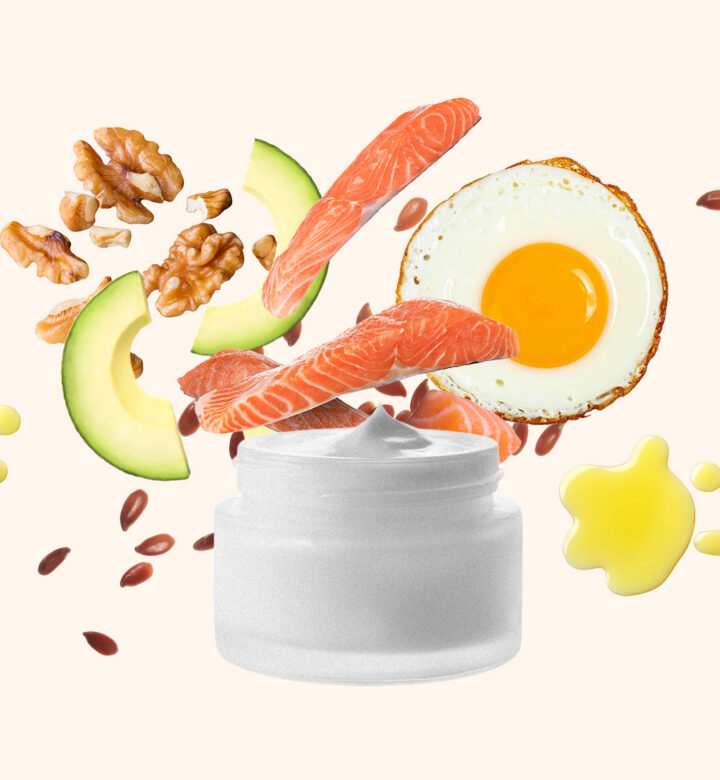
So if nutrition and skincare can work in tandem, what should you be eating? Dr. Palep recommends eggs (protein, Vitamins A and E), avocados (healthy fats, Vitamins C and E), flaxseeds (omega-3 fatty acids), walnuts (antioxidants, omega-3s), dark chocolate (antioxidant falvanols) and salmon (omega-3 and 6 fatty acids) as a starting point.
According to Dr. Kobets, protein is a source of amino acids required for structural protein in our bodies, like collagen and keratin. Fatty acids facilitate skin barrier functions, including, potentially, skin hydration.
“Nutrition can influence inflammation, oxidative stress, the microbiome and skin-barrier function,” she says, “So what is good for your overall metabolic health tends to be good for your skin as well.”