How Did $17 Work Salads Become a Status Symbol? Let’s Unpack It

Delicious? Yes. Elitist? Also, yes

elitist-work-salads
Paula Boudes for PureWow

When I worked in New Jersey, I’d nearly always bring lunch from home. Whether it was leftover lo mein or a turkey sandwich, I’d have something simple and affordable to carry me through the 3-o’clock slump. But once I started working in NYC, that changed.

Instead of brown bagging, I’d place an online order for pickup at the trendy salad shop downstairs (Buffalo Chicken with extra pickles). My turkey sandwich felt uncool, albeit practical, and the people-pleaser in me felt obligated to eat at my desk. Lunchtime suddenly felt like a performance once it was taking place in a Manhattan skyscraper: Without any explicit prompting, I wanted to appear healthy, financially secure and cool enough to deserve my desk, and an $18 salad was a way to do all three without much legwork.

As a freelancer who works from home now, there are certainly days that I crave a bowl of pricey roughage. But looking back, shaking dressing around a compostable hexagonal bowl was more a social signal than a health choice or wellness ritual. It took me back to being a kid in the cafeteria, feeling subpar with whatever my mom packed me because I didn’t have the money to buy French bread pizza or canned Snapple like the cool kids. I’d eye my coworkers’ lunches as an adult with the same curiosity, scrutiny and childlike insecurity as I did in elementary school, wondering, Am I cool enough to sit here?

Thinking back, I want to better understand what made me—a self-proclaimed abstainer of trends, especially expensive ones—opt into this corporate norm without thought or hesitation. Better yet, what makes any of us spend $18 on a bowl of produce from chains like Chopt, Sweetgreen and Honeygrow in an era of economic uncertainty and what feels like ever-rising prices? Is it really for our health? In my case (and likely yours), it’s deeper than nutrition.

But First, Salad’s Glow-Up

Before I knock them, let’s give credit where credit is due: Salad as we know it has come a remarkably long way. From postwar gelatin monstrosities to the 20th-century salad bars of buffets’ past, the term didn’t always refer to a photogenic arrangement of veggies. Those that were vegetables (read: not Jell-O-based creations) became signs of refinement, prepared and served tableside at fine dining spots to pave the way for gussied-up prime rib and flaming bananas foster.

While America’s wealthy savored the spectacle on nights out through the 1960s, green salads remained a restaurant delicacy for decades rather than a DIY meal, save for select housewives aiming to impress. They certainly weren’t served as standalone mains, either; instead, iceberg, dressing and a few croutons were a side at best.

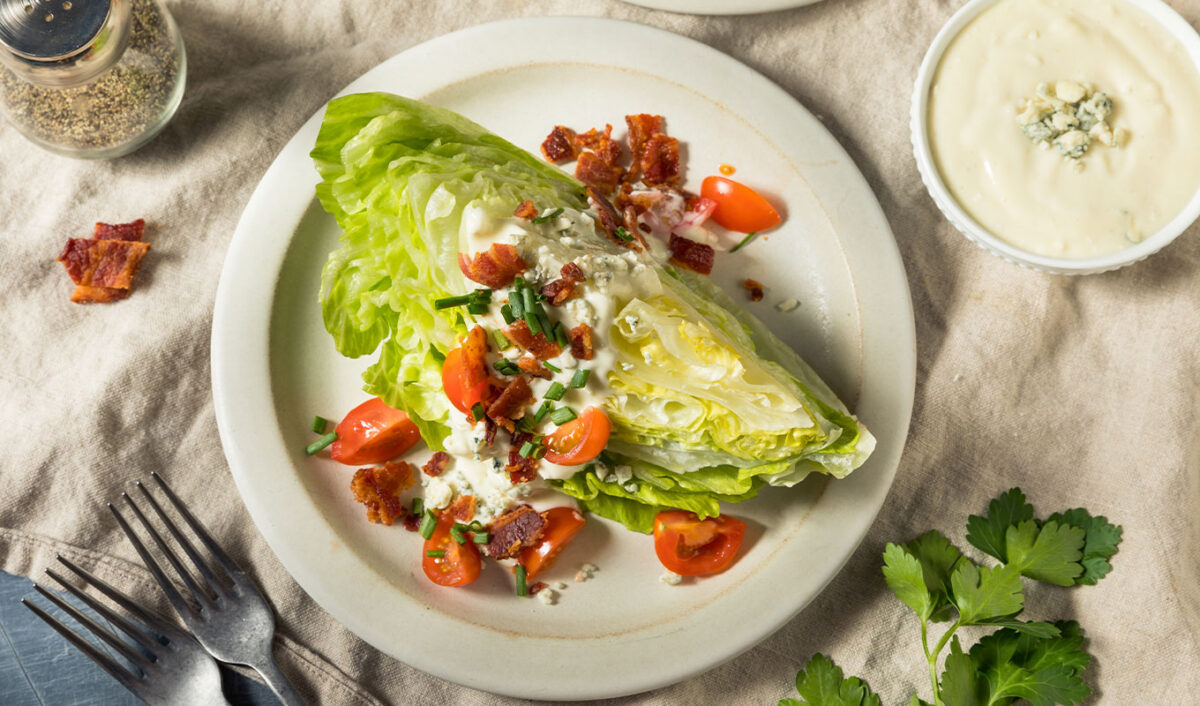
elitist work salads: an iceberg wedge salad topped with dressing, tomatoes and bacon
Brent Hofacker/Shutterstock

By the ’80s and ’90s, salad veered into diet food territory in the public’s mind. After obesity was declared a global epidemic in 1997, the general public became more health minded. Folks sought lighter, more nutritious quick meals than fast food, resulting in a slew of salad chains opening around the country in the early aughts, largely in major cities like New York. Add Chipotle-like customization to the mix with a slew of drool-worthy toppings (burrata! Norwegian salmon! roasted pistachios!), and Americans were quickly sold. By 2013, New York Times called chopped salad “the lunch choice in the Northeast.” Salads trickled down from fine dining spots to delis and corner stores before salad chains took the baton.

High Price for High Quality

Brands like Chopt, Just Salad and Sweetgreen indeed took salad to new heights. With an unprecedented range of peak-fresh produce (often seasonally rotated and locally sourced), cooked and raw add-ons, proteins, cheeses and dressings, a bowl of greens was finally filling enough to serve as a main. A number of featured vegetables had their own rebrands in the 2000s too, becoming the it-girls of the produce aisle (cauliflower walked so mushrooms could run, not to mention Brussels sprouts).

These chains offered everything that fast food salads couldn’t. Sure, a Sweetgreen salad is nearly four times more expensive than the now-discontinued McDonald’s Cobb salad (which cost about $4.50 in 2006, a year before Sweetgreen opened), but you essentially got what you paid for. Fast food chains offered cheaper greens of lower quality; not only were diners not interested in trading fries for iceberg, but they also didn’t trust burger joints to deliver quality greens in the first place. No wonder McDonald’s nixed salads from menus in 2020.

quotation mark

It’s not cheap to buy a fancy salad five times per week, but your purchase doubles as a statement to your deskmates.

elitist work salads: a sweetgreen salad bowl
Zack Whitford/BFA/Shutterstock

Today’s salad chains have earned public trust and nutritious credibility by serving quality—and that’s nothing to minimize (particularly in light of the recent Cyclospora outbreak). Plus, bowls are assembled by hand with fresh ingredients, rather than reheated from frozen. While they’re not exactly scamming customers, it’s key to dissect our motivations for splurging when we could often just as easily make the same salads at home for less, especially when we’re strapped for cash.

Salad as Quiet Luxury

A decade ago, most Sweetgreen salads cost $9 to $14. Today, they average $16 each. Inflation or not, it’s an investment folks are willing to make nonetheless. Higher cost hasn’t kept folks away; as Americans have less money to spend on proper meals out, fast-casual chains that tout nutrition are an alluring compromise. Here’s the real crux, though: It’s not cheap to buy a fancy salad five times per week, but your purchase doubles as a statement to your deskmates.

Like the tableside Caesars of yore, modern salads are symbols of wealth. Toting a green bag to your desk (along with a gut-friendly prebiotic soda, if you’re really committed) shows your coworkers that you have the money to invest in your health. You’re buying into a larger concept of aspiration when you buy these salads: You’re health-conscious, cool and most importantly, have disposable income.

quotation mark

Most of us can’t be stunning, rich and living our best lives 24/7, but we can buy a salad to simulate the feeling.

IMO, even the compostable container is the equivalent to a high-end, painfully beige designer blazer: It’s understated and minimalist in its allure, offering folks a taste of opulence that they couldn’t otherwise buy into. Even the customization angle is a privilege, as you can get *exactly* what you want and show it off like you invented dressing on the side. I see this aspect of salad culture as a trifecta of trends: clean girl aesthetic meets quiet luxury meets little treat culture—most of us can’t be stunning, rich and living our best lives 24/7, but we can buy a salad to simulate the feeling. At least for a 28-minute lunch break.

Investment in Wellness Is Social Currency

Today (and always), wellness is largely a privilege. It’s difficult to untangle health and wellness from fatphobia, classism and misogyny. Salad was viewed as strictly diet food for a good part of the late 21st century. While this surely impacted Americans at large, women likely felt more obligated to show restraint in the breakroom when lunchtime hit (after all, it was “women laughing alone with salad” that was meme-ified, not men). A thin person eating a salad may be idolized or praised, while a fat person eating a salad may be judged for it (despite perhaps having been told to do it by those same internet strangers). Salad chains, despite their messaging that implies nutrition for all, are largely located in pricey suburbs or corporate havens, while low-income communities often don’t even have a grocery store, living in food deserts where fresh produce feels unattainable.

With the tap of a card, folks can pay to be on the blessed side of wellness; it’s not solely about nutrition, but also visually representing the privilege of being nutritious in the first place. A Sweetgreen salad is the Erewhon smoothie of the East Coast: It’s a cultural icon, an Insta-worthy symbol that you’re invested in yourself (and footing the bill). Better yet, you’re cooler for it, and tapped into a larger concept of wellness, self-care and beauty.

For instance, your salad may signal someone to ask you about your skincare routine, even if you don’t have one. A stranger may see you in leggings holding a Sweetgreen bag and ask where you take Pilates, even if you don’t work out. In a world of largely invented social media identities, these emblems are perceived as representations of a lifestyle or ethos that is unattainable for most, but still tantalizing. Whether you’re consciously trying to look like a cool girl or are simply craving a salad, the way your lunch is perceived isn’t up to you.

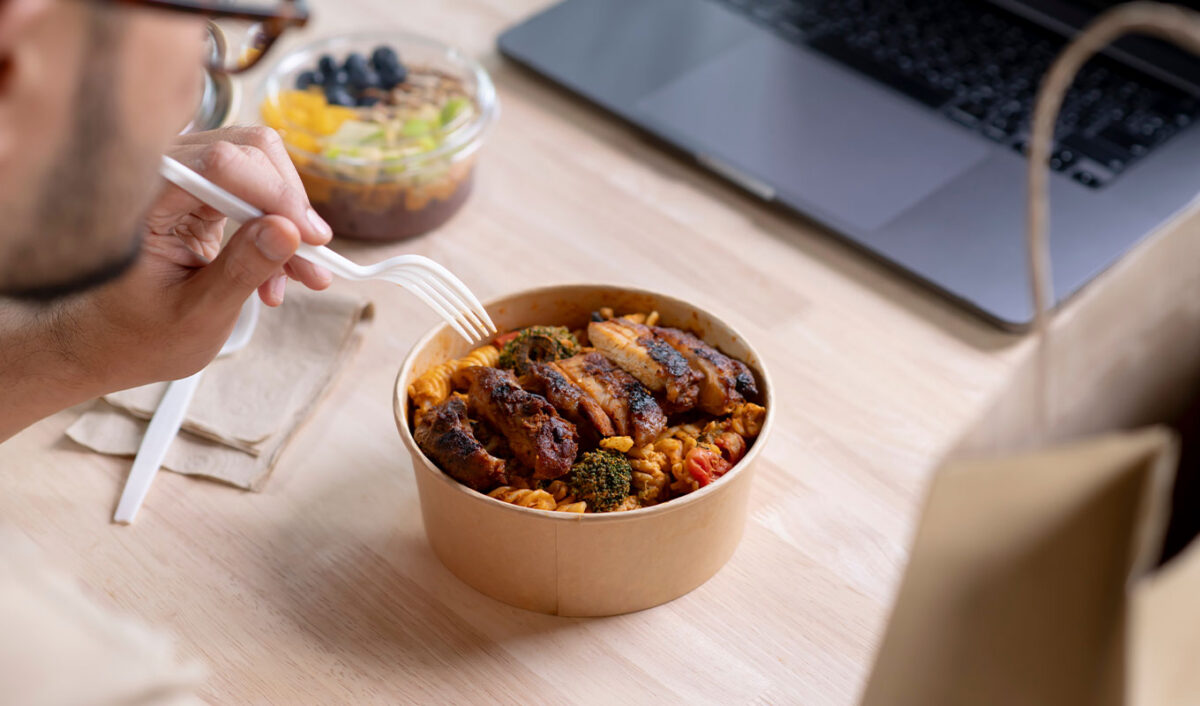
elitist-work-salads: a man eating a meal at a desk
amenic181/Shutterstock

Salad as the Fourth Horseman of Rat Race Culture

Consider the 1980s power lunch: Heavy-hitting businessfolk would go out for Scotch, oysters and steak to close deals, make money and stroke egos. By the 1990s, diet culture, a younger workforce and higher office rents started the shift, at least in NYC—think mineral water and Diet Coke flowing in place of gin martinis. But corporate salad culture, IMO, was the official death nail. (If you ask Eater, it was simply the “new power lunch” by 2019.)

Today, power lunch is all about maximizing efficiency and productivity, rather than face-to-face wheeling and dealing. Not only can you show your coworkers that you’re cool and nutritionally minded, but thanks to Chopt being located a stone’s throw away from your office and there being handy online ordering, you can fetch a bowl of greens and be back at your computer in mere minutes. Odds are you eat the salad alone at your computer too, rather than in the breakroom with friends. Many of us fuel up to keep working because there’s an unspoken hesitance around taking a break—and the result is feeling like you never properly recharged in the first place.

What’s a Kale Caesar Lover to Do?

I have nothing against folks who want to treat themselves to a fancy salad. And hey, if you can afford Sweetgreen every time you’re in the office, more power to you. But I think it’s important to ask ourselves why we spend our money where and how we do.

Are you going to Honeygrow because it was strategically placed 10 feet from your office? What would it look like to get a gyro from the cart down the street instead, and be away from your laptop for five more minutes? Are you craving McDonald’s but worried about the social implications of eating a Big Mac at your desk? Are you embarrassed to bring last night’s cacio e pepe? What is it that a #saddesksalad signals to those around you, and what are you giving up if you eat something else?

We all deserve access to quality food, and if you ask me, we deserve to choose what we eat without feeling like there’s a make-believe influencer (or worse, a real boss who doesn’t believe in lunch breaks) watching us. Truly think about what you’re in the mood to eat, so nourishing yourself doesn’t feel like a fussy obligation between work tasks. Trade your screen for small talk when lunchtime rolls around. Make your salad from home, pack it in a cute lunchbox you’re excited to show off, and take an actual break instead of shoveling kale down your throat between keystrokes—that sounds more like real wellness to me.


taryn pire 3

Taryn Pire

Food Editor

  • Spearheads PureWow's food vertical
  • Manages PureWow's recipe vertical and newsletter
  • Studied English and writing at Ithaca College