Summertime, and the livin’ is...a sweat fest. Ew. If only it were as easy as singing an Ella Fitzgerald song to transform sticky summers into something nice and breezy. Enter: cooling shirts. If you’re wondering what the heck that is, well, it’s just like it sounds. These shirts are made of fabrics that are known for their moisture-wicking, quick-drying abilities. (And, with some tech, also fight against odors.) That includes materials such as the classic linen and cotton, plus silk, hemp and seersucker, to name a few. And the best part is, the options are stylish and not always the frumpy, practical long-sleeve cover-up with UPF 50+. (Though we’re not knocking them.) These are shirts you can wear to the beach, the office, running errands, on a hike—basically, in every facet of your life during the sweltering summer months. Here, we’ve pulled 15 of the best cooling shirts, from our overall favorite, the versatile Lilly Pulitzer Briette Top ($98) to beach cover-ups, staple white tees and outdoor wear. Plus, textile experts break down the different types of cooling fabrics and what makes them so great.
The 15 Best Cooling Shirts You Need to Survive a Sweaty Summer
Plus, an expert breaks down the materials to shop
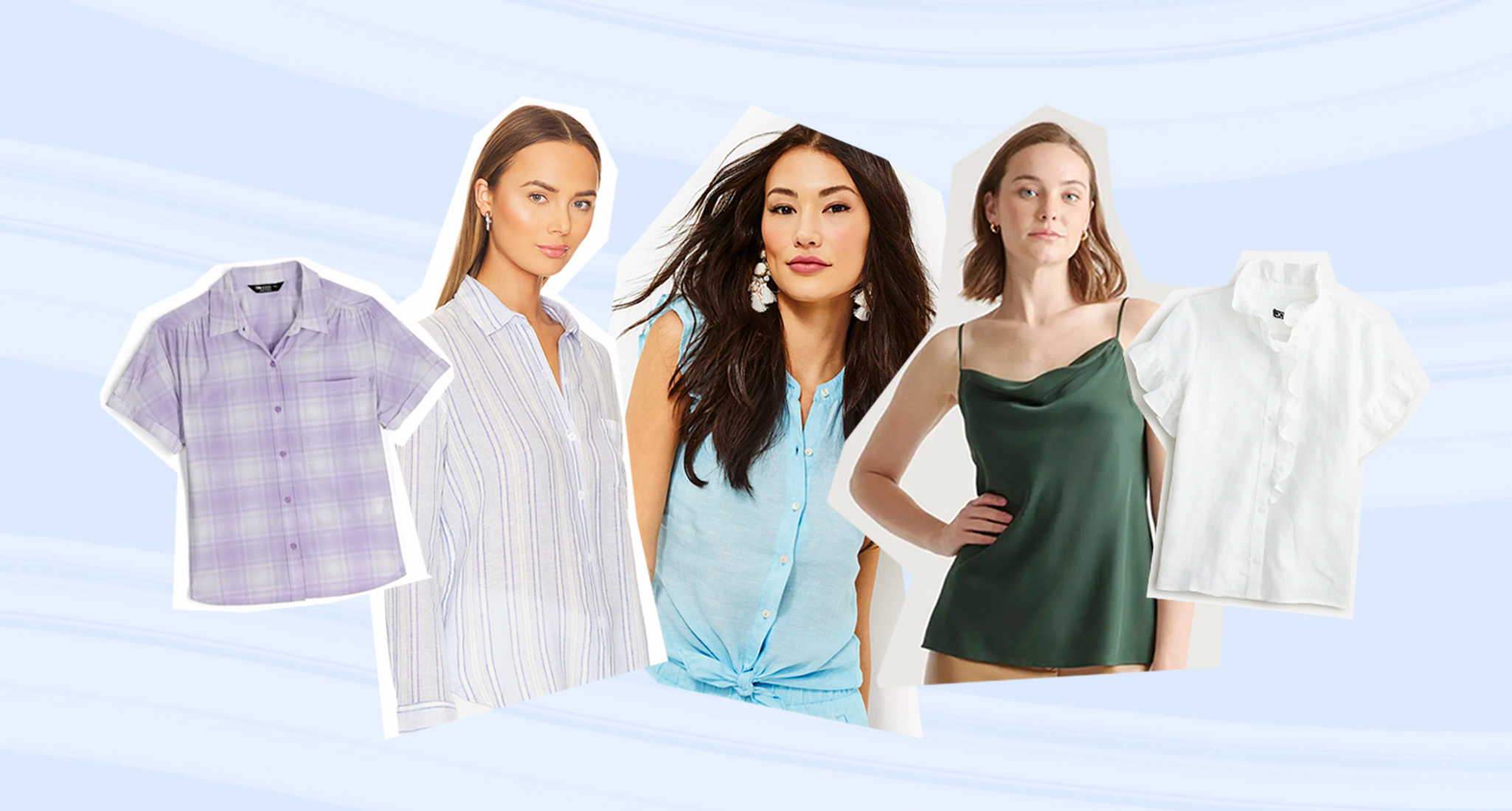
The Best Cooling Shirts at a Glance
- Best Overall: Lilly Pulitzer Briette Top ($98)
- Double Duty Cover Up: Rails Charli Button Up ($178)
- The Going Out Top: Quince Silk Cami ($40)
- The Work Shirt: J.Crew Linen Cottage Top ($98)
- Best with SPF: Outdoor Research Astroman Sun Shirt ($89)
Meet the Experts
- Julie Willoughby, PhD, is the chief scientific officer at Circ, a US-based mixed textile recycling innovator. Prior to joining Circ, Willoughby served as a professor in textile engineering and color science at NC State University and as a director of manufacturing innovation at Nike.
- Frej Lewenhaupt is a textile expert and the co-founder/CEO of Steamery, a Scandinavian clothing care brand whose product range includes steamers, fabric shavers, laundry products and clothing brushes. Lewenhaupt holds a degree in textile engineering from the University of Borås in Sweden.
- Laurie Fulford is the executive laundry pro at Poplin, an on-demand, nation-wide laundry service.
How We Chose the Best Cooling Shirts
In order to choose the best cooling shirts, we evaluated editor favorites and buyer reviews of popular picks, assessing the following qualities:
- Material: is it made of the expert-recommended fabrics?
- Functionality: where can you wear it, and for what activities?
- Style: because we want to look cool and cute.
- Value: price versus quality of the product.
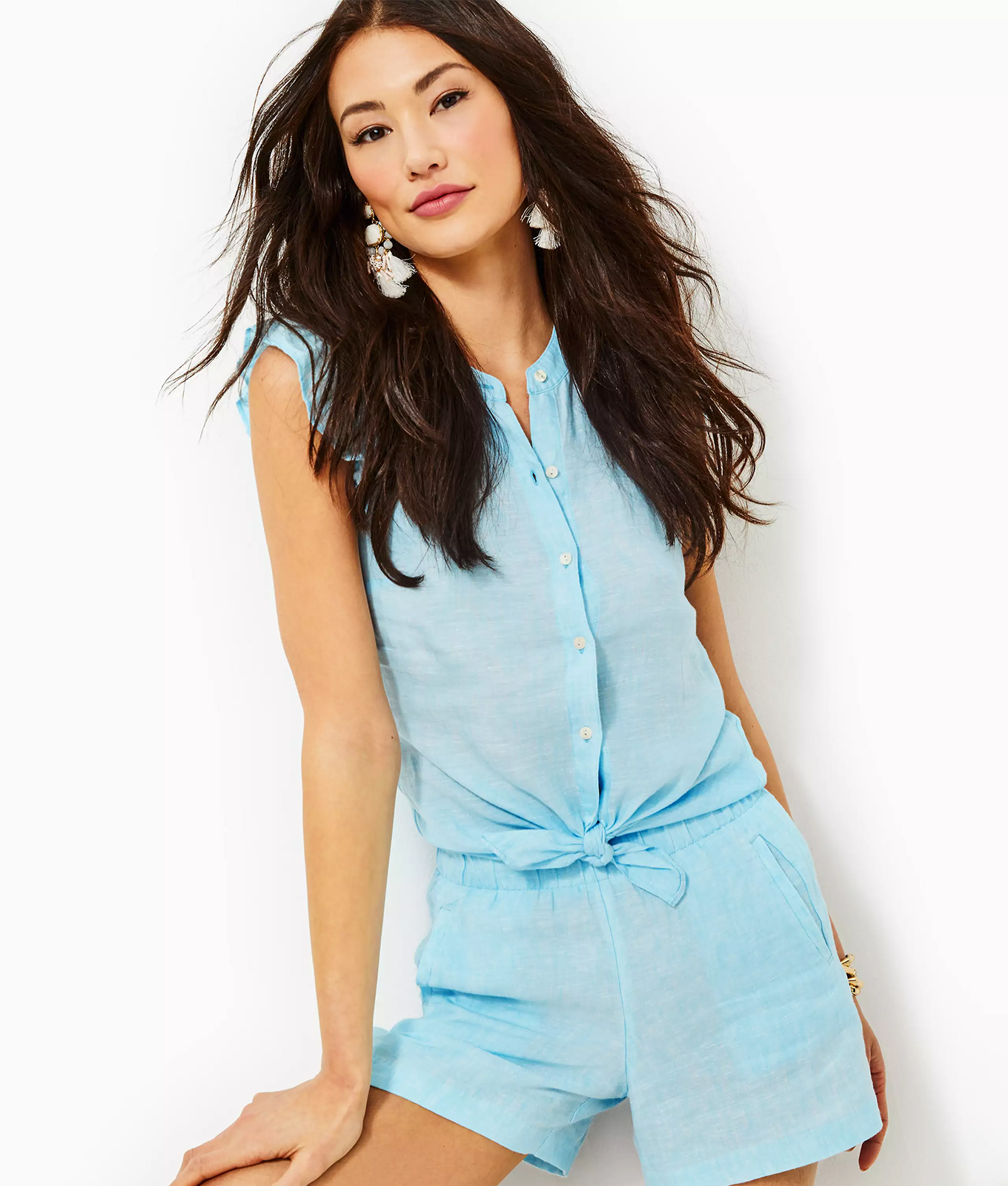
- What We Like: summery colors, versatile styling, understated ruffle shoulders
- What We Don’t Like: reviews suggest it may run small
- Material: linen
- Sizes: XXS to XL
This top has become a staple in PureWow associate editor Marissa Wu’s summer closet. “I love that it’s a great all-occasion shirt,” she says. “I literally wear it everywhere: work, social dancing, events. The linen keeps everything breezy and I like that I can style it by either tucking it in or tying it at the waist to change up the look.” Wu finds the shirt true to size, but do note that some reviewers say that it can run small in the bust.
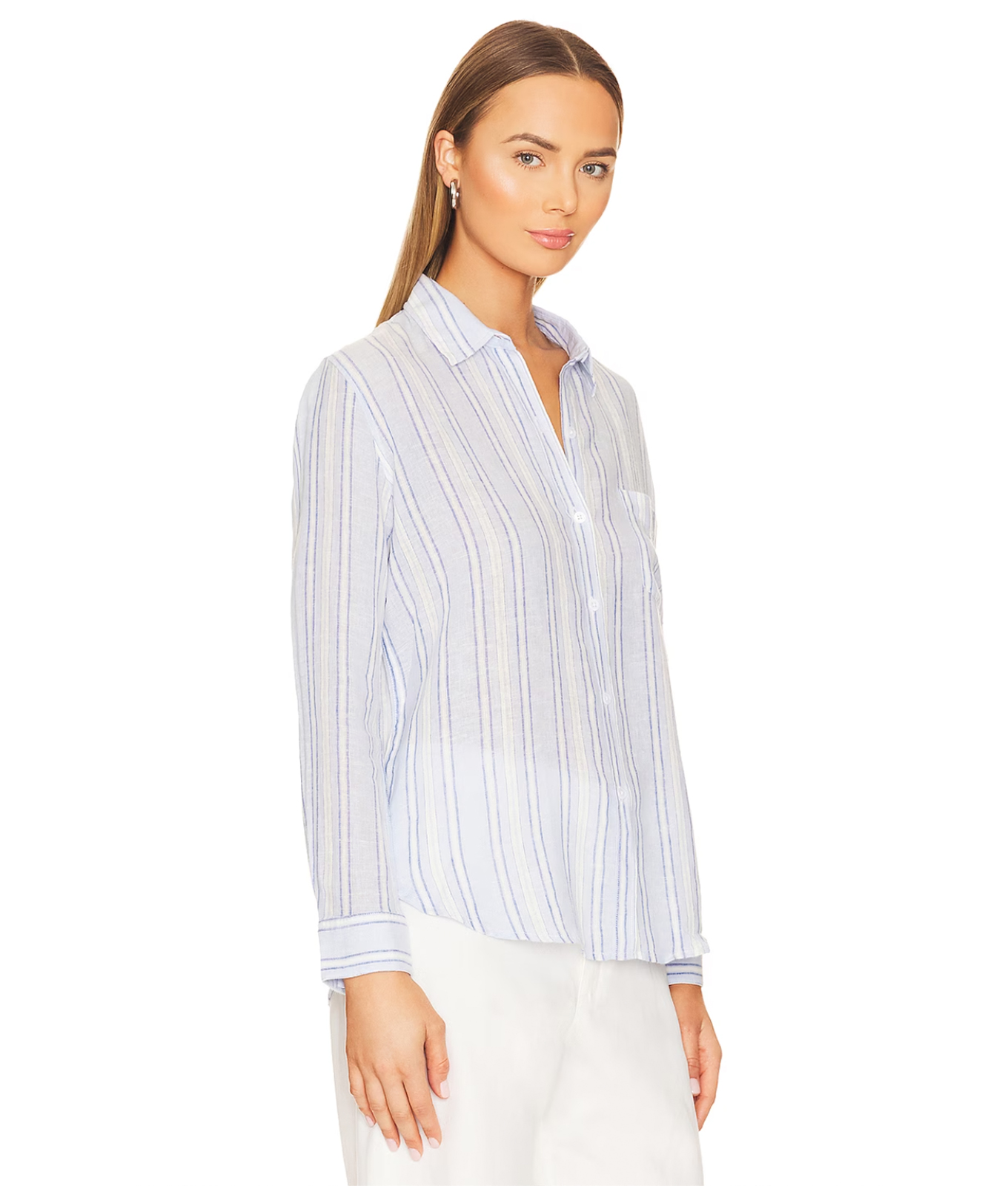
- What We Like: oversized, can be styled various ways, functions as a beach cover-up, breast pocket
- What We Don’t Like: limited sizes and colors, hand wash
- Material: linen, ecovero
- Sizes: XS to XL
“I have been wearing a shirt like this one by Rails as a cover-up for years because I just love how light and breezy the linen blend is,” says PureWow’s assistant commerce editor Natalie LaBarbera. “It keeps me covered (read: not sunburnt) without adding any heat.”
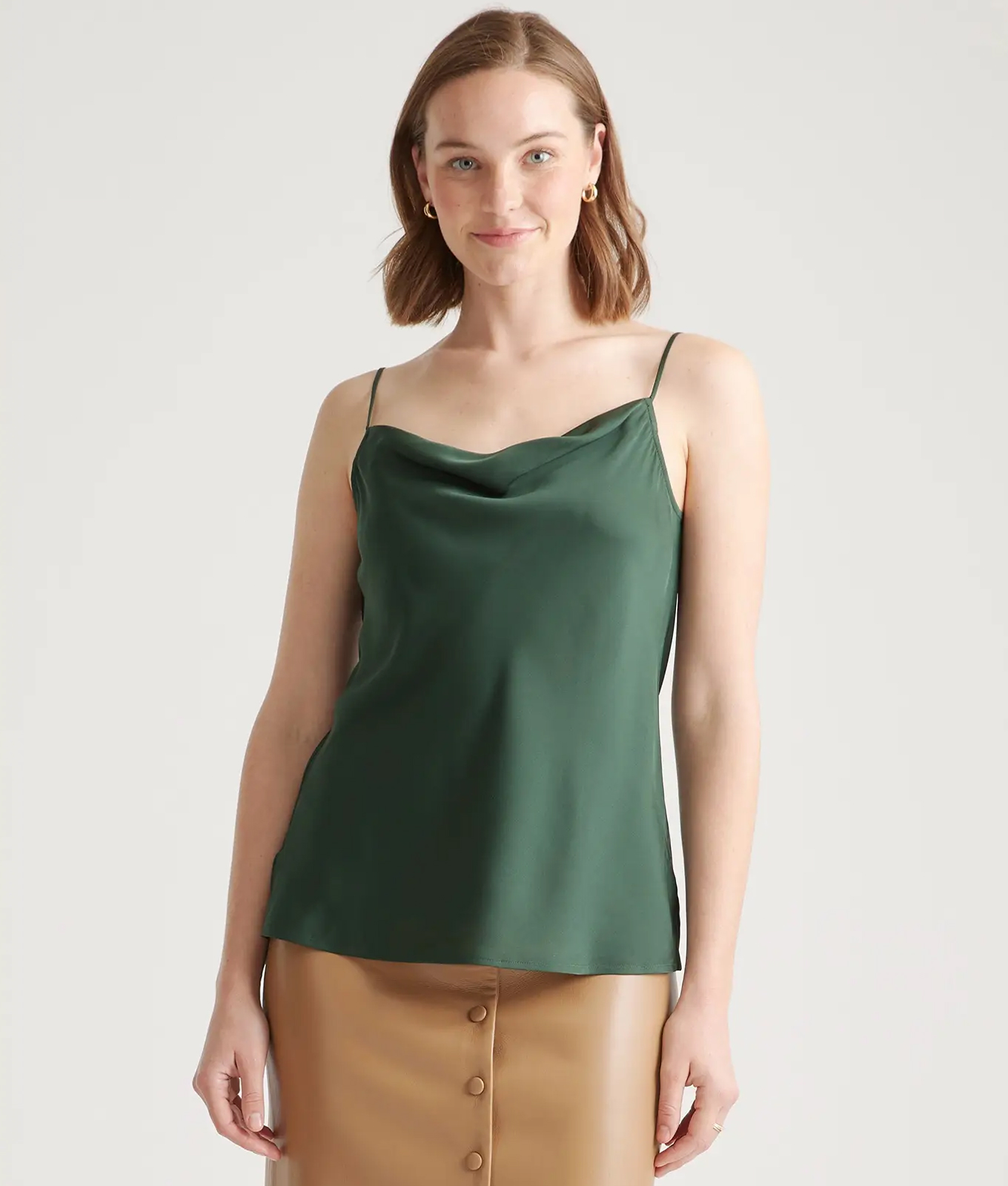
- What We Like: adjustable straps, side slits, cowl neckline
- What We Don’t Like: limited colors
- Material: mulberry silk
- Sizes: XS to XL
In case you haven’t heard, the going out top is back and we have to say this washable silk cami, with its cowl neckline, is screaming updated early 2000s. The straps are adjustable, while side slits help it drape elegantly down your torso. According to Quince, the fabric also contains amino acids that give it hypoallergenic and thermoregulating qualities.
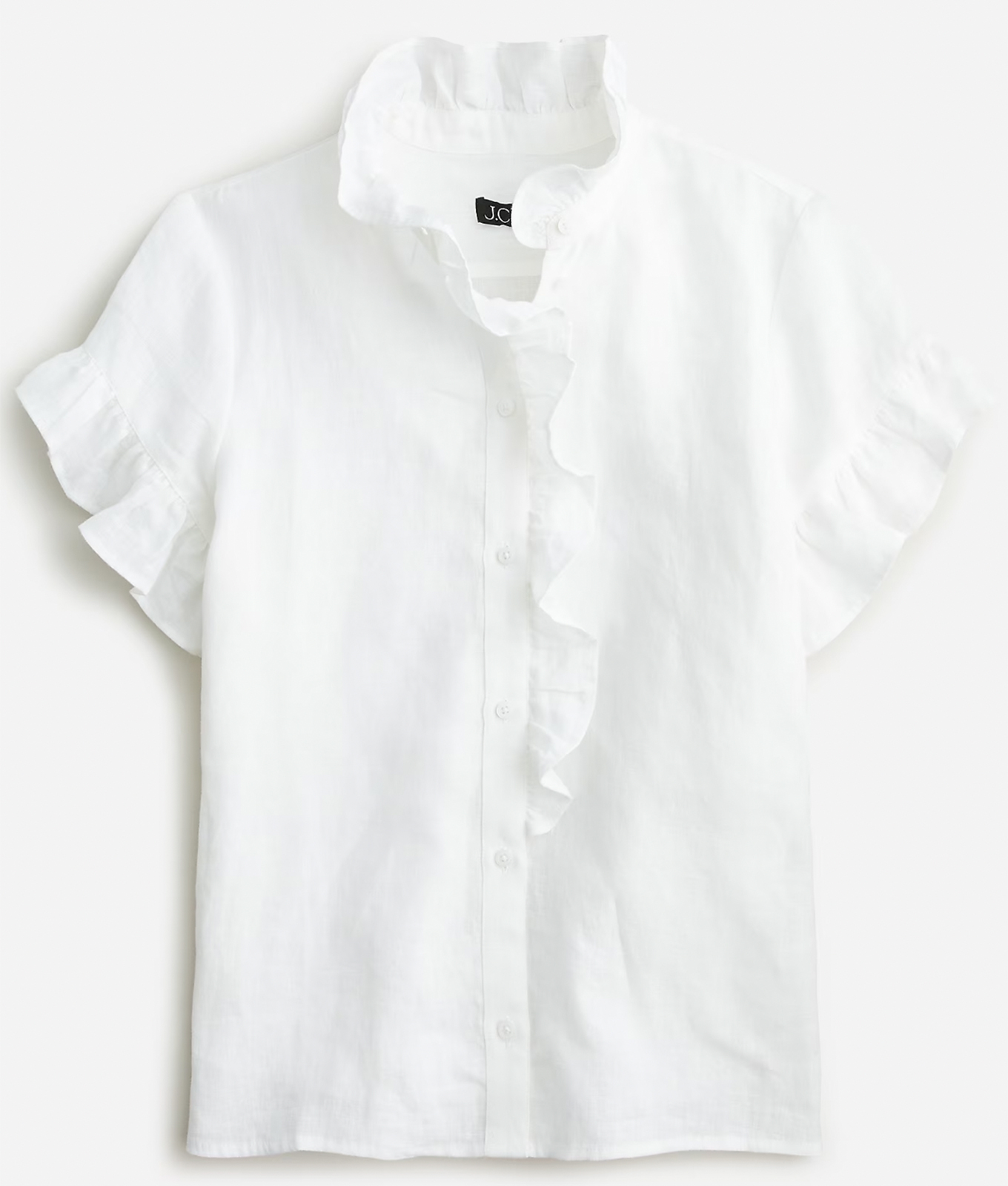
- What We Like: inclusive sizing, ruffle detailing, machine washable
- What We Don’t Like: limited colors, may run large
- Material: linen
- Sizes: US 00 to 24
“I recently got this cutie in white and I'm already obsessed,” says PureWow fashion editor Abby Hepworth. “The ruffles help dress up the lightweight linen and it's oh so airy.” The ruffles let the shirt pull double duty. Wear it to the office and then breeze out the door at five o’ clock for happy hour, or toss it on for Sunday brunch. When shopping, keep in mind that some buyer reviews mention that the style can run large.
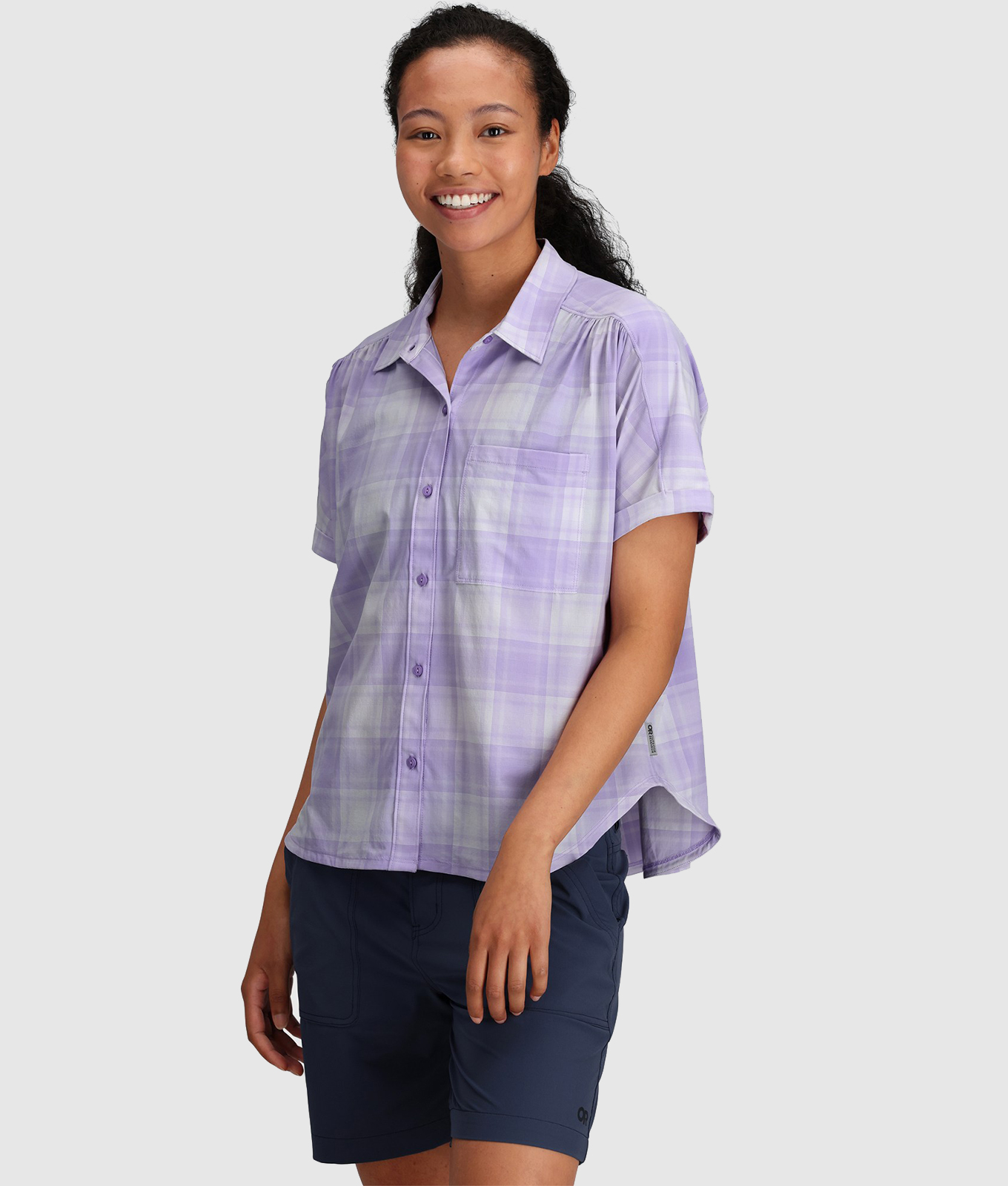
- What We Like: stretchy, durable, great for outdoor activities, moisture-wicking, quick drying, UPF 50+
- What We Don’t Like: limited sizing
- Material: nylon, spandex
- Sizes: XS to XXL
Those with outdoor adventures in the books will want to pick up one of these Astroman shirts. They’re stretchy, durable, moisture-wicking and made for activities like hiking and climbing. With quick-drying material and UPF 50+, it’ll keep you cool and protected from the summer sun. Buyers do note that you may want to size down.
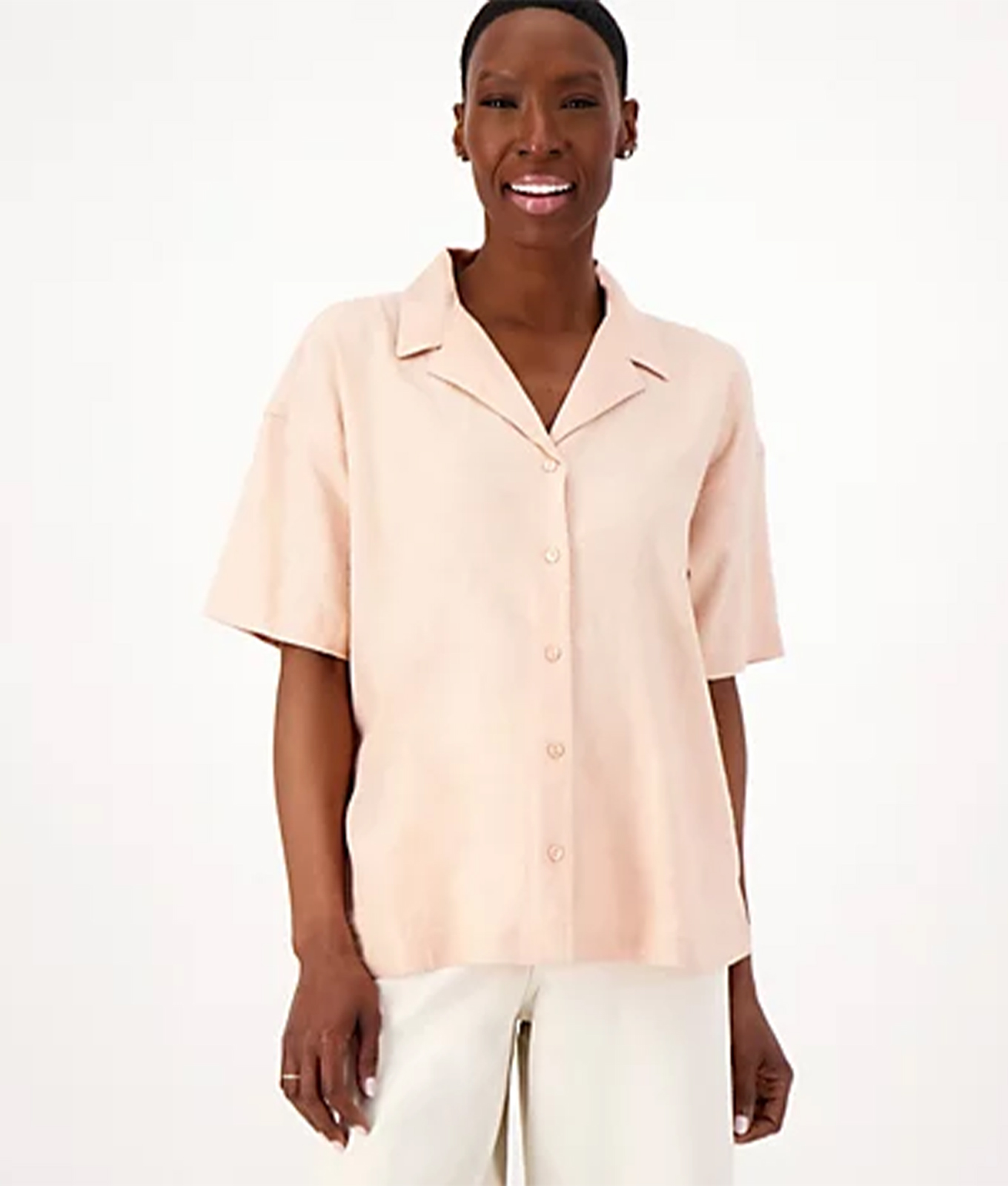
- What We Like: inclusive sizing, machine washable, lapel collar, functional pocket
- What We Don’t Like: limited colors and patterns
- Material: linen, viscose
- Sizes: XS to 5X
This breezy shirt comes in a bevy of sizes up to 5X, plus fun prints such as Navy Seaside and Easy Olive. The linen and viscose blend is machine washable with a lapel collar and functional pocket. From weekend beach trips and brunch to day-to-day errands, it’s a good wardrobe staple to have on hand for all occasions.
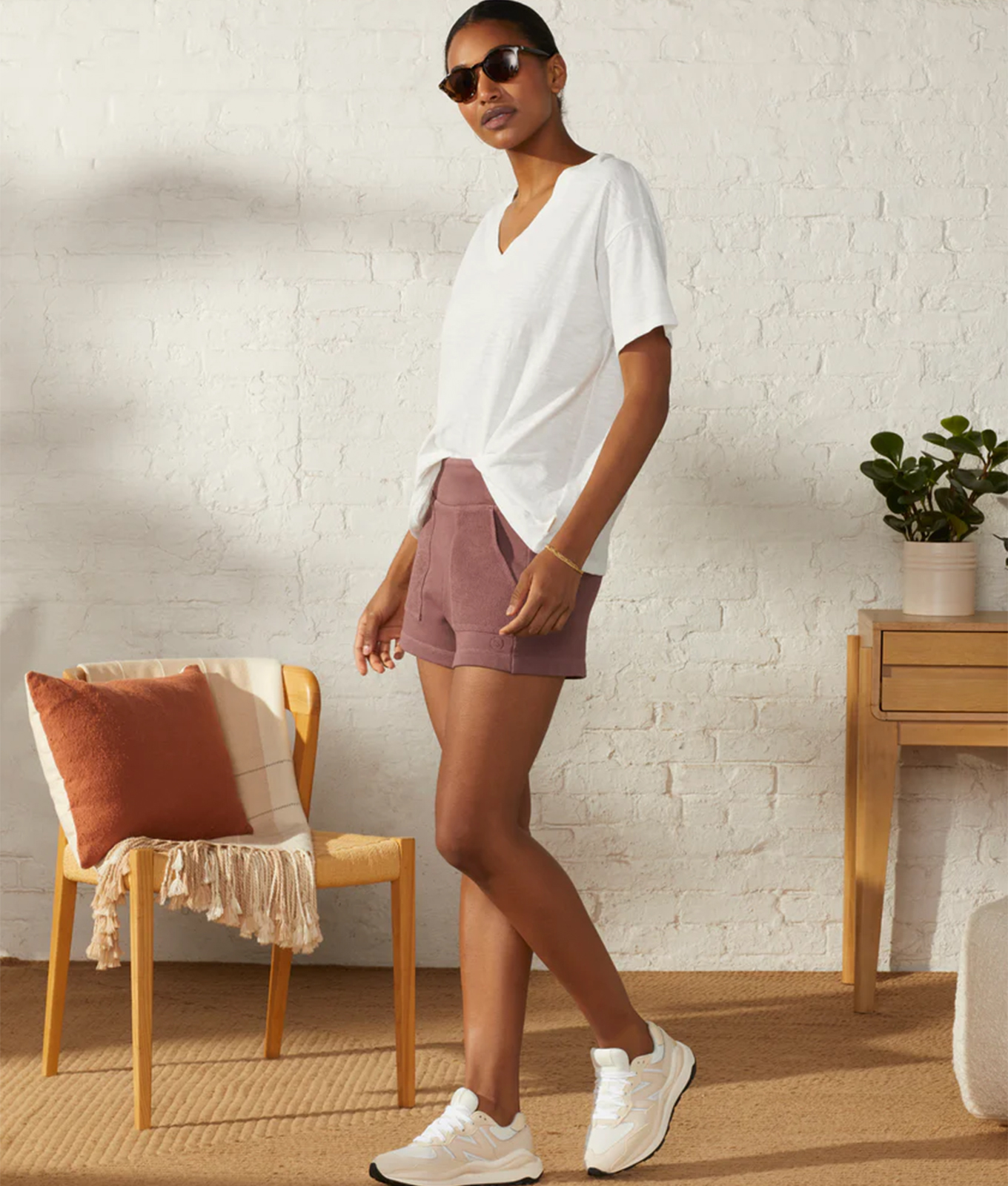
- What We Like: multiple colors, V-neck, flowy
- What We Don’t Like: limited sizing
- Material: organic cotton
- Sizes: XXS to XL
This plain white, V-neck T-shirt is well loved, with an average rating of 4.5 stars. The organic cotton is soft and flowy, and can be styled tucked in or loose for a casual outfit. Plus, every purchase helps support Mental Health America, a nonprofit providing mental health screens and education across the country.
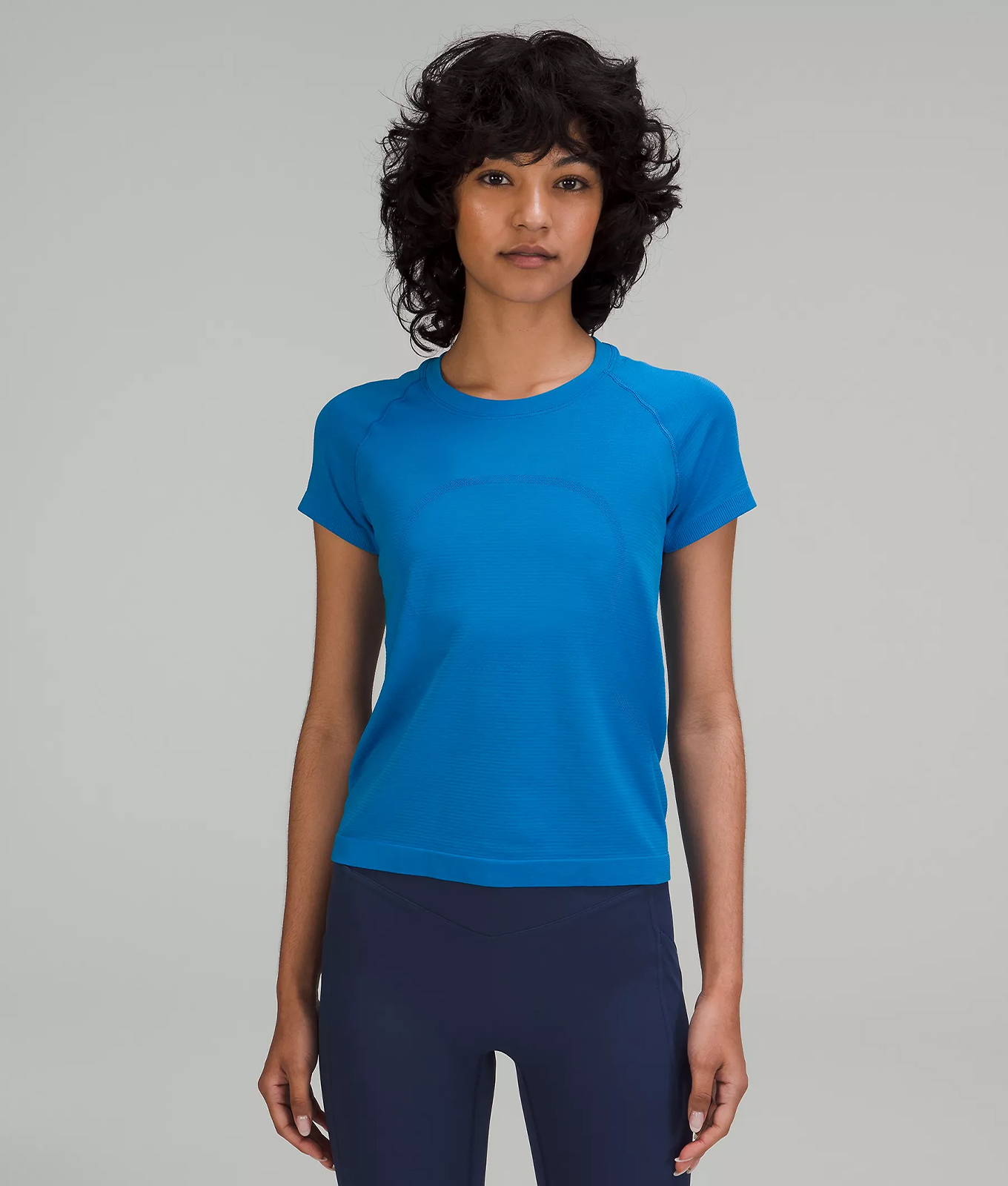
- What We Like: inclusive sizing, lots of fun colors, seamless, Silverescent technology fights odors
- What We Don’t Like: slim fit can feel clingy
- Material: nylon, recycled polyester, elastane, X-static nylon
- Sizes: US 0 to 20
PureWow senior editor Dana Dickey loves her lululemon Tech Shirt. “It’s so cooling when I work out, I think it’s the way that the fabric is woven that allows it to let air in while wicking sweat away,” she shares. “Also, it’s treated with something called Silverescent technology that keeps it from trapping all that sweaty smell.” The only downside, Dickey notes, is that she finds the shirt a little close-fitting, so she’ll typically size up for a looser fit.
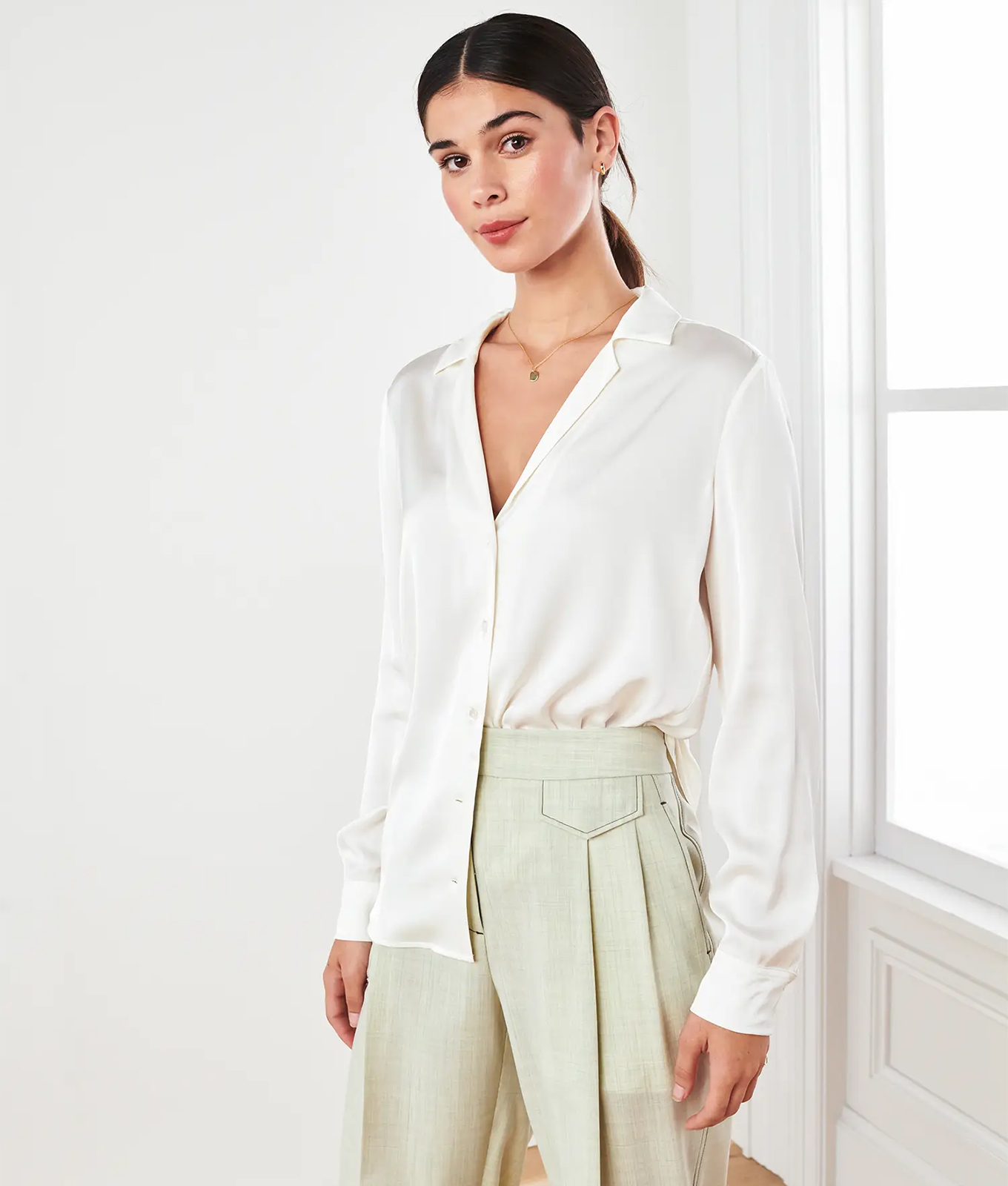
- What We Like: machine washable, tons of colors, relaxed and slim fit
- What We Don’t Like: limited sizing
- Material: mulberry silk
- Sizes: XS to XL
“I love how lightweight but high-end my Quince washable silk blouse is,” raves PureWow commerce editor Olivia Dubyak. “It has a nice deep neckline before the buttons start, which I like because it looks so chic with layered necklaces. Plus, it still has that billowy look and isn't too fitted to the body.”
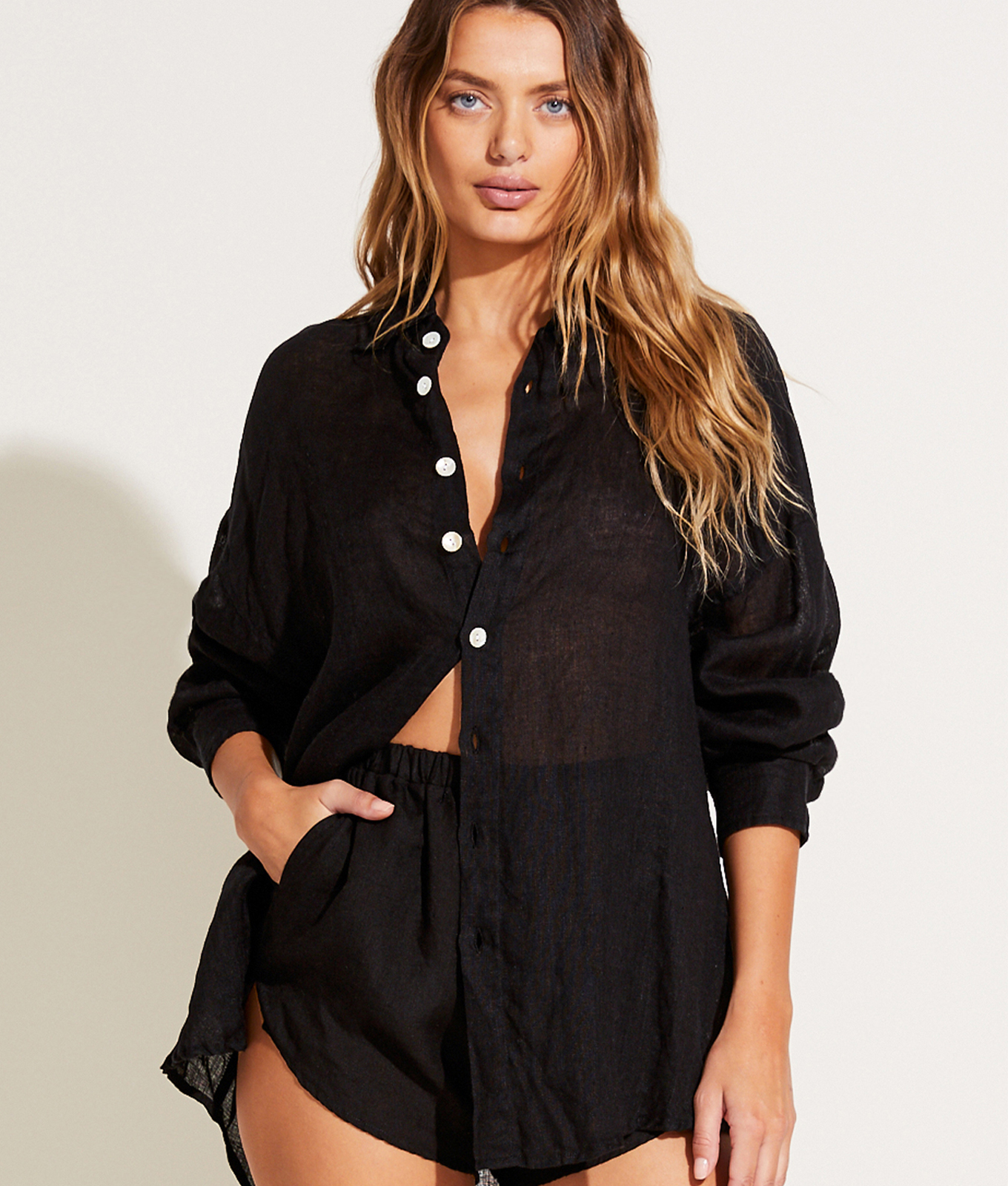
- What We Like: tons of patterns and colors, available in cotton and linen
- What We Don’t Like: runs large, limited sizing
- Material: cotton, ecolinen
- Sizes: XXS to L
PureWow commerce director Nicole Briese calls this shirt dress “the perfect beach shirt personified.” It’s easy to see why: The high-low hem, breezy fabric, smart buttons and sharp collar make it feel just put together enough. The shirt comes in a myriad of colors and patterns and is available in both linen and cotton.
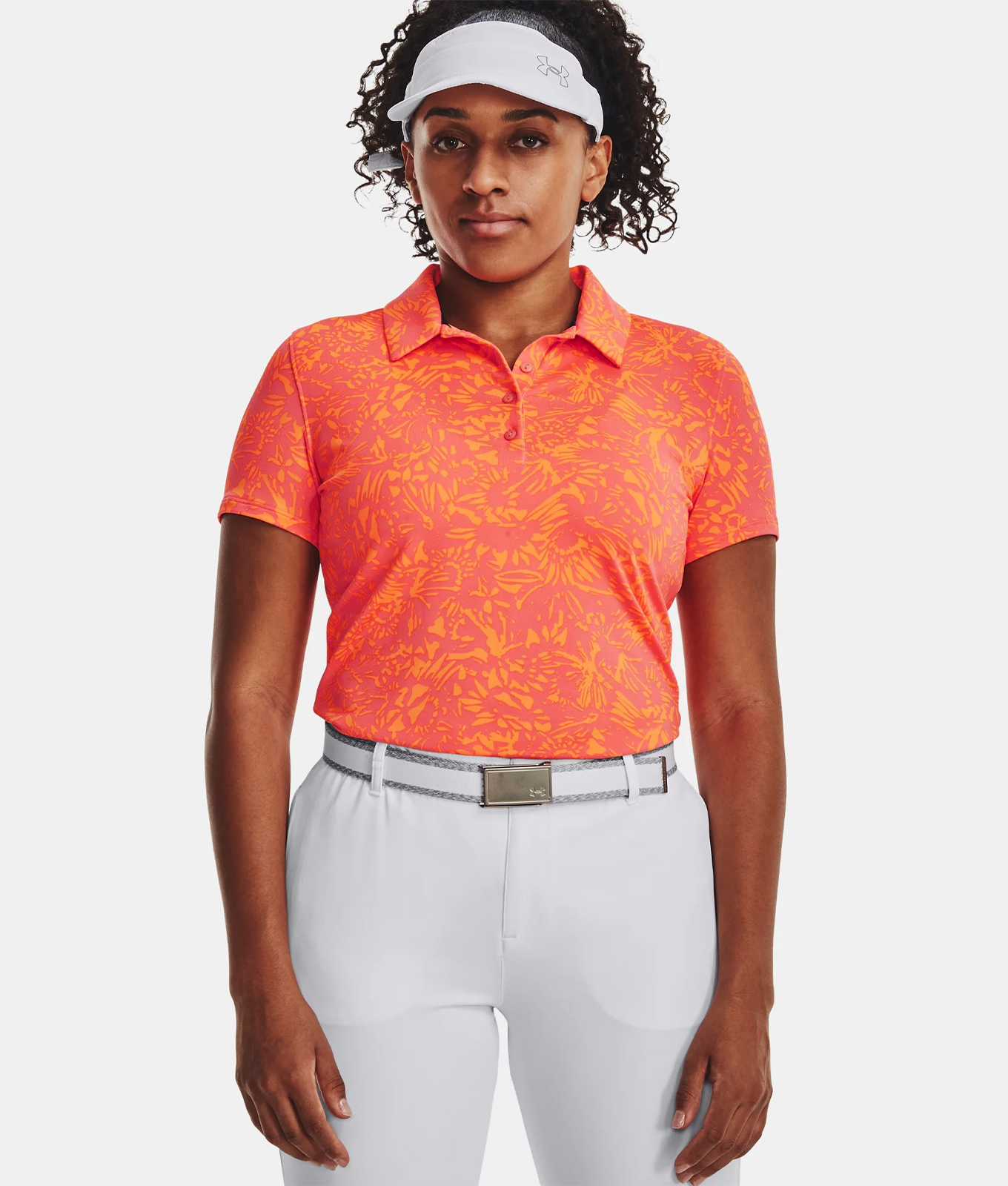
- What We Like: anti-pill, moisture-wicking, quick-drying, stretchy, anti-odor technology, UPF 50+
- What We Don’t Like: few color options
- Material: polyester, elastane
- Sizes: XS to XXL
Planning to amp up your golf game this summer? You’ll want Under Armour’s Playoff Polo in your closet. This stretchy, comfortable golf shirt is (potentially) your secret weapon to a hole-in-one. (Or, at least, sweating less on the greens.) The fabric is moisture-wicking and quick-drying with anti-odor technology, plus it won’t pill and has a UPF of 50+.
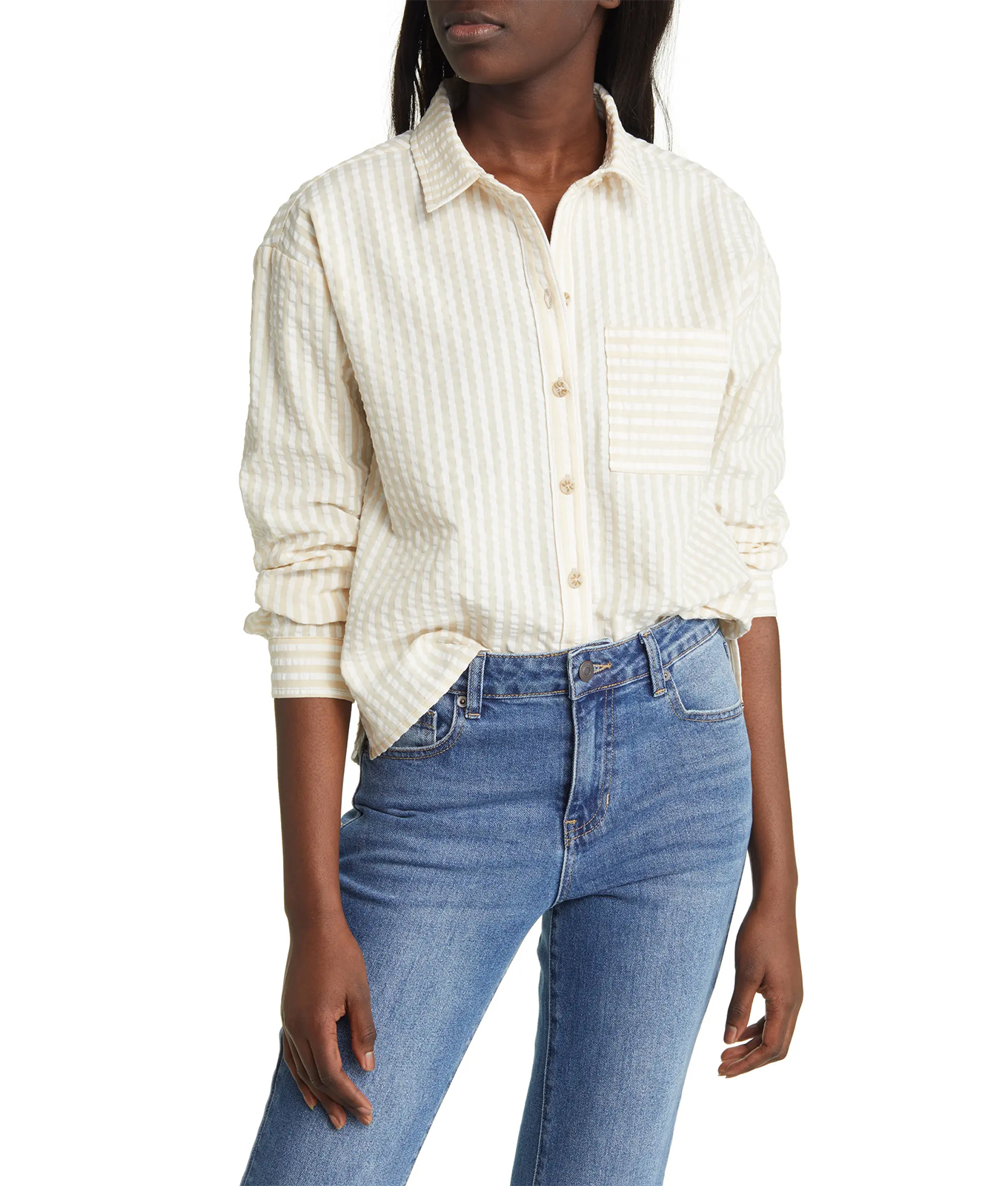
- What We Like: fun pattern, breast pocket, cuffed sleeves, smart collar, textured fabric
- What We Don’t Like: limited color selection
- Material: cotton, polyester
- Sizes: XX to XL
What screams summer more than seersucker? This smart button-up comes in cheerful striped pastel pink or yellow with cuffed sleeves and a collar to take you from work to brunch.
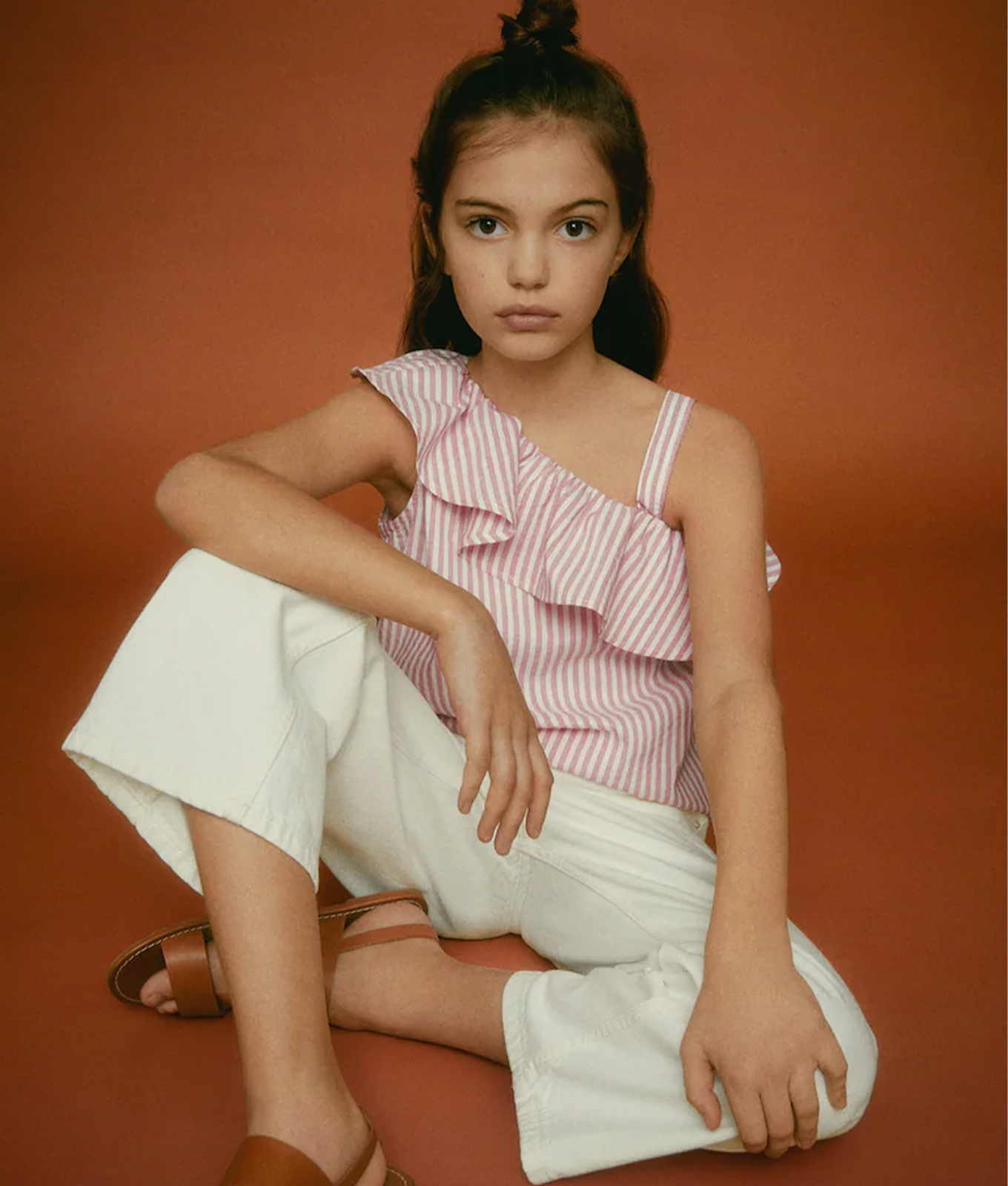
- What We Like: asymmetrical, ruffled neckline, textured fabric
- What We Don’t Like: only one color available
- Material: cotton, polyester, elastane
- Sizes: US children’s 6 to 14
Your kid will be the most stylish one on the playground with this fun little number from Mango. The ruffles add drama, while a thin shoulder strap keeps everything secure during playtime. The seersucker fabric adds textures to the fun pinstripe pattern. Easy, breezy and cute.
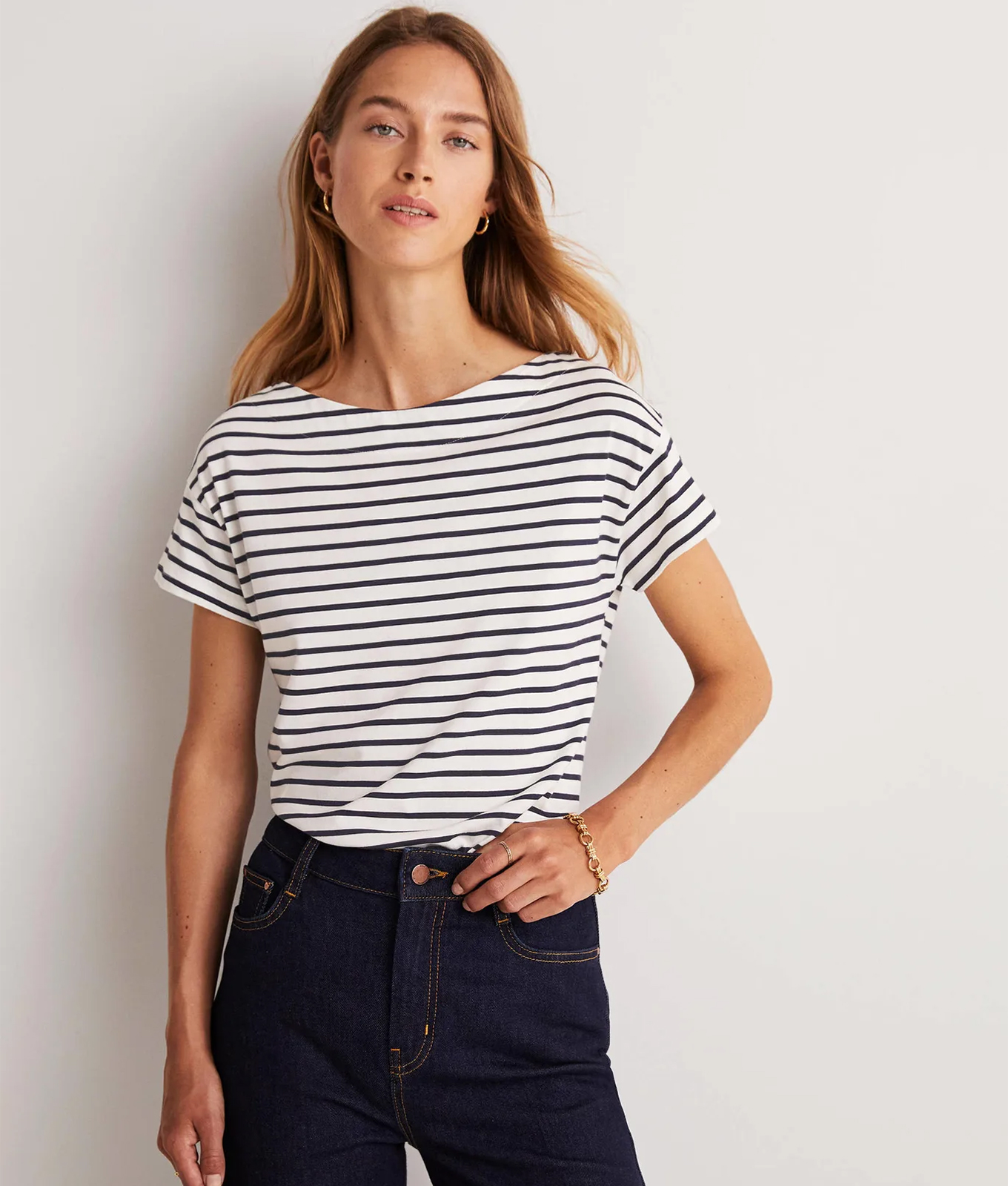
- What We Like: machine washable, multiple colors, inclusive sizing, relaxed fit
- What We Don’t Like: can run small
- Material: cotton, modal
- Sizes: US 2 to 22
Everyone needs a basic T-shirt, and Boden puts its spin on the classic by 1) making it a boat neck and 2) giving you the option for some Breton stripe. (Because everyone needs a little Paris in their wardrobe, right?) This cotton shirt is machine washable, available in a bevy of colors and has a relaxed fit—perfect for weekend errands.
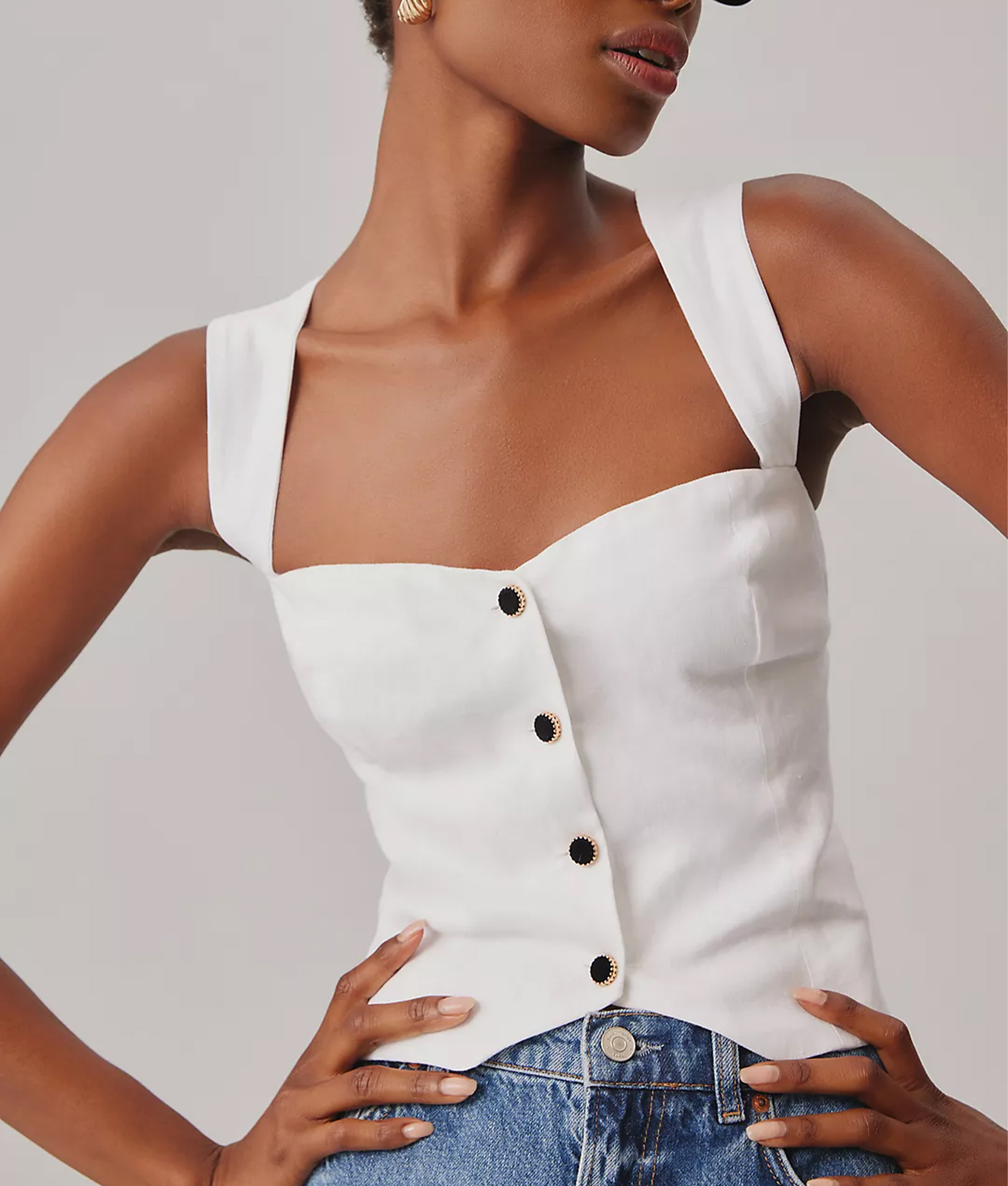
- What We Like: statement buttons, sweetheart neckline, cross-back straps, machine washable
- What We Don’t Like: limited sizing
- Material: linen
- Sizes: 0 to 12
The fitted bodice, delicate buttons and sweetheart neckline elevate linen from daytime summer shenanigans to cocktails at a rooftop bar. Added bonus: The top is machine washable and safe to tumble dry.
What Is the Best Material to Keep You Cool?
According to Lewenhaupt, the best fabrics for hot weather will have moisture-wicking fibers that encourage sweat to evaporate. The fibers in the fabric, plus the structure or weave, affects clothing’s ability to promote air flow and transport moisture. “[Good fabrics] will adjust your body temperature and help you stay cool in warm weather,” he adds. “Linen is a top choice for cool fabrics to wear in hot weather conditions. It is less absorbent than cotton, it dries quickly and it feels pleasantly airy to wear.”
“As a general rule, I recommend you stay away from synthetic fabrics like polyester, acrylic and nylon in hot and humid weather conditions since these materials tend to trap moisture and odors,” Lewenhaupt advises. “These synthetic materials are not very breathable and will trap heat and make you feel warm.” When shopping, keep these materials in mind instead:
Linen
“Linen fibers are naturally moisture wicking due to their inherent morphology,” Willoughby notes. Because of the rougher, porous shape, linen fibers have ridges, which facilitate the quick movement of moisture through the fabric. Additionally, linen is strengthened by moisture, which allows the fibers to swell. She also shares that linen has antimicrobial properties, thanks to the polymers lignin and hemicellulose.
“Due to the thermal regulation nature of linen, it would be an excellent choice in warmer temperatures,” she says. “The lignin component in linen serves as both an antibacterial and strengthening agent in clothing. These characteristics make linen clothing extremely durable, increasing the lifetime of linen garments versus cotton garments.”
Cotton
“Cotton staple yarn tends to have more stretch than linen, though linen is more durable,” Willoughby notes. Like linen, cotton is less susceptible to odor because its fibers are able to resist absorbing odorous molecules. However, do note that cotton might not be the best exercise clothing, as it is more fragile than linen and excessive washing will weaken the fibers. Additionally, because cotton is good at retaining moisture, your next sweat sesh will be soggy if you opt for a cotton T-shirt.
Silk
Lewenhaupt recommends silk as another breezy summer fabric choice that won’t stick to your skin. However, it can be hard to hand wash, so be sure to pick up some washable silk or brush up on your handwashing skills.
Lyocell
Though Lewenhaupt warns against synthetic fabrics, he makes the exception for lyocell, which is made of wood cellulose. It shares many characteristics of cotton and silk, including breathability.
Seersucker
“Seersucker is a type of cotton produced through a unique weaving technique that results in a textured surface which helps promote enhanced airflow,” Lewenhaupt explains. Willoughby adds that the structure of the weaving creates air pockets in the fabric that promote natural ventilation.
Hemp
Hemp is another good cooling fabric that shares many properties with linen. "[It] is frequently combined with cotton to produce a more comfortable blended fabric,” Lewenhaupt says. “Similar to linen, hemp imparts a refreshing sensation upon contact, as it possesses the ability to breathe and absorb moisture without feeling damp.”
However, note that a good deal of sportswear is made from synthetic fabrics, which incorporate technology that allow them to share properties of the materials above—in addition to fighting against odors. So, it’s not all bad.
How to Wash Moisture-Wicking Shirts?
“The biggest rule of thumb you want to keep in mind when you are washing your moisture-wicking clothing, such as athletic wear, is that you want to protect the fibers of the clothing so that they continue to do their job,” Fulford explains. “Keep your clothes as dry as possible and dry quickly.”
Fulford advises adhering to the care instructions on your clothing. When washing, she separates moisture-wicking clothing from the pile and uses less detergent. Too much can damage the fibers, she says.
“If these loads of laundry are extra smelly, you can add a cup of white vinegar to the load, along with the small amount of detergent. This will help get your athletic wear smelling fresh and clean again,” she advises. “Always wash athletic wear and any moisture- wicking clothing in cold water only. If possible, hang dry these items. If this is not an option and you need to use your dryer, use the lowest heat setting available.”
Some things to avoid? Skip the fabric softener, which can ruin the moisture-wicking effect, and don’t procrastinate on laundry. Doing so will make it tougher to remove odors.
Want to know which buzzy products are *really* worth buying? Sign up for our shopping newsletter to uncover our favorite finds.