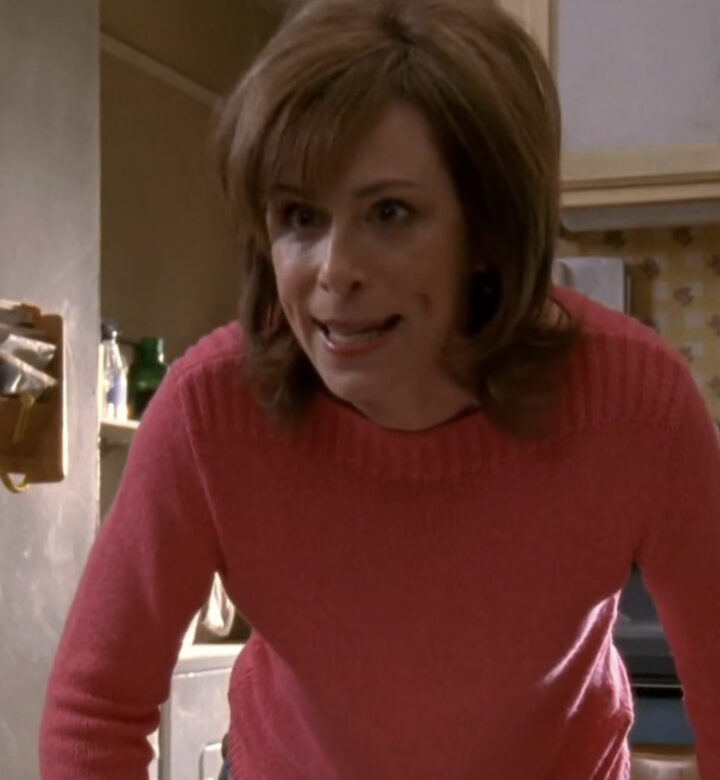
Does Yelling Work? Real Moms Say Yes

How you do it matters

moms who yell universal 1 720x780
FOX

Recently, I was out to dinner with a friend when the subject turned to yelling. “Am I bad mom if I raise my voice every now and again?” I asked. My friend couldn’t agree fast enough: “It’s honestly the only way I feel heard.”

In the weeks that followed, I found myself polling numerous other parents about the subject, and the response was unanimous: When a child refuses to put their coat on or hits their sister for the 17th time, how do you move the needle? You yell.

Still, in the era of gentle parenting, it’s easy to feel like this approach is wrong—and, quite frankly, ineffective. (The Child Mind Institute, for instance, continually advocates against yelling and The New York Times states that the only result of yelling is the feeling of being “out of control.”) Instead, we're supposed to say Dr. Becky-approved lines like “You’re a good kid, having a hard time.” All while looking into their eyes and past the mountain of dirt they dumped on your new sofa. 

But there is good news for the yellers out there: Not all yelling is toxic yelling. In fact, there’s quite a sliding scale. I reached out to a couple of experts to talk about the nuances, along with a few tips on how to re-calibrate.

Meet the Experts

  • Michael Vallejo, LCSW, is a child and family therapist based in Colorado. He’s also the founder of Mental Health Center Kids.
  • Melissa Paul, LCSW, is a licensed therapist based in Brooklyn, New York. She’s also the founder of MLP Therapy Group.

Reactive Yelling Is Not the Same as Fear-Based Yelling

One of the most important distinctions, Vallejo explains, is to consider is what’s driving your tone shift in the moment. On one end, there’s reactive yelling. “This is the parent who has asked five times, is running late and, finally, their voice goes up. It’s driven by frustration and overwhelm, not an intent to hurt.”

On the other end, there’s yelling that’s designed to control—through fear, shame and intimidation. “This might include name-calling, threats or language that attacks the child’s character rather than addressing the behavior,” says Vallejo. This is also where yelling crosses into territory that can cause real—and long-lasting—emotional harm.

Most parents are familiar with the reactive version of yelling, which can be accompanied by a sharp and frustrated tone. Per Vallejo, the reactive yeller usually isn’t at their breaking point, but they’re genuinely irritated—and that comes through. “There really is a version of raising your voice that’s just firm, direct communication,” the expert says. “The tone is serious, but not hostile. Kids can usually tell the difference.”

In other words, if you’re going to yell, yell about the situation rather than about something fundamental to the child (you’re such a bad brother) or a threat you don’t intend to uphold (you’re never watching TV again).

Then, Follow Up With A Way to Repair

Vallejo and Paul are in agreement: Issues of safety warrant a raised voice. “If your child is about to run into the street, you’re not going to whisper,” Vallejo says.

But beyond safety, reactive yelling is normal, they say, particularly in moments of genuine frustration. The goal, of course, is to minimize those moments, but if they do happen, to figure out how to repair. “If yelling happens, rather than feel[ing] shame, focus on [working through it],” Paul advises. “Wait until things calm down and say, ‘Mommy felt frustrated when you didn’t listen and I yelled. I shouldn’t have done that. Ask what you could have done differently and what your child could have done differently. Parents are put in frustrating situations all the time and we lose our temper. So are kids. It is powerful to teach our children that parents mess up, too.”

Revaluate Your Consequences

Again, most parents who yell aren’t doing anything damaging. “They’re just stuck in a cycle that isn’t working as well as they’d like,” Vallejo says. “The child tunes out the first four requests because they’ve learned that nothing happens until the voice goes up. In this case, yelling becomes the only signal that actually means, ‘I’m serious.’”

The best solution? Flip the script and focus on boundaries. Skip the repeated warnings and go straight to calm, direct action. “Walk over, get on their level and say it once with a clear expectation and a clear consequence, ‘We’re leaving in two minutes. If your coat isn’t on, you’re carrying it to the car.’ Then follow through,” Vallejo explains. “It’s not gentle parenting. It’s not yelling. It’s just being direct and consistent.” (It takes more energy up front, but actually reduces yelling long-term, he adds.)

And Check Your Emotional Temperature

Most parents don’t actually want to yell at their kids. But when you do, it’s important to be able to take a step back and ask yourself: Is this really about the coat? Or is this about my own emotional breaking point? “[Often,] It’s about the parent being depleted, over-stimulated or carrying stress from other parts of their life,” Vallejo says. “When that’s the case, no parenting technique is going to fix it.”

He also offers a simple gut-check for the next time you yell. “Ask yourself: After you raised your voice, would you be comfortable if someone you respect had been standing in the room? If the answer is yes, you’re probably fine. You were firm, maybe louder than you’d like, but not harmful. If the answer is no, that’s worth paying attention to.”

Finally, Vallejo says, a sense of guilt can mean you’re actually attuned to the needs of your kids. “The guilt itself is actually a signal that you care about how you’re showing up. That’s not something to feel bad about.”


rachel bowie christine han photography 100

Senior Director, Special Projects and Royals

  • Writes and produces family, fashion, wellness, relationships, money and royals content
  • Podcast co-host and published author with a book about the British Royal Family
  • Studied sociology at Wheaton College and received a masters degree in journalism from Emerson College