I Just Saw the Broadway Show Everyone Will Be Obsessed with This Season

I was blown away

Liberation
Little Fang

There’s a new show on Broadway and I have a feeling it’s about to be the talk of the town. From Tony Award nominees Whitney White and Bess Wohl comes Liberation, a play that’s not just powerful, it’s perfectly timed.

Full transparency: I went into this show totally blind. I didn’t read up on it at all. Honestly, all I knew was that it was set in the ’70s and I assumed it was about women playing basketball. Boy, was I wrong. Actually, scratch that, I was blown away.

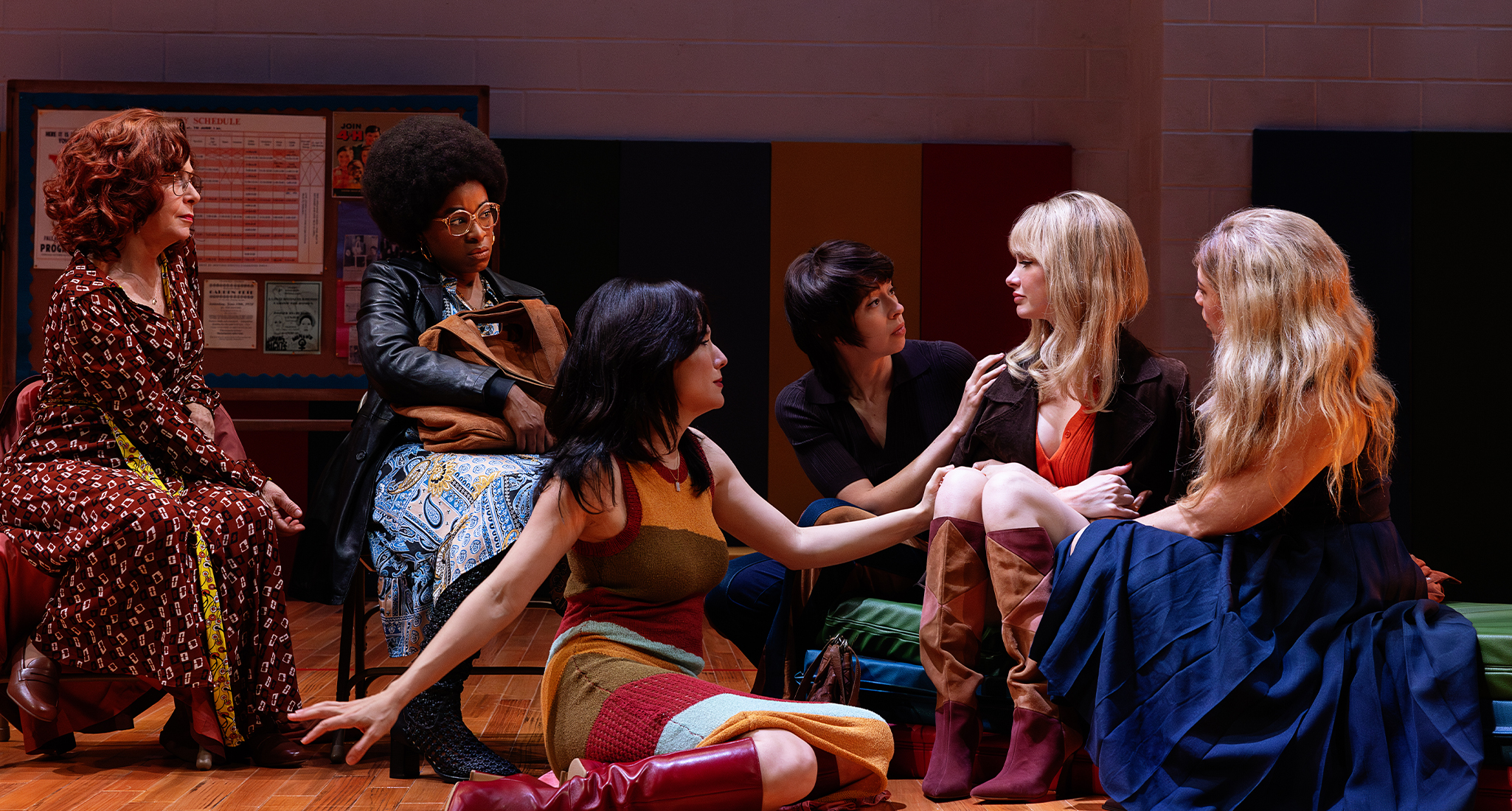
Here’s the setup: It’s 1970 in Ohio. Six women meet on a basement basketball court, determined to shake up their lives and change the world through their civil rights women’s group. Fast forward fifty years and one of their daughters, Lizzie (Susannah Flood), is trying to piece together where things went wrong. The result? A bold, thought-provoking show that dives into misogyny, gender roles and domestic abuse, while exploring friendship, legacy and what it really means to be free, all with humor and honesty seamlessly woven throughout.
1661 Susannah Flood and Irene Sofia Lucio in the Broadway production of Liberation by Bess Wohl directed by Whitney White ©Little Fang
Little Fang

About the women: The group features Lizzie’s mother (also named Lizzie and also played by Flood), plus Dora (Audrey Corsa), a driven receptionist; Susan (Adina Verson), a bold, gender-non-conforming writer; Isidora (Irene Sofia Lucio), who at first comes across as a fiery Sicilian stereotype but soon proves she’s far more radical and layered than anyone expects; Margie (Betsy Aidem), the lone traditionally married woman, who seems the most unsure about turning women’s liberation into action; and Celeste (Kristolyn Lloyd), the only Black woman in the group, who’s reluctantly back home caring for her dying mother.

As the story unfolds, we get to know each woman—their fears, frustrations, and the very different ways “fighting for equality” shows up in their lives. It also raises a powerful question: What are you willing to sacrifice to get what you want? For many women at that time, the answer could mean risking job security or the financial stability that came with marriage.

Even though most of Liberation takes place in the 1970s, it feels almost too relevant today—because, let’s be honest, women are still fighting for equality. What I loved most is how the show leans into nuance. Freedom and equality aren’t one-size-fits-all concepts. For some, it might mean choosing to be a stay-at-home mom; for others, it’s about climbing the corporate ladder and calling the shots. And for most of us, it’s somewhere in between. At the end of the day, it’s about having the choice.


1426 Kayla Davion and Charlie Thurston in the Broadway production of Liberation by Bess Wohl directed by Whitney White ©Little Fang
Little Fang

Ultimately, Liberation reminds us that even with our differences, we share far more in common than we think and that lasting change only happens when we stick together. And while no one has all the answers, the show makes one thing crystal clear: action starts with awareness.

One of the first lines sums it up perfectly: “The general concept is, if we raise our consciousness, increase our understanding of the oppression and the sources of oppression in our own lives, this is how we change the world. We raise our consciousness, we change the world.”

Tickets for Liberation are on sale now.

Want all the latest entertainment news sent right to your inbox? Click here.


LongHeadshot

Assistant Editor, News and Entertainment

  • Writes breaking news and entertainment content
  • Covers award show red carpets and movie premieres
  • Has earned two Edward R. Murrow Awards