We're living in a weird time where, depending on the headlines you read, we're either on the brink of a great technological breakthrough or societal collapse, all thanks to Artificial Intelligence. Daily, I see arguments online debating the merits of the Humanities, the benefits of AI, and if there's actually any value in being human anymore. One of my favorite authors, 2017 Nobel Laureate Kazuo Ishiguro, has made this question his life's work. Across many books, including Never Let Me Go and Remains of the Day, he seeks to interrogate what exactly makes us human. His most recent novel (and perhaps my favorite), 2021's Klara and the Sun, is almost prescient in its conversation around AI—and it's Dua Lipa's book club pick for October.
My Favorite Book About AI Is Dua Lipa's October Book Club Pick
A novel for this AI age

•
Published Oct 1, 2026

Angela Pham/BFA.com/Shutterstock
“I first read Klara and the Sun when it was published in 2021 and I’ve devoured Kazuo Ishiguro’s entire back catalogue since. I’m totally hooked," Lipa wrote in the Instagram caption announcing the selection. "At a time when AI's impact is questioned daily, this novel feels prescient. But at its core this is a book about our humanity—what it means to be human and why that is irreplaceable."
The plot revolves around Klara, an "Artificial Friend," which is Ishiguro's way of saying a robot with creepy verisimilitude to the human form. Klara, an older model, wallows on the shelf of a store as she watches other next-gen AFs leave to join new families. Her fate changes on the day that Josie, a young and chronically ill girl, comes in and chooses Klara as her AF, much to her mother's chagrin. As Klara integrates into the family's life, she uncovers a secret project whose ultimate success will depend on her own abilities.
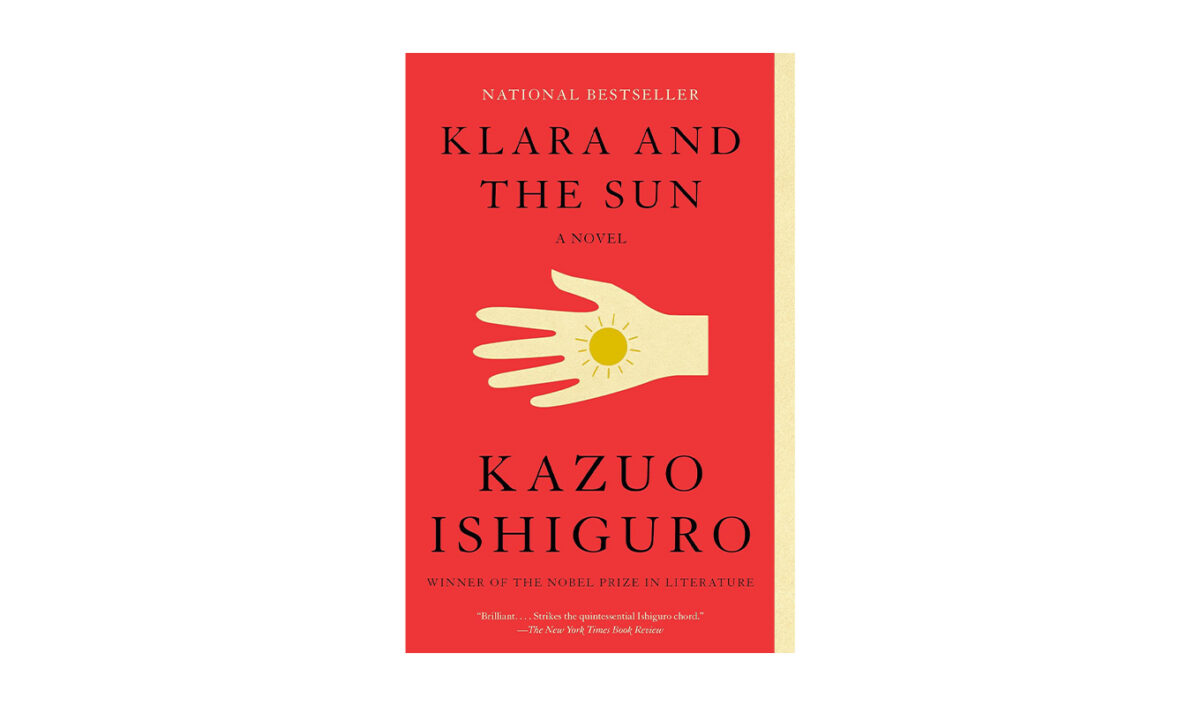
Knopf Doubleday Publishing Group
With Klara and the Sun, Ishiguro asks readers to wrestle with the price of technological advancement. In Klara's world, children often undergo a process known as "lifting," which enhances their academic abilities but can have fatal consequences. This is the cause of Josie's illness. Most children also have AFs in place of actual human connection. One of the most pressing topics Ishiguro raises is the idea of AI afterlife and grief tech. Is something that imitates a person so accurately actually them in continuity? Will they be human? Will it be enough for the people they leave behind? Klara sits at the center of this malestrom, all the while looking to the sun for hope and healing for her adoptive family.